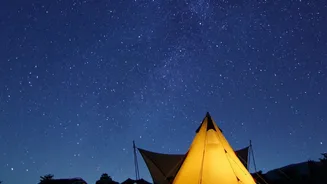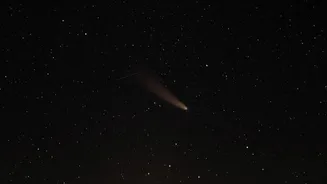








For any amateur astronomer, the quest for a perfect night sky is a familiar struggle. But what if the secret wasn't just escaping city lights? A unique combination of high altitude and clean air is creating a stargazing paradise in India.
The Twin Enemies of Stargazing
Every backyard
astronomer knows the frustration of light pollution. The glow from cities and towns washes out all but the brightest stars, making it impossible to see faint nebulae or the full glory of the Milky Way. But there’s a second, more subtle enemy: the atmosphere itself. Even in a dark location, the air we look through can distort and obscure our view. This interference comes in two main forms. First is 'seeing', which refers to the stability of the atmosphere. Heat rising from the ground and turbulence in the air can make stars twinkle and blur fine details on planets, much like looking at an object through shimmering water. The second is 'transparency', which is about how clear the air is. Haze, dust, smoke, and pollutants all act like a dirty window, scattering starlight and reducing contrast. These tiny particles, or aerosols, can even amplify the effects of light pollution, making skies brighter than they should be.
Why Altitude is the Ultimate Advantage
This is where high-altitude locations change the game. By setting up a telescope on a tall mountain, you physically place yourself above a significant portion of the Earth’s atmosphere. The air at these heights is thinner, drier, and generally much cleaner and more stable. With less air to look through, there's less turbulence to cause poor 'seeing' and fewer particles to degrade transparency. This allows telescopes to achieve their true resolving power, turning what might be a faint smudge at sea level into a detailed spiral galaxy. Professional observatories have known this for decades, which is why the world’s most powerful telescopes are perched on remote, high-altitude peaks. They are above most of the weather, moisture, and pollution that plague lower elevations.
India’s Stargazing Jewel: Hanle, Ladakh
In the remote Changthang region of Ladakh, the small village of Hanle has emerged as a world-class destination for astronomers. Situated at a breathtaking altitude of about 14,764 feet (4,500 meters), it combines all the necessary ingredients for a perfect sky. The location is a cold desert, meaning it has extremely low humidity and minimal cloud cover, boasting over 300 clear nights a year. Its remoteness means it is virtually free from man-made light pollution. This prime location is home to the Indian Astronomical Observatory, one of the highest observatories in the world. Recognizing its unique potential, the Indian government designated the area as the country's first official Dark Sky Reserve in December 2022. This designation protects a roughly 22-kilometer radius from artificial light, preserving the pristine darkness for both scientific research and a growing astrotourism scene.
A New Frontier for Amateur Astronomers
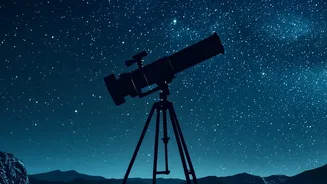
While the professional telescopes at the Indian Astronomical Observatory are generally off-limits, the Hanle Dark Sky Reserve is actively welcoming amateur astronomers and tourists. A key part of the project involves empowering the local community. Villagers have been trained as 'Astronomy Ambassadors' and provided with telescopes to guide visitors and host stargazing sessions at homestays. This creates a sustainable economic model centered on the night sky. For amateur astronomers from the U.S. and around the world, Hanle represents more than just a travel destination; it's a chance to experience skies that are practically unattainable at home. Organized 'star parties' bring together dozens of enthusiasts to share the view, photograph celestial objects in stunning clarity, and witness the Milky Way in a way few have ever seen.