







The Chemical Cocktail of Celebration
Fireworks are much more than paper and gunpowder. To create their spectacular effects, they rely on a complex recipe of chemicals. The dazzling colours are produced by metal salts: strontium for reds, copper for blues, and barium for greens, among others.
To launch them skyward, an oxidiser is needed, and that role is often filled by a class of chemicals called perchlorates. These components, along with fuels and binders, are designed to burn up in a brilliant display, but they don't simply vanish into thin air. After the explosion, a residue of unburnt materials, chemical byproducts, and charred packaging falls back to Earth.
From the Sky to Our Waterways
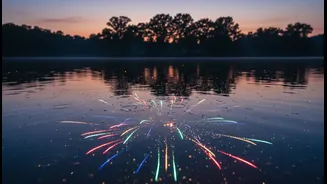
The journey from a firework's explosion to water contamination can be direct and swift. When displays happen over or near lakes and rivers, debris and chemical particulates can fall directly onto the water's surface. Even for displays on land, the fallout doesn't stay put. Rain can wash the residue from streets, rooftops, and soil into storm drains, which often lead directly to local water bodies. These particulates contain heavy metals and other compounds that can alter the chemistry of the water. Research has also shown that plastic components from fireworks can contribute to microplastic pollution in rivers.
A Closer Look at Perchlorate
Of all the chemicals involved, perchlorate has drawn significant scientific attention. It is highly soluble in water and can persist in the environment for long periods. Studies have consistently found spikes in perchlorate levels in both surface water and groundwater following firework events. One study in the US found that after years of fireworks displays at Mount Rushmore, perchlorate was present in the soil, surface water, and groundwater. Similar research in Kerala, India, also detected perchlorate in soil and water samples collected after fireworks were used. The concern is that high levels of perchlorate can interfere with the human thyroid gland, which is crucial for regulating metabolism and normal development.
The Lasting Impact of Heavy Metals
The metals that create the vibrant colours in fireworks also pose an environmental risk. Elements like copper, strontium, and manganese can be released into water from firecracker debris. While essential for the visual spectacle, these metals can be toxic to aquatic life. Studies show that changes in water chemistry from this residue can disrupt microbial activity and harm aquatic ecosystems, especially when fireworks are used intensively or repeatedly in the same area. High concentrations of these metals can lead to developmental and reproductive problems in fish and other aquatic animals.
The Search for a Greener Sparkle
The growing awareness of this pollution has sparked a search for more environmentally friendly alternatives. Researchers are developing new formulas that replace perchlorate with nitrogen-rich compounds that burn more cleanly and produce less smoke. These 'green' fireworks also aim to use fewer heavy metals to produce colours. Some manufacturers claim to be using biodegradable materials for casings to reduce plastic waste. However, creating alternatives that are as visually stunning and cost-effective as traditional fireworks remains a significant challenge. In the meantime, some communities are exploring high-tech alternatives like drone light shows and laser displays, which offer a spectacular celebration without the chemical fallout.