





From Hours to Minutes: The New Research Workflow
Traditionally, initial creative research involved manually scouring platforms like Pinterest, Behance, and design blogs for inspiration. This process of gathering images, identifying styles, and developing mood boards is crucial but incredibly time-intensive.
Today, AI-powered tools are transforming this workflow entirely. Instead of manually searching, designers can now use simple text prompts to generate a wealth of visual starting points. This shift allows freelancers to move from broad ideation to concrete concepts in a fraction of the time, freeing them up to focus on higher-value creative work like strategy and execution. The goal isn't to replace creativity but to accelerate the often tedious process of finding a direction.
Automating Mood Boards and Concept Art
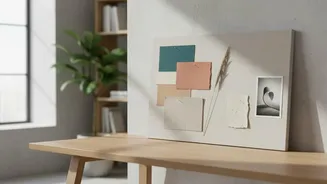
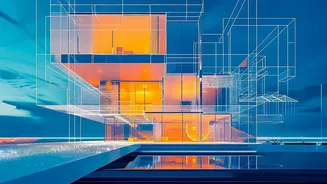
One of the most significant applications of AI in the early design phase is the rapid generation of mood boards and concept art. Tools like Midjourney and Adobe Firefly can take a descriptive prompt—such as "logo concept for a sustainable coffee brand in a minimalist Scandinavian style"—and produce dozens of visual interpretations. This provides an immediate aesthetic foundation. For freelancers, this is a game-changer for client pitches. Instead of describing an abstract idea, you can present tangible visual directions, making conversations more productive and reducing the rounds of revisions needed to align on a concept.
Intelligent Colour and Typography Pairing
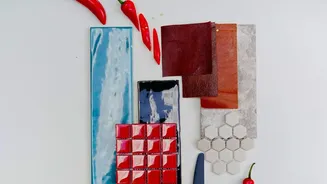
Beyond generating whole images, AI excels at the more granular aspects of design research, like creating colour palettes and suggesting font pairings. Services like Khroma and Adobe Color use AI to learn a designer's aesthetic preferences and generate limitless, harmonious colour combinations. Many tools can also extract a full palette directly from an uploaded image. Similarly, AI-driven typography tools like Fontjoy can suggest complementary font pairings based on criteria like harmony and readability, solving a common design challenge that often relies on trial and error. This automates the meticulous task of ensuring visual cohesion from the very start.
Streamlining the Ideation Process
AI applications act as a powerful brainstorming partner, helping designers overcome creative blocks. When you're stuck for an idea, generating a few AI images can provide a visual spark to get things moving. These tools are excellent at creating variations on a theme, allowing for rapid exploration of different stylistic avenues. For example, a designer working on a website can use AI to quickly mock up different layouts or hero image concepts. This ability to iterate quickly and at scale means more ideas are explored in less time, ultimately leading to more refined and innovative final concepts.
The Artist's Role: Curation Over Creation
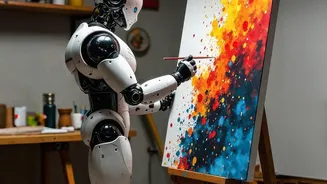
The rise of AI doesn't make the graphic designer obsolete; it shifts their role from manual creator to expert curator and strategist. AI tools are powerful, but their output is often generic or requires refinement. The designer's expertise is still essential to select the best AI-generated concepts, tweak them to fit the client's specific needs, and ensure the final output is original and impactful. Experienced designers use these tools thoughtfully to enhance their work, not to replace their judgment. In this new workflow, the freelancer's value lies in their taste, critical thinking, and ability to guide the technology toward a strategic goal.
Navigating the Pitfalls
While these tools offer immense benefits, freelancers must be aware of potential drawbacks. Over-reliance on AI can lead to a sense of visual uniformity, where designs start to look similar to other AI-generated work. Furthermore, the copyright and ownership of AI-generated assets can be a complex issue, and it's crucial to use tools that grant clear commercial rights. For instance, Adobe has trained its Firefly model on its licensed stock library to address these concerns. The key is to use AI as a starting point for inspiration and automation, not as a final, unedited solution. Human oversight remains the most critical component.