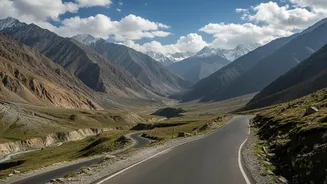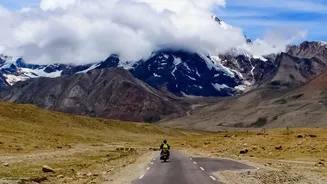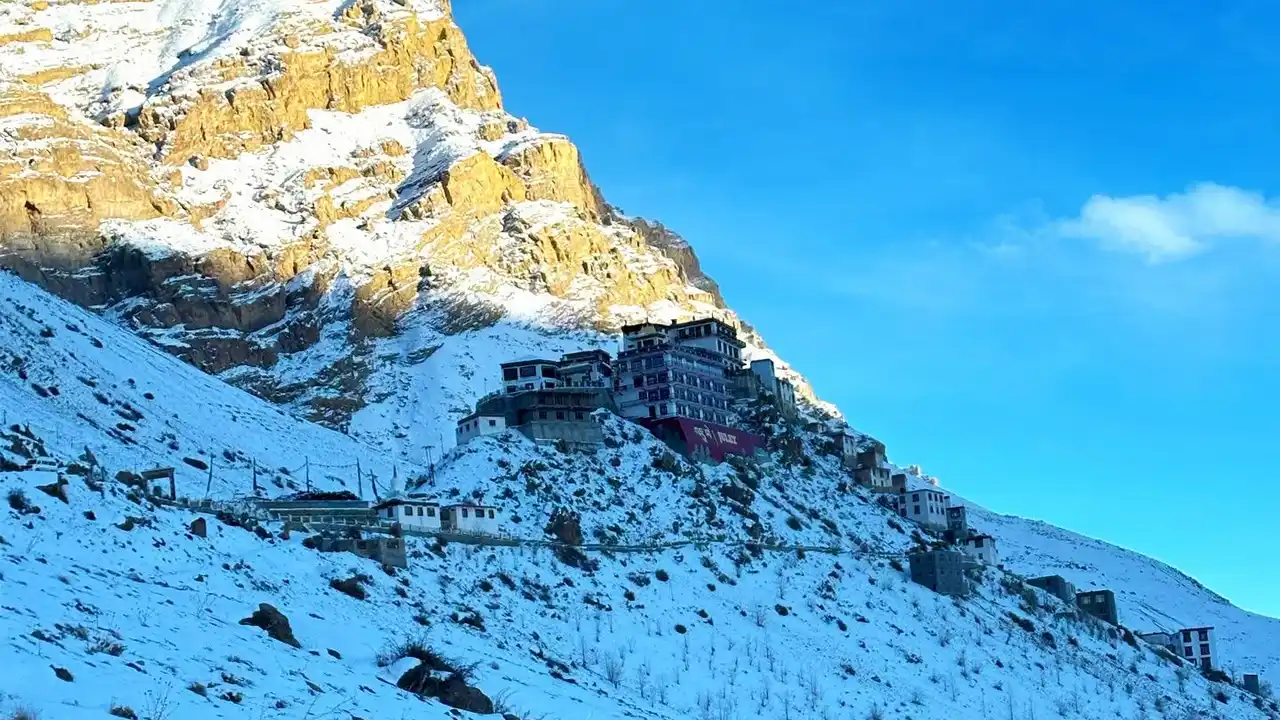






The Challenge: Altitude, Water and Weather
A late monsoon journey from Manali to Leh is a unique undertaking. While the heaviest rains have subsided, the road presents a distinct set of challenges. You'll face numerous water crossings fed by melting glaciers, roads still slick with residual moisture,
and dramatic temperature swings. More importantly, the entire route is a high-altitude environment, with multiple passes soaring above 15,000 feet. This combination of moisture and thin air puts extraordinary stress on your vehicle's most critical systems. Descending from a high pass like Tanglang La requires constant braking, and climbing it pushes your engine to its limits in an oxygen-starved atmosphere. This isn’t a typical highway drive; it's an expedition where your vehicle’s reliability is your primary safety net.
Brake Fluid: The Unseen Safety Net
Most drivers rarely think about brake fluid, but on this route, it’s a matter of life and death. Brake fluid is hygroscopic, meaning it naturally absorbs moisture from the atmosphere. In the humid conditions of a late monsoon, and with potential exposure from water crossings, this process accelerates. As water contaminates the fluid, its boiling point drops significantly. This is dangerous because the long, steep descents on the Manali-Leh road generate immense heat in the braking system. If the fluid boils, it turns into compressible vapor, leading to a terrifying condition known as 'brake fade'—the pedal feels spongy or goes straight to the floor with little to no stopping power. Furthermore, high altitude itself lowers the boiling point of all liquids, including contaminated brake fluid, compounding the risk. A pre-trip flush with fresh, high-quality brake fluid from a sealed container is the only way to ensure your brakes perform reliably when you need them most.
Engine Performance in Thin Air
As you climb higher, the air becomes less dense, containing less oxygen. This directly impacts your engine’s ability to generate power. An engine works by igniting a precise mixture of fuel and air; with less air, combustion becomes less efficient. This can result in a noticeable loss of power—sometimes as much as 3% for every 1,000 feet of elevation gain. On the high passes of the Ladakh region, this can mean a power reduction of 20-30% or more. You'll feel this as sluggish acceleration and a struggle to maintain speed on inclines. A comprehensive engine check is vital. This includes inspecting the air filter, which can get clogged with dust on these roads, further starving the engine of air. The fuel system, spark plugs, and engine oil should all be in top condition to ensure the engine runs as efficiently as possible. For diesel vehicles, ensuring fuel injectors are clean is paramount for proper combustion in thin air. Modern engines with turbochargers fare better at altitude, but even they benefit from a thorough check-up before undertaking such a demanding trip.
A Holistic Pre-Trip Inspection
While brakes and engine are the stars, they are part of a larger team. A complete vehicle service is non-negotiable. Pay close attention to the coolant system; overheating is a common problem on long, high-altitude climbs where the thin air is less effective at cooling the radiator. Inspect your tyres for adequate tread and any signs of damage, as road conditions can be unpredictable, ranging from smooth tarmac to rocky tracks. Your suspension will also take a beating, so ensure shocks and springs are in good health. Finally, check all electrical systems, especially your battery, as cold temperatures at high altitudes can reduce its performance, making it difficult to start the engine in the morning. Carrying spares like an extra air filter, fuses, and essential fluids like engine oil and brake fluid is also a wise precaution.