


The Hidden Danger in Hot Food
The single greatest threat to your leftovers is something called the “temperature danger zone.” Food safety authorities define this as the range between 5°C and 60°C (41°F to 140°F). Within this range, harmful bacteria like Salmonella, E. coli, and Bacillus
cereus (commonly found in rice) can multiply at an astonishing rate, sometimes doubling in number every 20 minutes. The longer food sits in this zone, the higher the risk of foodborne illness. A large, deep pot of hot food acts as a perfect incubator. Its sheer volume retains heat, meaning the core of the dish can remain in the danger zone for many hours, even if you place the pot directly in the fridge. This is a common cause of foodborne illness, as toxins produced by these bacteria may not be destroyed by reheating.
Why Your Big Pot is a Bad Idea
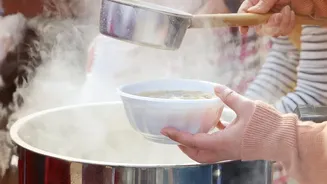
Think of a large pot of freshly made sambar or biryani. Its centre is incredibly hot and insulated by the surrounding food. When you place this entire pot in the refrigerator, the appliance has to work overtime. Worse, the outside of the food cools much faster than the inside. The core of that dish might take hours to drop below the crucial 60°C mark, and even longer to get below 5°C. During this extended cool-down period, your delicious meal becomes a potential health hazard. The Food Safety and Standards Authority of India (FSSAI) advises that cooked food should be refrigerated within two hours. A large, deep pot makes meeting this deadline nearly impossible for the food at its centre.
The Shallow Portion Solution
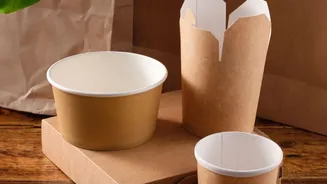
This is where the headline's advice becomes a simple, game-changing rule. The solution is to increase the food's surface area to speed up heat loss. Instead of putting the entire large pot in the fridge, you should divide and conquer. By transferring hot food into several smaller, shallow containers, you dramatically reduce the cooling time. A shallow container (ideally less than three inches deep) allows the cold air of the refrigerator to penetrate the food mass more effectively and evenly. This ensures the entire batch of food moves through the temperature danger zone as quickly as possible, significantly limiting the window for bacterial growth. This is a key recommendation from food safety agencies worldwide.
Your Step-by-Step Cooling Plan
Implementing this is easy. Follow this simple process for safer leftovers: 1. Don't Wait Too Long: Aim to start the cooling process within two hours of cooking. Never leave perishable food out at room temperature for more than two hours (or one hour if the ambient temperature is high). 2. Divide and Decant: Ladle your hot dal, curry, or rice from the large cooking pot into several smaller, shallow containers. Metal or glass containers are often better than plastic as they transfer heat more efficiently. 3. Give it Space: When placing the shallow containers in the fridge, leave some air space around them to allow for proper circulation. You can leave the lids slightly ajar or cover them loosely until the food is completely cool to prevent condensation from building up, then seal them tightly. 4. Label and Date: For ultimate safety, especially in a busy household, label the containers with the contents and the date. FSSAI guidelines suggest consuming most refrigerated leftovers within 48 hours for maximum safety.
Extra Tricks for Rapid Cooling
If you're in a hurry, there are other methods you can use in addition to shallow portions. You can create an ice bath by filling your sink or a larger basin with ice and cold water, then placing the containers of hot food into it before they go into the fridge. Stirring the food periodically while it's in the ice bath will help release heat even faster. For soups and stews, you can even use special 'ice paddles'—frozen plastic wands designed to cool liquids from the inside out. Whatever method you choose, the principle remains the same: cool it fast, cool it safe.