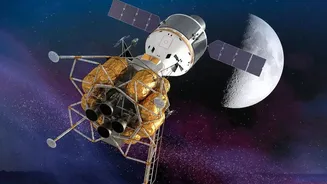

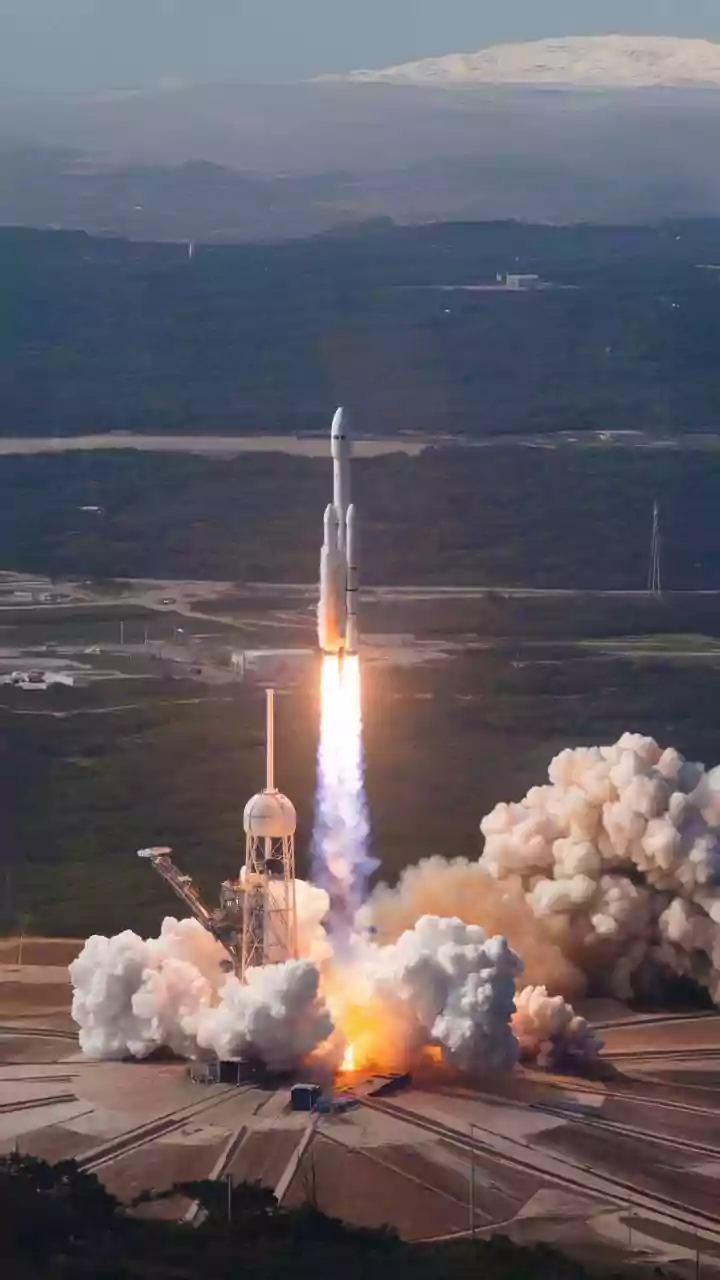




Paving the Way for a Lunar Outpost
Before astronauts can live and work on the Moon, NASA needs to answer critical questions about the environment. Under the Artemis program, the agency plans to establish a permanent 'Moon Base' at the lunar South Pole, and the first step is reconnaissance.
Through its Commercial Lunar Payload Services (CLPS) initiative, NASA partners with private American companies to deliver suites of scientific instruments to the lunar surface. These robotic missions are designed to gather essential data that will inform everything from where to build habitats to what resources astronauts can use to survive. Recently, NASA selected three new sets of investigations through its PRISM program specifically to address the biggest challenges of long-term settlement. These instruments are humanity's advance team, scouting the terrain for the first off-world outpost.
Hunting for Water and Safe Ground
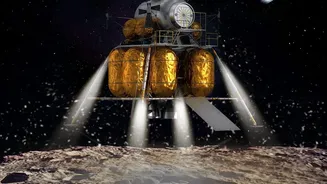
One of the most crucial resources for a future Moon base is water ice, which can be processed into drinking water and breathable oxygen, or split into hydrogen and oxygen for rocket propellant. The Depth Imager with Spectral and Color Optics (DISCO) payload is designed to get the first on-the-ground look at ice hidden in permanently shadowed micro-cold traps. Understanding exactly where this ice is and how much exists is a primary goal for enabling 'in-situ resource utilization'—the practice of living off the land. DISCO will also study the stability of the lunar soil, or regolith, and analyze how it's disturbed by the force of a rocket's exhaust during landing. This data is vital for designing safe landing pads and infrastructure that won't be damaged or create hazards during future missions.
Searching for Natural Shelters
The lunar surface is an incredibly harsh environment. With virtually no atmosphere, it is exposed to extreme temperature swings, constant radiation from deep space, and strikes from micrometeoroids. Finding natural protection is a top priority. The Geophysical Investigation for Mapping Lunar Interior (GIMLI) investigation will explore a feature called the Marius Hills pit, a large hole in the lunar surface that could be a 'skylight' into an underground lava tube. These subterranean caverns, formed by ancient volcanic activity, could provide ready-made shelters for future astronauts, protecting them from radiation and meteorite impacts far more effectively than any surface habitat. GIMLI will use geophysical instruments to map the subsurface structure and determine if the pit leads to an extended cave system, potentially identifying a prime location for a future base.
Monitoring a Dangerous Environment
To live on the Moon, astronauts must understand its daily hazards. The Lunar Environment Monitoring Station – South Pole (LEMS-SP) will act as a long-duration weather station for the Moon. This autonomous suite of instruments will use a seismometer to detect 'moonquakes' and track the frequency of micrometeoroid impacts, providing crucial data for designing habitats and equipment that can withstand the local conditions. LEMS-SP will also monitor the behavior of volatiles—elements and compounds like water that can easily turn to gas—in the Moon's thin atmosphere. This helps scientists understand the lunar water cycle and assesses potential resources. Unlike the seismic stations left by Apollo astronauts, which were powered by radioisotope heaters, LEMS-SP will use advanced insulation and solar power to survive the two-week-long lunar night, enabling long-term monitoring essential for crew safety.