






A Future-Ready Handloom Sector
The push to modernise India's traditional industries is not new. For the handloom sector, which supports over 3.5 million weavers and allied workers, the promise of technology is alluring. It suggests higher productivity, better incomes, and greater competitiveness
against the relentless pace of power looms and fast fashion. It is within this context that the Indian Institute of Technology (IIT) Delhi, in collaboration with the Ministry of Textiles, inaugurated a Centre of Excellence for Handloom Technology on August 3, 2026. The stated goal is to create a future-ready ecosystem by integrating cutting-edge research, innovation, and digital technologies with India's rich weaving heritage. However, the Centre’s core message is not simply to embrace all technology, but to do so with caution and intelligence.
The Core Concern: Modernise, Don't Replace
The main takeaway from IIT Delhi's new initiative is a call for 'appropriate modernisation'. The key concern is how to upgrade the sector while preserving the very essence of what makes handloom special: its handcrafted identity. Officials and academics connected to the project have been clear that the goal is to use technology to assist the weaver, not to automate them out of existence. Professor Deepti Gupta of IIT Delhi noted that the Centre will focus on enabling greater standardisation and productivity while preserving the uniqueness of handcrafted textiles. This is the central challenge: to increase efficiency and reduce the physical toil on weavers without sacrificing the subtle imperfections and artistic value that differentiate a handwoven fabric from a machine-made one. The vision is to strengthen the sector for the future without it losing its traditional identity.
Beyond the Loom Itself
IIT Delhi's approach shows that true modernisation is about more than just faster looms. The Centre’s research focus is broad, covering ergonomics to make weaving more comfortable, artificial intelligence to aid in design and traceability, and developing sustainable practices. Five flagship initiatives were launched alongside the Centre, including a mobile app to monitor loom productivity and sustainability, a digital learning platform, and an accelerator for handloom-focused startups. These tools aim to empower weavers across the entire value chain, from accessing better raw materials to reaching global customers directly through e-commerce portals. This holistic view suggests that a weaver's livelihood can be improved just as much by better market access and digital tools as by a mechanical upgrade to their loom.
The Slippery Slope to Power Looms
A key, unspoken concern in any discussion of handloom modernisation is the danger of inadvertently turning a handloom into a power loom. The distinction is critical. Handloom products are protected under the Handlooms (Reservation of Articles for Production) Act, and their value lies in the human skill required to create them. Power looms, by contrast, are mechanized and produce textiles at a fraction of the cost and time, posing the single biggest competitive threat to the handloom industry. By adding too much automation, a 'modernised handloom' risks losing its legal definition and, more importantly, its market cachet. The challenge that IIT Delhi is tackling is how to introduce technology that reduces drudgery—for instance, in setting up the warp or in creating complex jacquard patterns—without replacing the weaver's direct control over the weft and the creation of the fabric itself.
Weaving a Balanced Future
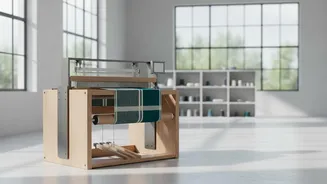
The establishment of the Centre of Excellence is a clear signal that the future of handloom is not a nostalgic retreat from technology, but a strategic embrace of it. The initiative aims to develop solutions that respect the artisan's skill and the fabric's heritage. This could mean AI-enabled tools that help weavers translate complex traditional designs, or digital systems that guarantee a product's authenticity to a global buyer. It involves developing improved loom technologies that are ergonomic and efficient but still fundamentally hand-operated. By focusing on innovation that supports, rather than replaces, human craftsmanship, the Centre aims to build a robust ecosystem that empowers weavers, enhances productivity, and secures the sector's place in the modern global marketplace.