


Why Your Pepper Might Not Be Pure
The primary reason for black pepper adulteration is simple economics. To increase the volume and weight of a batch, some suppliers mix in cheaper substances that look similar to whole peppercorns. This fraudulent practice boosts profits but compromises
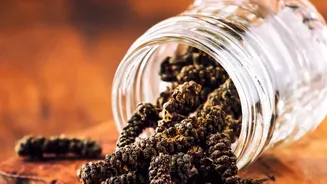
the quality, flavour, and safety of the spice that ends up in your home. Common adulterants include dried papaya seeds, which look strikingly similar to pepper, 'light berries' which are underdeveloped peppercorns without the flavourful core, and mineral oil, which is used to give a shiny, appealing look to low-quality peppercorns. While some of these might seem harmless, others can pose health risks. Fortunately, you don't need a science lab to become a smarter consumer.
The Water Test: Spotting Papaya Seeds
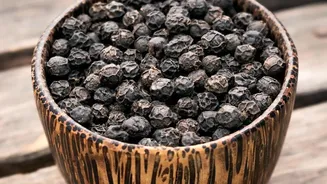
One of the most common adulterants, dried papaya seeds, can be easily identified with a glass of water. This simple test, recommended by the Food Safety and Standards Authority of India (FSSAI), is highly effective. Just drop a spoonful of your whole black pepper into a clear glass of water. Stir it gently and observe. Pure, dense black peppercorns will sink to the bottom of the glass. However, papaya seeds and other light impurities, like hollow or immature peppercorns, are less dense and will float on the surface. If you see a significant number of 'berries' floating, your pepper is likely adulterated.
A Closer Look: Visual and Texture Clues
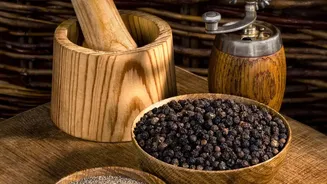
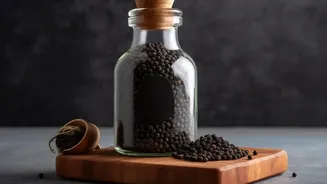
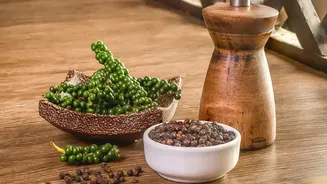
Your senses are powerful tools in detecting adulteration. Start by examining the peppercorns closely, preferably on a white plate to see them clearly. Genuine black pepper has a uniformly dark brown or black colour with a distinctly wrinkled surface. Papaya seeds, on the other hand, are often more oval-shaped, shrunken, and have a smoother surface that can appear greenish-brown or blackish. Next, use your fingers. Try pressing a few peppercorns firmly. A pure, mature peppercorn is hard and will not break easily. Adulterants like papaya seeds or light, hollow peppercorns are softer and will crumble or crush with gentle pressure.
The Rub Test: Detecting Mineral Oil
Sometimes, peppercorns are coated with mineral oil to make them appear shiny and of a higher quality. While small amounts of food-grade mineral oil may be permitted in some contexts, non-food-grade oil can be harmful and lead to digestive issues. To check for this, take a few peppercorns in your palm and rub them vigorously. You can also rub them on a piece of white paper. If your hands feel greasy or the paper develops a slight oily stain, the pepper may be coated. Another tell-tale sign is the smell; pepper coated with mineral oil may have a faint kerosene-like or chemical odour instead of the sharp, pungent aroma of pure pepper.
Aroma and Buying Smart
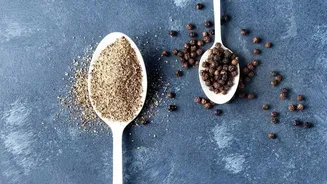
The final and most enjoyable test is the smell. Crush a single peppercorn between your fingers or with a spoon. Pure black pepper will release a strong, sharp, and spicy aroma instantly due to its piperine content. If the smell is weak, musty, or non-existent, the pepper is likely old or of poor quality. To minimise the risk of buying adulterated spices, it is always best to buy whole peppercorns rather than pre-ground powder, which can easily hide fillers like sawdust. Whenever possible, purchase spices from trusted brands and check for FSSAI certification and clear packaging dates on the label.