


More Than Just Muddy Floors
While no one enjoys muddy paw prints on their tiles, the biggest reason to clean your dog’s paws is to protect them from invisible threats. Monsoon puddles aren't just water; they are a cocktail of contaminants. Stagnant water is a breeding ground for
dangerous bacteria, most notably Leptospira, which can cause leptospirosis—a serious and potentially fatal disease for dogs that can also be transmitted to humans. Fungal spores also thrive in damp conditions, and moisture trapped between your dog’s paw pads can lead to painful yeast infections or pododermatitis. Beyond germs, these puddles can hide sharp objects like glass shards or metal, as well as chemical runoff from roads, including oils and pesticides. These substances can cause chemical burns or irritation. A thorough cleaning allows you to wash away these hazards and inspect their paws for any cuts or injuries that might have occurred during the walk.
The Right Way to Clean Paws
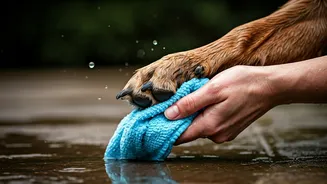
A proper paw-cleaning routine doesn't need to be complicated, but it does need to be consistent. The key is to be gentle and thorough. First, set up a dedicated cleaning station near your door with a towel, a basin of lukewarm water, and a soft cloth. When your dog comes inside, have them sit and wait. One by one, dip each paw into the water, gently swishing it around to loosen dirt and debris. Use your fingers to carefully clean between the pads and around the nails, as this is where mud and moisture love to hide. After washing, the most critical step is drying. Use a clean, dry towel to pat the paw completely dry, paying extra attention to the areas between the toes. Trapped moisture is a primary cause of fungal and bacterial infections, so simply wiping the paws is not enough. They must be thoroughly dried to prevent skin issues from developing.
What to Use (And What to Avoid)
When it comes to cleaning products, simple is usually best. For most daily cleans, lukewarm water is perfectly sufficient. If your dog’s paws are particularly filthy, you can use a gentle, pet-specific shampoo or a paw cleaning solution. These are formulated to match a dog’s skin pH and won't cause irritation. A microfibre cloth can also be very effective at trapping dirt, even with just water. However, it is crucial to know what to avoid. Never use human soaps, hand sanitisers, or harsh antiseptic liquids like Dettol or Savlon on your dog’s paws. These products contain chemicals that can be toxic if licked and can strip the natural oils from their skin, leading to dryness, cracking, and irritation. Alcohol-based products are particularly drying and can be painful if your dog has any small cuts. Stick to products made for pets or just plain water to keep them safe.
Don't Forget to Check and Trim
Your daily paw-cleaning ritual is the perfect opportunity for a quick health check. As you clean and dry each paw, take a moment to inspect it closely. Look for any redness, swelling, cracks, or blisters on the pads. Check for any cuts, thorns, or embedded debris. Gently press on the pads to see if your dog shows any signs of pain or discomfort. This regular check can help you catch minor problems before they become serious infections. Additionally, keeping the fur between the paw pads trimmed short can make cleaning easier and prevent it from trapping mud and moisture. Similarly, keeping your dog's nails at a sensible length prevents them from collecting excess dirt and reduces the risk of painful breakage on wet, slippery surfaces. This holistic approach to paw care ensures your dog stays comfortable and healthy throughout the rainy season.