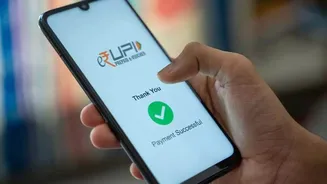




First things first: Will I be charged for my UPI payments?
No. For the vast majority of users, nothing changes. The National Payments Corporation of India (NPCI) and the Finance Ministry have been clear: consumers will not pay any fee for making UPI payments. Sending money to friends or family (peer-to-person
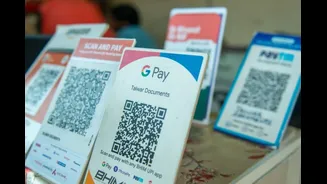
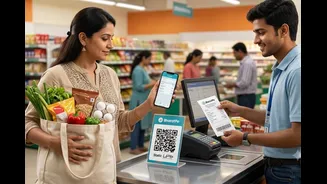
or P2P) remains completely free, regardless of the amount. Similarly, when you scan a QR code at a local shop to pay from your bank account, you will not be charged anything extra. The price you see is the price you pay.
So, what is this new fee?
The new charge is called a Merchant Discount Rate (MDR). It's a fee that applies only to merchants—the businesses you pay—not customers. This MDR is set at 0.4% and will only be levied on person-to-merchant (P2M) UPI transactions that are above ₹2,000. For example, if a merchant receives a payment of ₹3,000, they would incur a fee of ₹12. For very large transactions of ₹75,000 or more, the fee is capped at a maximum of ₹300.
Which merchants are affected?
This fee is not for everyone. The government has stated that the vast majority of merchants will not be affected. Specifically, small vendors who receive up to ₹1 lakh per month through UPI QR code payments are exempt from this MDR. Transactions of any amount up to ₹2,000 are also completely exempt for all merchants. The new charge is designed to apply to larger, established businesses for higher-value transactions, which according to government analysis, only make up a small fraction of total UPI merchant payments.
Does this apply to wallet payments too?
The rules can get a bit more specific when it comes to payments made from a prepaid wallet (a Prepaid Payment Instrument or PPI) instead of directly from a bank account. For a while, there has been a separate 'interchange fee' for merchants on PPI-based UPI transactions over ₹2,000, which can range from 0.5% to 1.1%. This interchange fee is also a merchant-side cost and is not paid by the customer. The key takeaway remains the same for users: whether you pay from your bank account or a wallet, you are not the one paying these transaction fees.
Why is this fee being introduced?
For years, UPI has operated on a zero-MDR framework to encourage widespread adoption. This strategy was incredibly successful, making UPI India's leading digital payment method. However, running the complex, secure infrastructure behind UPI costs money. Banks and payment service providers who process millions of transactions per second need a sustainable revenue model. The government and NPCI have introduced this tiered MDR structure to ensure the long-term health, security, and innovation of the UPI ecosystem without burdening consumers or small businesses.