





What Are These New Contracts?
On July 8, 2026, NASA announced it had selected seven companies for its new Science Transport and Robotic Innovation for Deployment and Exploration (STRIDE) initiative. With a total potential value of around $17 million, these contracts task the companies with
developing concepts for advanced mobility on Mars. The awardees are a mix of established aerospace players and innovative robotics firms: AeroVironment, Astrobotic, Venturi Astrolab, Ground Control Robotics, Honeybee Robotics, Intuitive Machines, and MEI Technologies. Their goal is to design systems that can go farther and access scientifically valuable regions that are currently out of reach for rovers like Curiosity and Perseverance. Work is expected to kick off in the fall of 2026.
Why Do We Need New Robots?
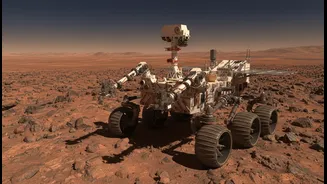
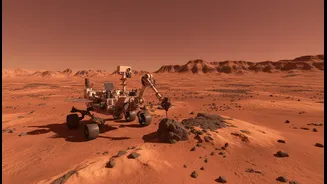
NASA's Mars rovers have been monumental successes, but they have their limits. The first generation of rovers, like Sojourner, Spirit, and Opportunity, struggled with challenges like getting stuck in Martian sand and dealing with dust storms that block their solar panels. Even the more advanced, nuclear-powered rovers like Curiosity and Perseverance are constrained by terrain. They are remarkable geologists, but they are cautious drivers by necessity. Certain scientifically fascinating areas—the steep sides of craters, rocky fields, or regions with intriguing geological formations—are simply too dangerous or inaccessible for our current technology. To make the next leap in discovery, NASA needs explorers that aren't bound by the same old roads.
What Does 'Difficult Terrain' Mean on Mars?
Mars isn't a smooth, red billiard ball. It’s a world of extreme geography. 'Difficult terrain' can mean many things: slopes steeper than our rovers can safely climb, fields of sharp rocks that could damage wheels, or deep, loose sand that acts like a trap. The planet's thin atmosphere also presents a huge challenge for landing. It’s just thick enough to create intense friction and heat during entry, but too thin to slow a heavy lander down with parachutes alone. This has historically limited landing sites to lower, flatter elevations. The STRIDE contracts are pushing for designs that can overcome these obstacles, potentially opening up more than half of the planet's surface that has so far been off-limits.
Are We Talking Just Rovers?
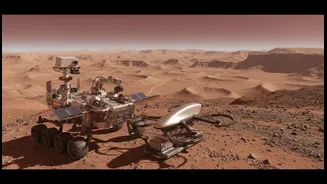
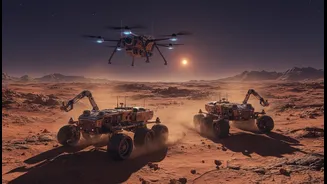
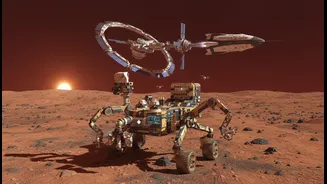
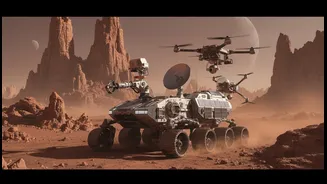
No, and that’s one of the most exciting aspects of this initiative. The success of the Ingenuity helicopter, which hitched a ride to Mars with the Perseverance rover, proved that aerial exploration is possible. The STRIDE initiative is explicitly seeking proposals for both surface and aerial mobility systems. This could mean swarms of smaller, cooperative rovers that can spread out to map an area, as NASA has tested in concepts like CADRE. It could also mean more advanced, science-equipped drones. It's notable that AeroVironment, the company that built Ingenuity, is one of the seven contract recipients, suggesting NASA is serious about taking flight on Mars to the next level.
What Is the Ultimate Goal?
These contracts are about more than just cool robots; they are foundational to NASA's entire long-term vision for exploring the solar system. By developing more capable and autonomous robots, the agency can conduct more ambitious scientific investigations, such as searching for signs of past life in hard-to-reach ancient riverbeds or canyons. These technologies are also crucial for the ambitious Mars Sample Return mission, which will require a new level of robotic precision and capability. Ultimately, everything NASA learns from these robotic missions serves a dual purpose. It not only delivers groundbreaking science but also paves the way for eventual human exploration. The same technologies that allow a robot to navigate a treacherous Martian cliff could one day help guide the first human habitat to a safe landing spot.