





The Powerhouse of Mahendragiri
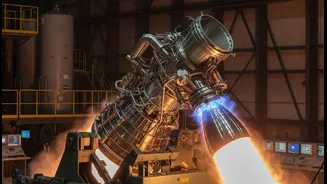
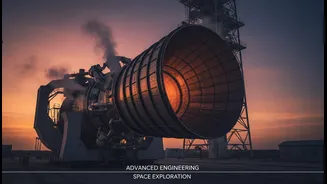
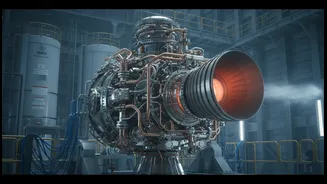
When we talk about 'Mahendragiri' in the context of India's space programme, we're referring to the ISRO Propulsion Complex (IPRC) in Tamil Nadu. It's the nerve centre where ISRO assembles, tests, and qualifies the powerful engines that lift our rockets
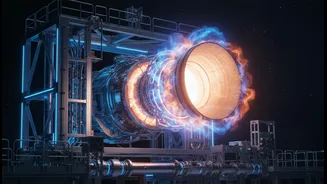
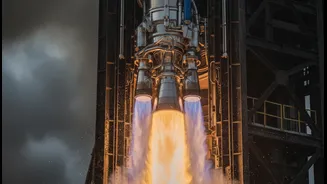
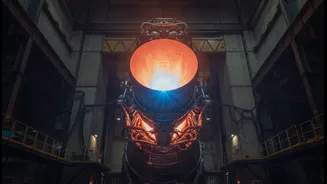
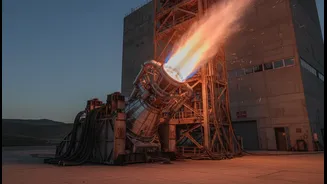
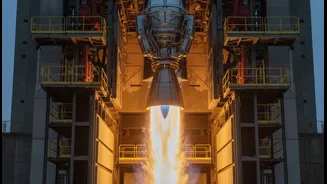
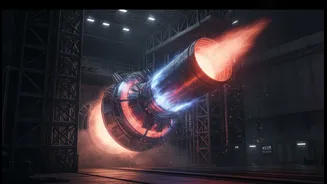
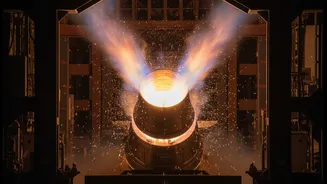
into space. Recently, this facility has been buzzing with activity focused on a game-changing piece of technology: a new semi-cryogenic engine. In a major milestone on June 24, 2026, ISRO successfully conducted a hot test of this engine's core components, achieving a massive 175 tonnes of thrust. This test demonstrated that the engine, officially known as the SE2000, is on the right track to achieving its full target of 200 tonnes of thrust. It is the powerhouse that will fuel India’s next leap in space.
Why More Thrust Matters
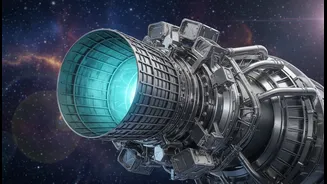
In rocketry, thrust is the force that pushes the launch vehicle upwards, fighting against gravity. Having more thrust is like upgrading your car’s engine; it allows you to carry a heavier load or get to your destination more efficiently. For ISRO, developing a higher-thrust engine is critical. It's the key to launching heavier satellites, more complex scientific instruments, and eventually, the building blocks of a future Indian space station. The new SE2000 engine uses a combination of refined kerosene and liquid oxygen. This semi-cryogenic fuel is more powerful, cleaner, and easier to handle than the propellants used in some of ISRO's older liquid stages, marking a significant technological advancement.
Upgrading the 'Bahubali' Rocket
The primary beneficiary of this new engine will be India's mightiest rocket, the Launch Vehicle Mark-3 (LVM3). Often nicknamed 'Bahubali' for its heavy-lifting capacity, the LVM3 is the vehicle behind the Chandrayaan missions and is designated for the Gaganyaan human spaceflight programme. The new semi-cryogenic engine will power a new core stage, the SC120, which is set to replace the LVM3’s current L110 liquid stage. This is a fundamental upgrade that will transform the rocket's performance. In parallel, ISRO is also enhancing the rocket's upper stage, moving from the C25 to the more powerful C32 cryogenic stage, which itself allows for more propellant and thrust. Together, these upgrades will create a far more capable LVM3.
Heavier Payloads, Bigger Missions
So, what does this increased power actually enable? The immediate impact is on payload capacity. The upgraded LVM3 will be able to lift heavier communication satellites into Geostationary Transfer Orbit (GTO). The goal is to boost the capacity from the current 4 tonnes to over 5 tonnes, and potentially as high as 7.5 tonnes in the future. This means India will no longer have to rely on foreign launch providers for its heaviest satellites, ensuring complete self-reliance and saving foreign exchange. This capability also directly supports the Gaganyaan mission, as it provides the muscle needed to launch the orbital module and crew into space. Beyond that, it opens the door to heavier interplanetary probes and more ambitious deep-space science missions.
A New Era for Indian Spaceflight
The development at Mahendragiri isn't just about a single engine; it's about a strategic leap forward for India's role in space. By mastering high-thrust semi-cryogenic technology, ISRO is positioning India as a more formidable player in the global commercial launch market. A more powerful LVM3 makes ISRO more competitive, capable of offering launches for a wider range of international satellites. This technological self-sufficiency is a cornerstone of a modern space programme, ensuring India can pursue its scientific, commercial, and strategic goals without external dependencies. The successful tests of the SE2000 engine are not just engineering achievements; they are the rumblings of a new, more powerful era for Indian spaceflight.