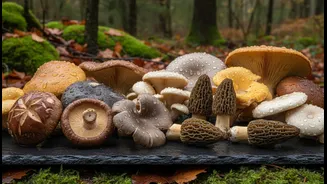

The Monsoon’s Wild Harvest
When the rains arrive, particularly along the Western Ghats, a culinary tradition awakens. Local communities begin foraging for wild mushrooms, a delicacy that cannot be farmed. The most celebrated among these is the 'Roen Olmi', a species of Termitomyces
that grows exclusively on termite hills in Goa and the Konkan coast. Foragers with generational knowledge know exactly when and where to find these mushrooms, which are believed to sprout after heavy rains and thunderstorms. Known for their meaty texture and robust, earthy flavour, these fungi are a fleeting seasonal treat. They are central to regional monsoon cuisine, often becoming the star ingredient in rich, coconut-based curries like Xacuti. This tradition connects food to the forest floor, offering a taste that is intrinsically tied to the local ecosystem and the arrival of the rains.
An Essential Word of Caution
The allure of foraging is strong, but it comes with a critical warning. Many poisonous wild mushrooms bear a striking resemblance to edible ones, and telling them apart requires expert knowledge passed down through generations. Mistaking a toxic variety for a delicacy can have severe health consequences. Foraging is not a casual activity; it's a skill honed over years of experience. Unless you are with a trusted local expert who can definitively identify every single mushroom, it is safest to admire wild fungi from a distance. For consumption, always purchase from reputable local sellers who are known experts in their communities.
The Rise of the Cultivated Gourmet
Parallel to the tradition of wild foraging, another mushroom trend is thriving in urban India: the move towards cultivated gourmet varieties. While button mushrooms have long dominated the market, consumers are now actively seeking out options like oyster and shiitake mushrooms. This shift is driven by a growing awareness of their health benefits and a desire for more diverse culinary experiences. Oyster mushrooms, in particular, are becoming incredibly popular. They are relatively easy to cultivate in India's climate, making them a profitable crop for small-scale farmers and entrepreneurs. This has made them more accessible in city markets, allowing home cooks to experiment with flavours and textures that were once reserved for high-end restaurants.
A Nutritional Powerhouse
The growing interest in mushrooms isn't just about taste; it's also about health. Fungi are nutritional powerhouses, and different varieties offer unique benefits. Oyster mushrooms are celebrated for being a great source of protein, fibre, and essential minerals while being low in calories. They also contain compounds that are believed to support immune function. Shiitake mushrooms, a staple in many Asian cuisines, are packed with B vitamins and compounds that may help heart health. As more people look for plant-based sources of protein and nutrients, mushrooms are emerging as a versatile and satisfying choice that aligns perfectly with a wellness-focused lifestyle.
From Farm to Flavour
So, how can you embrace this trend? For those lucky enough to find authentic wild 'Olmi', the traditional Goan preparations are a must-try. For the more widely available cultivated varieties, the options are endless. Oyster mushrooms have a delicate flavour and a tender texture that makes them perfect for a simple stir-fry with garlic and herbs. Their meaty quality also makes them an excellent substitute in dishes that would typically use chicken or mutton. Shiitake mushrooms, with their richer, umami-packed flavour, add depth to brothy soups, noodles, and risotto. They can be sautéed until their edges are crisp or simmered into a hearty gravy. Experimenting with these fungi is a simple way to elevate everyday meals this monsoon.