




Decoding the New Space FDI Policy
In a landmark decision effective from April 2024, the Indian government significantly reformed its FDI policy for the space sector, moving away from a restrictive, government-approval-only system. The new framework creates a tiered system with more liberal
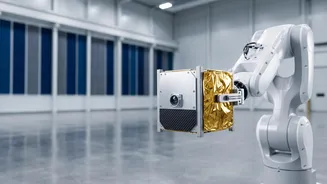
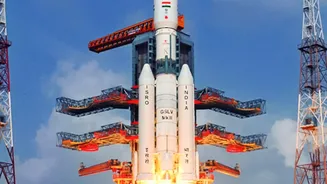
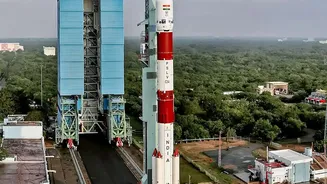
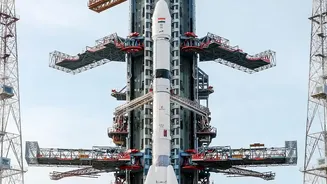
'automatic' entry routes, designed to attract global investors. For companies manufacturing components and subsystems for satellites and ground segments, the policy allows 100% FDI through the automatic route, offering maximum flexibility. For more complex activities like manufacturing and operating entire satellites, up to 74% FDI is permitted automatically, with investments beyond that threshold requiring government approval. The most sensitive area, concerning launch vehicles and the creation of spaceports, now allows for up to 49% FDI via the automatic route. This structured liberalization is a clear signal that India is serious about integrating its private space industry into the global market.
Why Foreign Capital is Crucial
Space technology is an inherently capital-intensive industry. Startups face long and expensive research and development cycles, high infrastructure costs for testing and manufacturing, and significant financial risks. Many promising Indian space-tech ventures have struggled to secure the large, late-stage funding required to scale their operations and compete globally. While early-stage funding has seen a surge, domestic venture capital often hesitates at the larger cheque sizes needed for growth-stage companies with long gestation periods of seven to ten years. The new FDI policy directly addresses this funding gap. By welcoming foreign investment, Indian startups gain access not only to much-needed capital but also to global expertise, advanced technologies, and established international markets. This infusion is expected to help companies accelerate development, build robust infrastructure, and de-risk their path to commercial viability.
A Galaxy of Opportunity for Startups
India is now home to over 400 space-tech startups, creating a vibrant ecosystem that spans launch systems, satellite manufacturing, propulsion, and data analytics. Companies like Skyroot Aerospace and Agnikul Cosmos, which focus on building private launch vehicles, stand to benefit from the clearer investment path, even with the 49% cap. Others specializing in satellite manufacturing and operations, a sector now open to 74% automatic FDI, can attract significant strategic partners. The biggest immediate beneficiaries might be the numerous startups in the components and subsystems space, who can now seek 100% foreign ownership. This policy change aims to help these private players capture a larger slice of the global space economy, which is projected to grow substantially. India’s space economy is currently valued at around US$9 billion and is forecast to reach over US$40 billion by the next decade, and this policy is designed to accelerate that growth.
Navigating the Final Frontier
Despite the optimism, challenges remain on the launchpad. The absence of a comprehensive national space law creates a degree of regulatory uncertainty for companies regarding licensing, liability, and operational rules. While IN-SPACe (Indian National Space Promotion and Authorization Center) acts as the single-window agency, navigating approvals from multiple government departments can still be complex. Furthermore, Indian startups face intense competition from established global giants like SpaceX. Another significant hurdle is bridging technology gaps and reducing dependence on imported high-tech components, such as space-qualified solar cells. Attracting and retaining experienced talent in highly specialized fields like propulsion and avionics is also a critical challenge that capital alone cannot solve. The government's continued focus on creating a supportive regulatory environment, including the potential for a single-window clearance system, will be crucial for the policy's success.