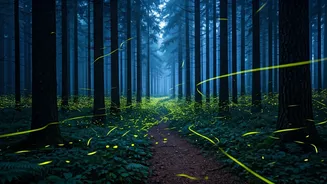






The Forest After Dark
For many, the jungle is a daytime destination—a world of sun-dappled trails and the distant calls of birds. A night safari, however, flips that script entirely. It’s an immersion into a sensory landscape dominated by sound and shadow. Headlights cut through
the inky blackness, revealing eyes that glitter in the dark: a civet cat crossing the path, a sambar deer frozen in the beam, or the astonishing sight of a slow loris clinging to a branch. The air, cool and heavy with the scent of damp earth and night-blooming jasmine, carries different sounds—the chirping of crickets, the hoot of an owl, and the rustle of unseen creatures in the undergrowth. It is this promise of encountering elusive nocturnal wildlife, from porcupines and jungle cats to the occasional leopard, that makes the experience so profoundly different and deeply compelling.
What's Behind the Sudden Surge?
While official, consolidated data on a "massive spike" is still emerging from state forest departments, tour operators and local guides across Kerala, Tamil Nadu, and Karnataka confirm a significant uptick in inquiries and bookings. Several factors appear to be fuelling this demand. Firstly, there's the post-pandemic craving for unique, experiential travel that goes beyond typical sightseeing. Travellers are actively seeking out novel adventures that feel both authentic and thrilling. Secondly, social media plays a huge role. A single viral video of a Malabar giant squirrel at dusk or a glowing frog can trigger a wave of interest. Finally, as more travellers become seasoned safari-goers, the night safari represents a new frontier—a way to experience a familiar landscape in an entirely new light and see animals that are impossible to spot during the day.
Where the Wild Things Are at Night
The Western Ghats offer several designated areas where controlled night safaris are conducted, often led by the forest department or certified eco-tourism groups. In Kerala, regions around the Parambikulam Tiger Reserve and Chinnar Wildlife Sanctuary are popular for their guided nocturnal tours. Similarly, the Anamalai Tiger Reserve in Tamil Nadu, particularly around Top Slip, offers organised vehicle safaris after dark. In Karnataka, private estates bordering the dense forests of Coorg and Chikmagalur sometimes provide jeep safaris on their periphery roads, offering glimpses of wildlife activity. It's crucial to note that these are not unrestricted drives; they are confined to specific buffer zones and non-core forest roads to minimise disturbance.
The Rules of the Night
Venturing into the forest at night comes with strict rules designed to protect both wildlife and visitors. These are not joyrides. Most official safaris are conducted in designated vehicles with trained guides and trackers. The use of powerful flashlights is limited, and flash photography is strictly forbidden as it can startle, disorient, or even temporarily blind the animals. Maintaining silence is paramount; loud conversations and music are obvious no-gos. The goal is to be a passive observer, not an intruder. These regulations are essential for ensuring that the safaris are low-impact and that the animals' natural behaviours are not disrupted. Choosing an operator who strictly adheres to these forest department guidelines is the first step towards a responsible trip.
A Delicate Balance: Tourism and Conservation
The growing popularity of night safaris presents a classic conservation dilemma. On one hand, well-managed ecotourism can be a force for good. The revenue generated can fund anti-poaching patrols, habitat restoration, and research. It also provides livelihoods for local communities, turning them into stakeholders in the preservation of their natural heritage. On the other hand, an unregulated boom can be disastrous. Too many vehicles, excessive light, and noise can cause immense stress to nocturnal species, altering their feeding and breeding patterns. It can push shy animals deeper into the forest and away from vital resources. The key lies in sustainability—finding the sweet spot where tourism supports conservation without overwhelming it.