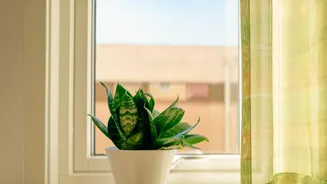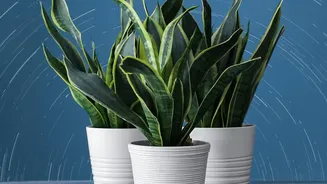





We all love the idea of a lush indoor jungle doubling as a natural air filter. But when the Air Quality Index (AQI) is poor, relying on your snake plant to clean the air is a myth that needs busting. So, what's the truth about houseplants?
The Myth's Green Roots
The belief that
houseplants can purify indoor air largely stems from a landmark 1989 NASA study. Researchers, looking for ways to clean the air in sealed space stations, found that common houseplants could remove volatile organic compounds (VOCs) like benzene and formaldehyde from small, airtight chambers. This exciting finding was widely publicised, leading to the popular idea that placing a few plants around your home could scrub the air clean. Over the years, this has become a go-to tip for creating a healthier indoor environment, with specific plants like peace lilies and spider plants gaining fame as 'air-purifying' heroes. The concept is appealing: a simple, beautiful, and natural solution to a modern problem. The problem, however, is that our homes are nothing like a sealed NASA chamber.
A Reality Check from Science
While the NASA study was scientifically sound for its specific context, its findings don't translate well to a typical house or apartment. Subsequent research reviews have put the original findings into perspective. A 2019 meta-analysis concluded that the natural ventilation of a building does far more to remove VOCs than plants do. To achieve the same air-cleaning rate as a building's standard air exchange—or the work of a decent air purifier—you would need an impossibly large number of plants. Estimates suggest anywhere from 10 to 1,000 plants per square metre of floor space would be required to make a significant difference. For an average 1,500-square-foot home, that could mean deploying over 680 plants. In short, while your plants might make you feel good, they have a negligible effect on removing indoor air pollutants in a real-world setting.
What Actually Works: Source Control
The most effective way to improve indoor air quality is to eliminate or reduce pollutants at their source. Many everyday items release VOCs, which can cause everything from headaches to respiratory irritation. These include cleaning products, air fresheners, candles, paints, and even some furniture. Opting for low-VOC or zero-VOC products can make a huge difference. Cooking, especially on a gas stove, is another major source of indoor pollutants like PM2.5 and nitrogen dioxide. Always use your kitchen's exhaust fan when you cook and ensure it vents outside. By being mindful of what you bring into your home and how you use it, you can prevent many pollutants from ever entering your air in the first place.
The Power of Proper Ventilation
Ventilation is your next line of defense, as it dilutes and removes stale, polluted indoor air. However, 'smart ventilation' is key, especially when outdoor AQI is poor. On days when the outside air is clean (check a local AQI app), opening windows for even 15–20 minutes can significantly refresh your home's air. But when pollution, smoke, or pollen levels are high, it's crucial to keep windows and doors closed to prevent those outdoor pollutants from coming inside. In these situations, you should rely on your home's mechanical systems. Using exhaust fans in bathrooms and kitchens helps remove moisture and contaminants at their source.
Mechanical Filtration Is Key
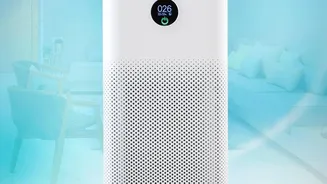
When outdoor air is bad and you need to keep your home sealed, a high–quality air purifier becomes essential. These devices are designed to do what plants cannot:' effectively remove harmful particles from the air.' Look for purifiers with a High–Efficiency Particulate Air (HEPA) filter.' HEPA filters are proven to capture at least 99.97% of airborne particles like dust,' dander,' pollen,' and the dangerous fine particulate matter known as PM2.5,' which can penetrate deep into the lungs.' For removing gaseous pollutants like VOCs and odors from cooking or smoke,' you need a purifier that also includes an activated carbon filter.' Running an air purifier continuously in bedrooms and main living areas can significantly reduce your exposure to indoor pollutants,' especially during high AQI events.