


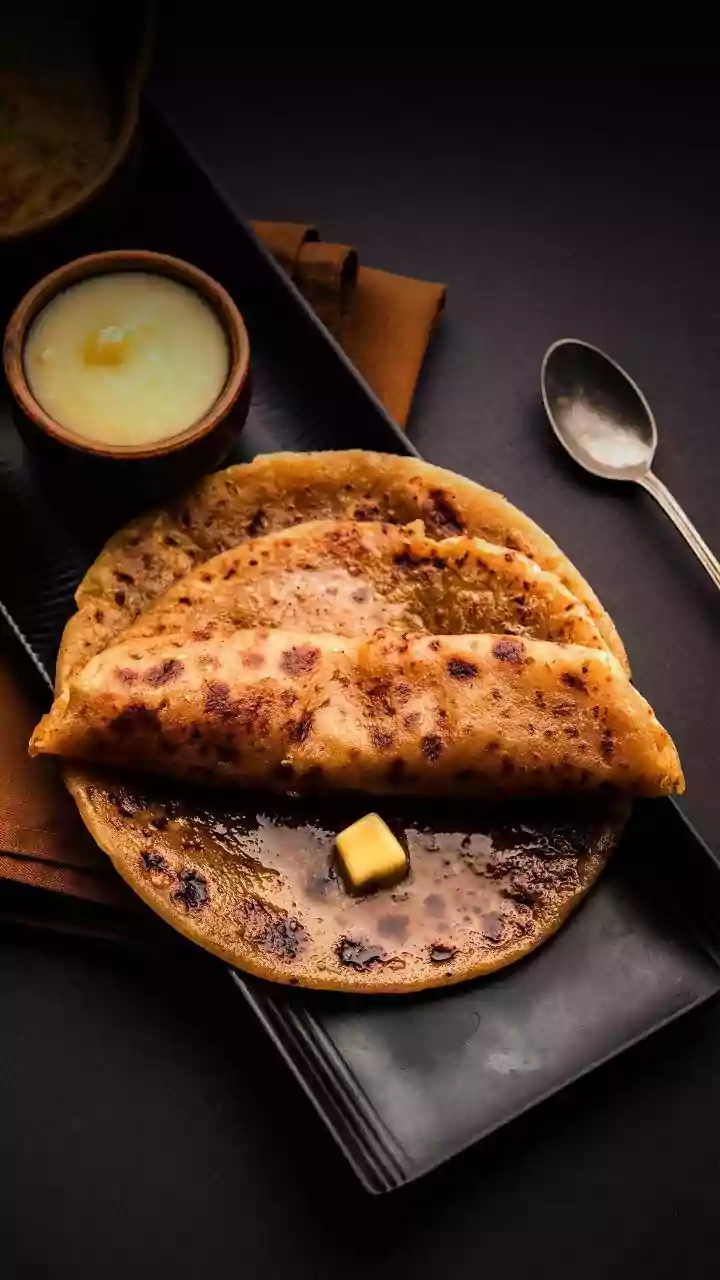


The humble paratha is a staple in Indian households, but what if it could be softer, more nutritious, and brilliantly colourful? Enter the Vegetable Reshmi Paratha, a delightful twist that transforms this everyday flatbread into a culinary star.
What Makes a Paratha ‘Reshmi’?
The secret
to this paratha’s charm lies in its name. ‘Reshmi’ translates to ‘silky’ in Hindi, and that’s the exact texture this flatbread aims for. Unlike conventional parathas that are kneaded with water, the dough for a Reshmi Paratha is prepared using milk or yogurt. This simple substitution works wonders, creating a dough that is incredibly soft and pliable. The fats and proteins in the dairy tenderise the gluten in the wheat flour, resulting in a paratha that is melt-in-the-mouth soft. This signature silkiness not only makes it a pleasure to eat but also ensures it stays soft for hours, making it an excellent choice for tiffins and travel.
The Magic of Colourful Purees
The innovation of the Vegetable Reshmi Paratha is the seamless integration of vegetables. The trick is not to use grated or chopped vegetables, which would disrupt the smooth texture. Instead, cooked vegetables are blended into a fine puree before being mixed into the flour. This technique allows you to add a dose of nutrition and a pop of natural colour without compromising on the 'reshmi' quality. Imagine vibrant pink parathas made with beetroot puree, sunny orange ones with carrot, or gorgeous green flatbreads using spinach. This method is a game-changer for parents of fussy eaters, as it cleverly conceals the vegetables while making the meal visually exciting and appealing to children.
Crafting Your Vegetable Reshmi Paratha
Making these parathas is a straightforward process. Start with your chosen vegetable—beetroot, carrot, or spinach are great starting points. Boil or steam the vegetable until tender, then blend it into a smooth puree, using a little water if needed. In a large bowl, combine two cups of whole wheat flour (atta), a pinch of salt, and a teaspoon of ajwain (carom seeds) for flavour and digestion. Add the vegetable puree and a tablespoon of ghee or oil. Now, instead of water, use about half a cup of milk or fresh curd to knead everything into a very soft, supple dough. Let the dough rest for at least 20-30 minutes. Afterwards, divide it into equal-sized balls, roll them into thin circles, and cook on a hot tawa with a smear of ghee or oil until golden brown spots appear on both sides. You will notice they puff up beautifully, a sign of their softness.
Tips for Perfect, Silky Parathas
To ensure your parathas are flawless every time, keep a few things in mind. First, the dough must be exceptionally soft—softer than a typical chapati dough. Don't be shy with the milk or curd. Second, resting the dough is a non-negotiable step; it allows the gluten to relax, making the parathas easier to roll and ensuring a softer end product. When adding spices, keep them minimal to let the vegetable's flavour shine through. A little cumin powder or a pinch of garam masala works well, but avoid anything too overpowering. For variations, try a combination of purees or add finely chopped herbs like coriander or mint to the dough. You can also experiment with other vegetables like pumpkin or sweet potato for a different flavour profile and colour.