

The Building Blocks of Life
To understand the magic of pairing grains and legumes, we first need to talk about proteins. Proteins are essential macronutrients that act as the primary building blocks for everything in your body, from muscles and tissues to hormones and enzymes. These
proteins are constructed from smaller units called amino acids. There are 20 different amino acids that our bodies use, but nine of them are classified as 'essential'. This means our bodies cannot produce them on their own, so we must get them from the food we eat. Think of these nine essential amino acids as critical ingredients in a recipe; if even one is missing, you can’t complete the dish.
The 'Complete Protein' Puzzle
A food source is considered a 'complete protein' when it contains all nine essential amino acids in sufficient quantities. Animal-based foods like meat, fish, eggs, and dairy are generally complete proteins. Many plant-based foods, however, are considered 'incomplete'. This doesn't mean they are bad or lack protein; it simply means they are low in one or more of the essential amino acids. The specific amino acid that is lowest in a food is called its 'limiting amino acid' because it limits the body's ability to build protein from that food source.
The Weak Link in Grains
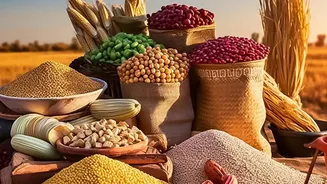
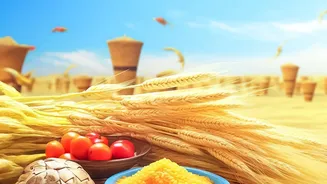
Cereal grains, which form the base of many diets in India and around the world, are nutritional powerhouses. Rice, wheat, corn, and millets provide the carbohydrates we need for energy. While they do contain protein, they are typically deficient in one crucial essential amino acid: lysine. Because lysine is present in such low amounts, it becomes the limiting factor when you consume only grains for your protein. This means even if you eat a large quantity of rice, your body can only build as much protein as the limited amount of lysine allows.
How Legumes Fill the Gap
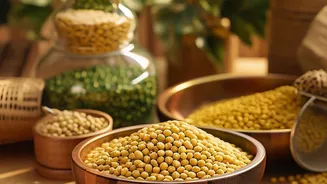
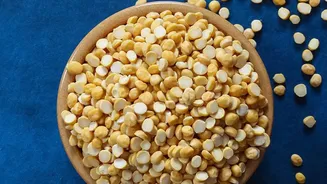
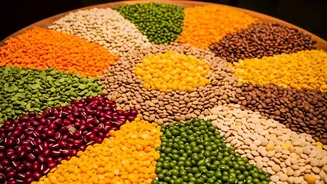
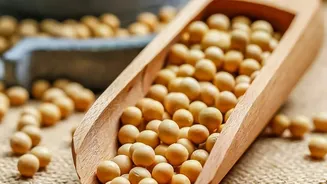
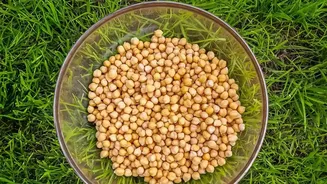
This is where legumes—the family of plants that includes lentils (dal), chickpeas, beans, and peas—come to the rescue. Legumes are celebrated for being rich in plant-based protein and fibre. Conveniently, they are packed with the very amino acid that grains lack: lysine. However, legumes have their own limiting amino acid. They tend to be low in the sulfur-containing amino acids, primarily methionine. So, while a bowl of dal is rich in protein, its total usability is capped by its lower methionine content.
A Perfect Nutritional Partnership
When you pair a cereal grain with a legume, something remarkable happens. The lysine that is abundant in the dal compensates for the lack of lysine in the rice. In turn, the methionine present in the rice makes up for the deficiency in the dal. Together, they create a meal that delivers all nine essential amino acids in the right proportions, effectively forming a complete protein. This concept, known as protein complementation, is why pairings like dal-chawal, rajma-chawal, hummus with pita bread, and rice and beans are nutritional staples across different cultures. They are not just traditional or tasty; they are a scientifically sound method for achieving high-quality protein intake from plant-based sources.
Myth vs. Reality: Mealtime Timing
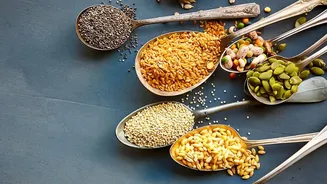
For years, it was believed that complementary proteins had to be eaten in the very same meal to be effective. However, modern nutritional science has updated this view. Your body maintains a 'pool' of amino acids that it can draw from throughout the day. As long as you consume a variety of plant protein sources over the course of a day—grains, legumes, nuts, and seeds—your body can combine them as needed to synthesize complete proteins. That said, eating them together in a meal like dal and rice remains a simple, delicious, and foolproof strategy to ensure you are covering all your amino acid bases, especially for those on a vegetarian or vegan diet.