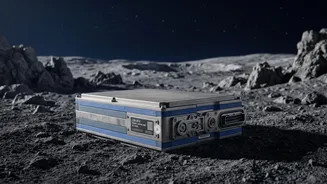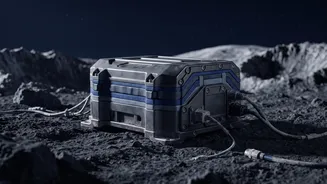



The Challenge of the Lunar Night
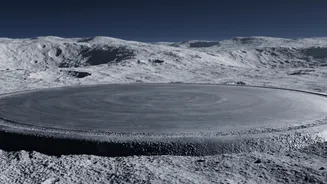
For any sustained presence on the Moon, a daunting obstacle looms: the lunar night. Spanning 14 Earth days, this period of darkness sees temperatures at the lunar south pole, a key target for NASA's Artemis missions, plunge to around minus 200 degrees
Celsius. For technology, this is a death sentence. Conventional lithium-ion batteries, like those in our phones and electric cars, rely on a liquid electrolyte to function. In the extreme lunar cold, this liquid would freeze solid, damaging the battery's internal structure and rendering it useless. In the vacuum of space, the liquid could also evaporate. Until now, the only solution was to equip lunar hardware with bulky and power-hungry heating systems to keep batteries constantly warm, adding significant mass and complexity to missions.
A Solid-State Solution
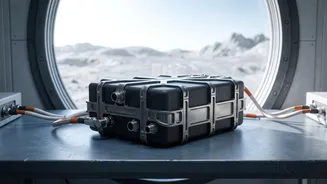
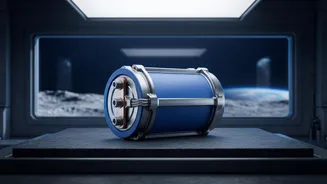
Enter the SPEARS project. The name stands for Solid Power for Extreme Environment Adaptability and Resilience in Space, and it represents a fundamental shift in how we power lunar exploration. Led by researchers at NASA's Glenn Research Center, the project's goal is to replace the problematic liquid in batteries with a solid material, such as a ceramic or polymer. This creates what is known as a solid-state battery. By eliminating the liquid electrolyte, the risk of freezing, evaporation, or even fire is removed. This simple but profound change could unlock a new era of lunar capability, allowing rovers, scientific instruments, and even astronaut life-support systems to function in the harshest environments imaginable.
Survival vs. Operation: The Test Results
Recent tests at NASA's Langley Research Center provided a crucial proof-of-concept. The key finding is best understood as a difference between survival and operation. During thermal vacuum testing, the small, coin-sized prototype cells proved they could survive exposure to a staggering temperature range, from a high of 100 degrees Celsius down to a low of minus 170 degrees Celsius, without suffering any physical damage. However, surviving is not the same as working. The batteries cannot generate power at these extreme lows. The operational tests showed the cells worked well down to minus 60 degrees Celsius and continued to function with reduced performance all the way to minus 80 degrees Celsius—far colder than conventional batteries can handle. This is a critical distinction: the battery can freeze solid without breaking.
The 'Cold-Soak' Advantage
The true genius of the SPEARS technology lies in its ability to 'cold-soak'. Instead of wasting precious energy to keep batteries warm throughout the entire 14-day lunar night, mission planners can simply let the hardware get cold. When the sun returns or when the equipment is needed, small, efficient heaters can quickly warm the solid-state batteries back up to their operational temperature. This strategy dramatically reduces the overall power demand and the weight of thermal management systems. By shedding that mass, NASA can either lower mission costs or pack more scientific instruments onto its landers and rovers, boosting the potential for discovery during Artemis missions.
Powering the Artemis Generation
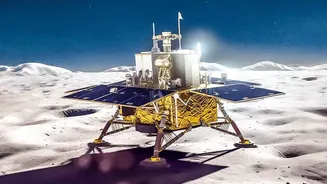
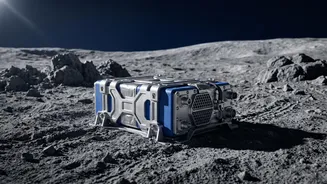
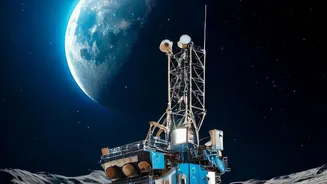
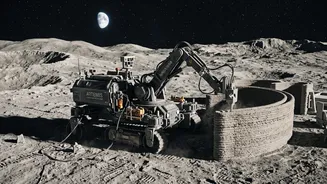
This battery technology is a key enabler for NASA's long-term ambitions on the Moon. It is being developed specifically to support the Artemis campaign, which aims to establish a sustainable human presence on the lunar surface. These durable batteries could power everything from scientific drills exploring permanently shadowed craters to the emergency power packs carried by astronauts. While the technology is still in the prototype phase, it represents a vital step toward building a reliable power grid on another world. This work, combined with related projects like the Vertical Solar Array Technology (VSAT) designed to generate power from the low-angle sun at the lunar poles, forms a comprehensive strategy for living and working on the Moon for extended periods.