



More Than Just a Camera
The secret to your phone’s newfound cosmic ability isn’t just a better lens or a bigger sensor, though those help. The real magic is called computational photography. Instead of relying purely on optics to capture light, your phone now uses immense processing
power and artificial intelligence to essentially build an image that its hardware couldn't possibly see on its own. This software-first approach has transformed mobile cameras from simple point-and-shoot devices into powerful imaging tools. Leaders like Google, Apple, and Samsung are in a race, not just of hardware, but of algorithms. They've turned low-light photography from a noisy, blurry mess into a showcase of what AI can achieve, making it possible to capture clear, vibrant photos in near darkness.
The Science of Stacking and AI
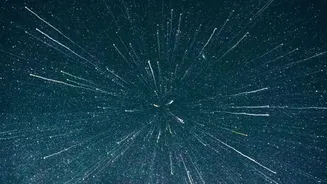
So how does it work? When you point your phone at the night sky and hold it steady, dedicated astrophotography modes, like the one pioneered by Google's Pixel phones, kick in. Instead of taking one long, minutes-long exposure—which would result in blurry star trails due to the Earth's rotation—the phone captures a series of many short-exposure shots over several minutes. An AI algorithm then gets to work. First, it intelligently aligns each of these individual frames, correcting for the slight movement of the stars. Then, it 'stacks' them, averaging out the visual data. This process dramatically increases the good information (the faint light from a distant galaxy) while cancelling out the bad (the random, grainy 'noise' inherent in digital photos). The AI also performs real-time enhancements, sharpening details and balancing colors to make the final image pop.
From the Milky Way to Nebulae
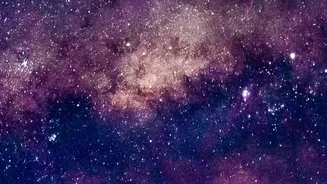
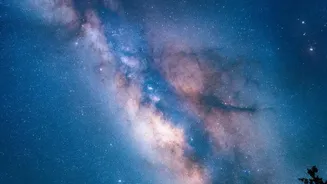
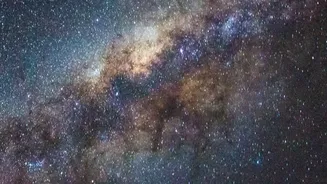
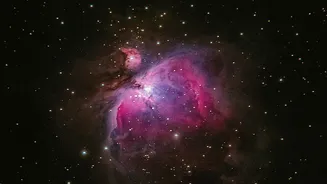
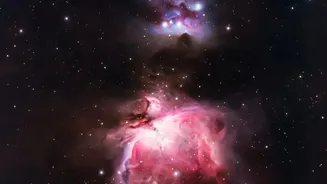
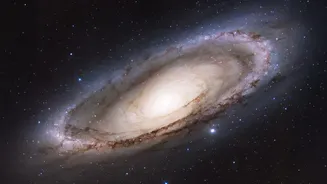
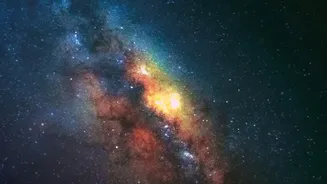
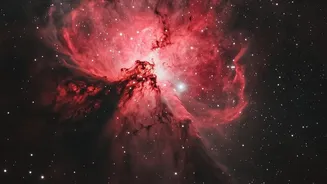
The results are often astonishing. While basic night modes can easily capture constellations and the shimmering band of the Milky Way, today's flagship phones can go even deeper. With a tripod, a dark sky away from city lights, and some patience, users are now capturing deep-space objects once reserved for telescope owners. The most popular targets include the Orion Nebula (M42), a stellar nursery visible in the winter, and the Andromeda Galaxy (M31), our closest galactic neighbor. While you shouldn’t expect Hubble-quality images, modern phones can reveal the nebula’s glowing gas clouds and the bright central core of Andromeda. Phone models like the Samsung Galaxy Ultra series offer powerful zoom and pro modes with manual controls, allowing enthusiasts to fine-tune settings for specific targets. Meanwhile, Apple's ProRAW format on the latest iPhones captures more data, giving users greater flexibility in post-processing to bring out faint details.
The Hardware That Makes It Work
While software does the heavy lifting, hardware advancements are crucial. The latest flagship phones, such as the Google Pixel 10 Pro, Samsung Galaxy S25 Ultra, and iPhone 17 Pro Max, feature larger primary camera sensors than ever before. A bigger sensor physically captures more light, which is the fundamental starting point for any good low-light photo. This is paired with lenses that have wider apertures (lower f-stop numbers), which act like a larger pupil, funneling more light onto the sensor. Finally, the powerful processors, or 'systems-on-a-chip' (SoCs) inside these phones contain dedicated Neural Processing Units (NPUs). These NPUs are specifically designed to handle the massive calculations required by AI and machine learning, allowing the complex process of image stacking and enhancement to happen in just a few moments.
The Democratization of the Cosmos
Ultimately, computational astrophotography is more than just a clever feature to sell new phones. It represents a fundamental shift in who gets to participate in the hobby of astronomy. What was once a field with a high barrier to entry—requiring expensive equipment and technical knowledge—is now accessible to anyone with a modern smartphone and a clear night sky. This technology is fostering a new wave of amateur astronomers, encouraging people to step outside, look up, and connect with the universe around them. It sparks curiosity, enabling users to not just see, but capture and share the wonders of deep space. It turns a simple snapshot of the stars into a personal discovery, bringing the vastness of the cosmos into the palm of your hand.