

For the All-Around Experience: Star Walk 2
Star Walk 2 is often recommended for beginners, and for good reason. It offers a fantastic balance of user-friendly design and rich features. Simply point your phone at the sky, and the app uses augmented reality (AR) to overlay information on the live
view from your camera. You'll see stars, constellations, planets, and even satellites identified in real-time. The app includes beautiful artwork for constellations, helping you visualize the mythological figures they represent. It also provides a wealth of information about the history and science of celestial objects. While the base version is available for free on both iOS and Android, it is supported by ads. An affordable upgrade unlocks more features and removes interruptions.
For Powerful, Realistic Viewing: Stellarium Mobile
For those who want a more realistic and data-rich view of the sky, Stellarium is a top contender. It’s known for its incredibly detailed and accurate star maps, featuring a massive catalogue of stars, nebulae, and galaxies. Stellarium presents a faithful simulation of what you’d see with your eyes, binoculars, or a telescope. You can see constellations from different cultures, track artificial satellites, and even simulate meteor showers. The app allows you to set your location and time to see the sky from anywhere on Earth, at any point in history or the future. A free version with a huge star database is available, while a paid 'Plus' version offers even more deep-sky objects for serious hobbyists.
For Simple Augmented Reality: SkyView Lite
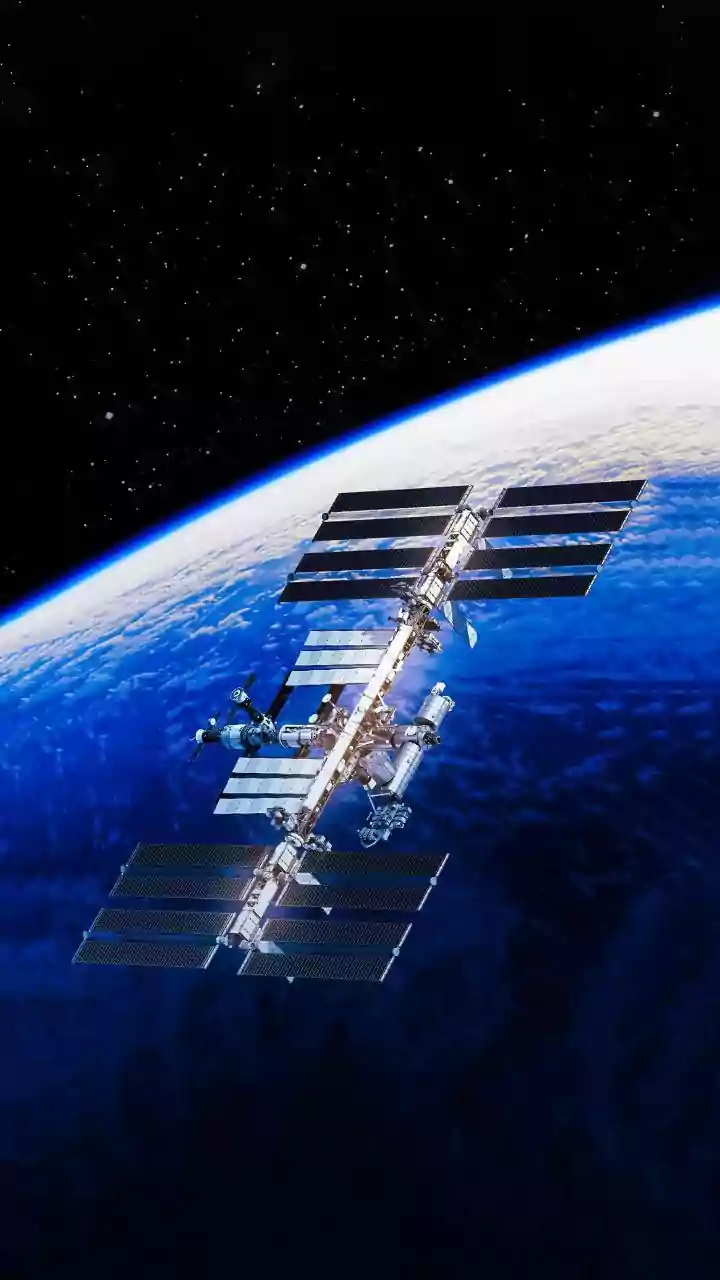
If your main goal is to quickly and easily identify what's above you, SkyView Lite is an excellent choice. Its strength lies in its simplicity and effective use of augmented reality. Just point your device at the sky to identify planets, stars, constellations, and satellites like the International Space Station (ISS). You don't even need to be outside; the app can use your location to show you where celestial objects are, day or night. A handy feature allows you to capture and share beautiful images from within the app. The free 'Lite' version is robust for casual stargazing, with a paid version available for those who want more features.
For a Universe of Information: The NASA App
While not a traditional stargazing app in the same vein as the others, the official NASA app is an essential free download for any space enthusiast. It's a treasure trove of information, offering the latest news, stunning images and videos from missions like the James Webb Space Telescope, live feeds from NASA TV, and educational articles. The app does include features to track satellites, including notifications for when the ISS will be visible from your location. It also has some basic AR functions to view 3D models of rovers and spacecraft. Think of it less as a star map and more as your direct portal to the entire universe of space exploration.
For Serious Observers: SkySafari
If you're ready to move beyond casual viewing and perhaps even connect your app to a computerized telescope, SkySafari is the professional-grade choice. It’s widely regarded by serious amateur astronomers for its massive database, accuracy, and powerful features. The app can simulate past and future celestial events with precision and offers extensive observing lists to guide your stargazing sessions. A standout feature for telescope owners is the ability to control GoTo telescopes wirelessly from your phone. While the basic version is free on Android and low-cost on iOS, the 'Plus' and 'Pro' versions are paid but are considered a worthwhile investment for dedicated astronomers.