





The Divine Procession
Every year, as the monsoon clouds gather, a unique wave of energy sweeps across India. This is the season of the Rath Yatra, or the Chariot Festival. While celebrated in many cities, its soul resides in Puri, Odisha. Here, the deities Jagannath, his brother
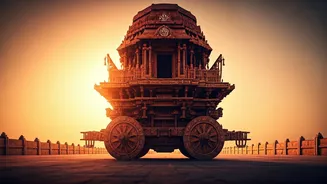
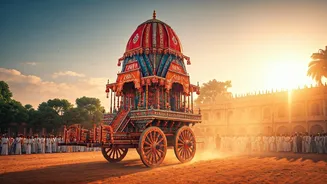
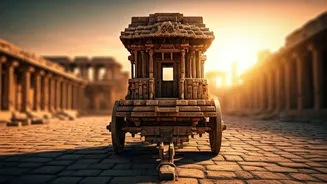
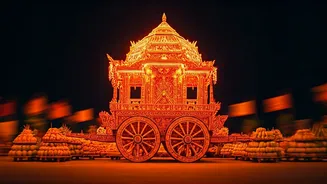
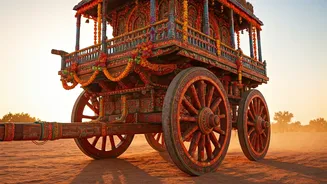
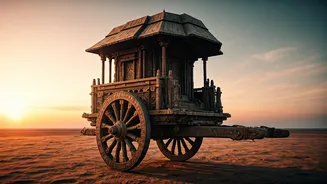
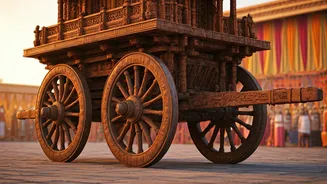
Balabhadra, and sister Subhadra leave their temple sanctuary for a nine-day sojourn to the Gundicha Temple. They travel not in ordinary vehicles, but in three colossal, ornately decorated wooden chariots, built anew each year by generations of craftsmen. The sheer scale is breathtaking: Jagannath’s chariot, Nandighosha, stands over 44 feet tall. The spectacle is a vibrant explosion of colour, music, and ritual, drawing the eyes of the world. But the true story isn’t just the destination; it’s the journey, and the millions who come to be a part of it.
A Journey of Millions
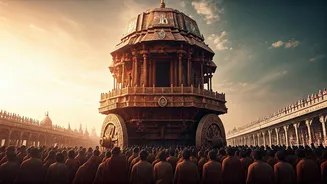
The headline's 'Travel Energy' is no exaggeration. The Rath Yatra is one of India’s largest and oldest pilgrimage events, setting in motion a massive, voluntary human migration. Well over a million devotees converge on Puri alone. They arrive from every corner of the country and beyond, transforming the coastal city into a bustling metropolis of belief. Special trains are commissioned, bus routes are altered, and highways leading to the epicentre become arteries of faith, clogged with travellers. People journey for days, using every mode of transport imaginable, from packed general-class train compartments to chartered buses and family cars. For this brief period, personal and professional lives are put on hold. The only priority is to arrive, to witness, and to participate in pulling the sacred ropes.
Faith as Fuel
What motivates someone to undertake such an arduous journey? The answer is a powerful blend of devotion, tradition, and community. For devout Hindus, seeing the deities and, more importantly, helping to pull the chariots is an act of immense piety, believed to wash away sins and grant salvation. It is a physical manifestation of devotion, a tangible connection to the divine. But it's more than just individual belief. The Yatra is a powerful force for social cohesion. In the sea of humanity, distinctions of caste, wealth, and status blur. Everyone is a devotee, united by a common purpose and a shared spiritual experience. This collective energy is palpable, creating a sense of belonging that is as much a draw as the religious ritual itself.
The Modern Pilgrimage Machine
Behind this ancient festival lies a massive, modern logistical operation. Managing a temporary city of over a million people requires immense planning. The state government, temple administration, and countless volunteers work in concert. Security is a top priority, with thousands of police personnel deployed. Health services are ramped up with temporary medical camps and ambulance services on standby. Sanitation and food distribution become critical challenges, often managed by NGOs and religious organisations that set up free kitchens (langars) to feed the endless stream of pilgrims. This is where faith meets infrastructure. The spiritual energy of the devotees is matched by the practical, earthly energy of organisers ensuring the event runs smoothly and safely. It's a fascinating case study in crowd management on a divine scale.
An Enduring Tradition
While Puri is the heart of the Rath Yatra, its spirit pulses throughout India and across the globe. From Ahmedabad to Kolkata, smaller but equally fervent chariot festivals take place. The phenomenon has even gone international, with ISKCON (International Society for Krishna Consciousness) organising Rath Yatras in major cities like London, New York, and Dublin. This global spread demonstrates the universal appeal of the festival's core ideas: community, celebration, and the symbolic journey of the divine among the people. It proves that this ancient tradition is not a static relic. Instead, it is a living, breathing force that continues to adapt, grow, and inspire movement, turning deep-seated faith into kinetic, observable travel energy year after year.