








Why Early Detection Is Key
A dog's fear of thunderstorms, sometimes called astraphobia, is more than just a dislike of loud noise. Dogs can sense changes in barometric pressure, smell the rain in the air, and even feel static electricity building up long before we hear the first
rumble. This anticipation can trigger stress well before the storm arrives. Spotting the initial, quieter signs of this stress is crucial. Intervening early can prevent the anxiety from escalating into a full-blown panic attack, which is much harder to manage and more traumatic for your pet. Addressing the fear at its onset allows you to comfort your dog and manage their environment proactively, rather than reacting to a state of extreme distress.
Subtle Signs of Rising Stress
Before the more obvious signs like shaking appear, a dog's anxiety often manifests in quieter ways. One of the most common but easily missed signals is excessive yawning when not tired. Spontaneous panting, when the dog isn't hot or hasn't been exercising, is another key indicator of stress. You might also notice frequent lip licking or drooling more than usual. Some dogs become unusually clingy, seeking constant reassurance from their owners, while others might start pacing restlessly around the house, unable to settle down. These behaviours are your dog’s first calls for help, indicating that their anxiety levels are starting to climb.
Reading Their Body Language
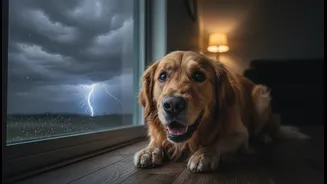
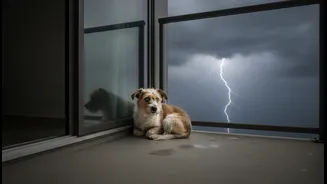
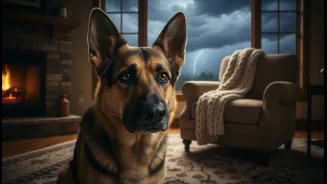
A dog's posture can tell you a lot about their emotional state. An anxious dog may hold its body differently. Look for ears that are pinned back against the head and a tail that is tucked low or completely between their legs. Another tell-tale sign is what behaviourists call "whale eye," where you can see the whites of your dog’s eyes as they widen them in a state of alert. They may adopt a lowered or cowering posture, as if trying to make themselves smaller. These are classic signs of fear and insecurity, and when they appear as a storm approaches, they are clear evidence that your dog needs support.
When Stress Becomes Panic
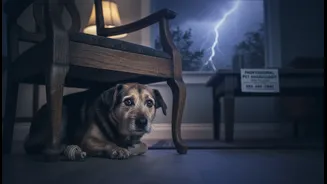
If the early signs of stress go unmanaged, they can quickly escalate into overt panic. This is when you'll see the more dramatic behaviours that owners often associate with storm phobia. These include intense and uncontrollable shaking or trembling, and desperate attempts to hide in small, enclosed spaces like closets, bathrooms, or under furniture. Vocalisation such as whining, howling, or frantic barking is common. In a state of extreme panic, some dogs may become destructive, scratching at doors or chewing on furniture. In the most severe cases, a dog might even try to escape the house, which can lead to injury. Recognising the earlier signs can help you prevent this level of distress.
How to Create a Calm Haven
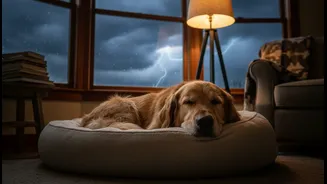
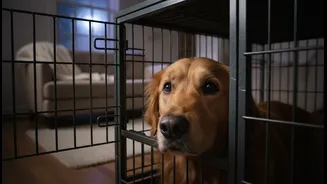
Once you recognise the signs, you can take steps to help your dog feel more secure. The first step is to create a safe space. This could be a crate covered with a blanket, an interior room without windows, or even a closet where they feel protected. Muffle the storm's sounds by closing windows and curtains, and play some calming background noise like classical music, a television, or a white noise machine. Providing engaging distractions like a puzzle feeder or a special chew toy can help redirect their focus. It’s okay to comfort your dog with gentle petting, but try to remain calm yourself, as they can pick up on your own anxiety.