

The Rise of the AI Assistant
The solution isn't more scientists, but smarter tools. Machine learning (ML), a type of artificial intelligence, has become an essential partner in space discovery. Think of it as a tireless assistant capable of scanning billions of data points for the
faintest of patterns. Scientists train these algorithms on known examples—what an exoplanet signal looks like, or the shape of a spiral galaxy—and the ML model then hunts for similar signatures in new data with incredible speed and accuracy. This frees up human astronomers to focus on the bigger picture: interpreting the findings and asking deeper questions about the universe.
Discovering Thousands of New Worlds
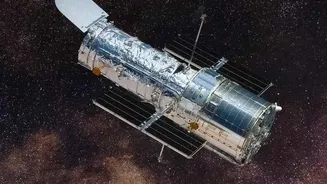
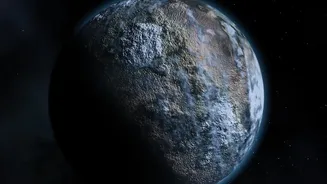
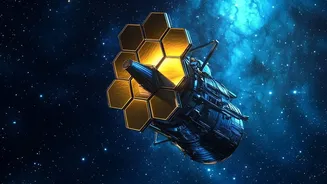
One of the most exciting applications of ML is the hunt for exoplanets, or planets orbiting other stars. Missions like NASA's Kepler and TESS telescopes monitor the brightness of hundreds of thousands of stars. A planet passing in front of its star causes a tiny, almost imperceptible dip in that star's light. While humans can spot these dips, the sheer volume of data makes manual analysis impossible. Machine learning models, however, can sift through these light curves by the million, flagging potential candidates. This approach has led to the discovery and confirmation of thousands of new worlds, including some that were initially missed by human analysis. In one case, an AI system validated over 100 new planets from TESS data alone.
A Cosmic Librarian for Galaxies
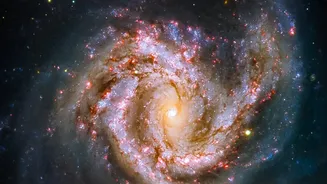
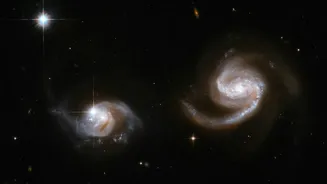
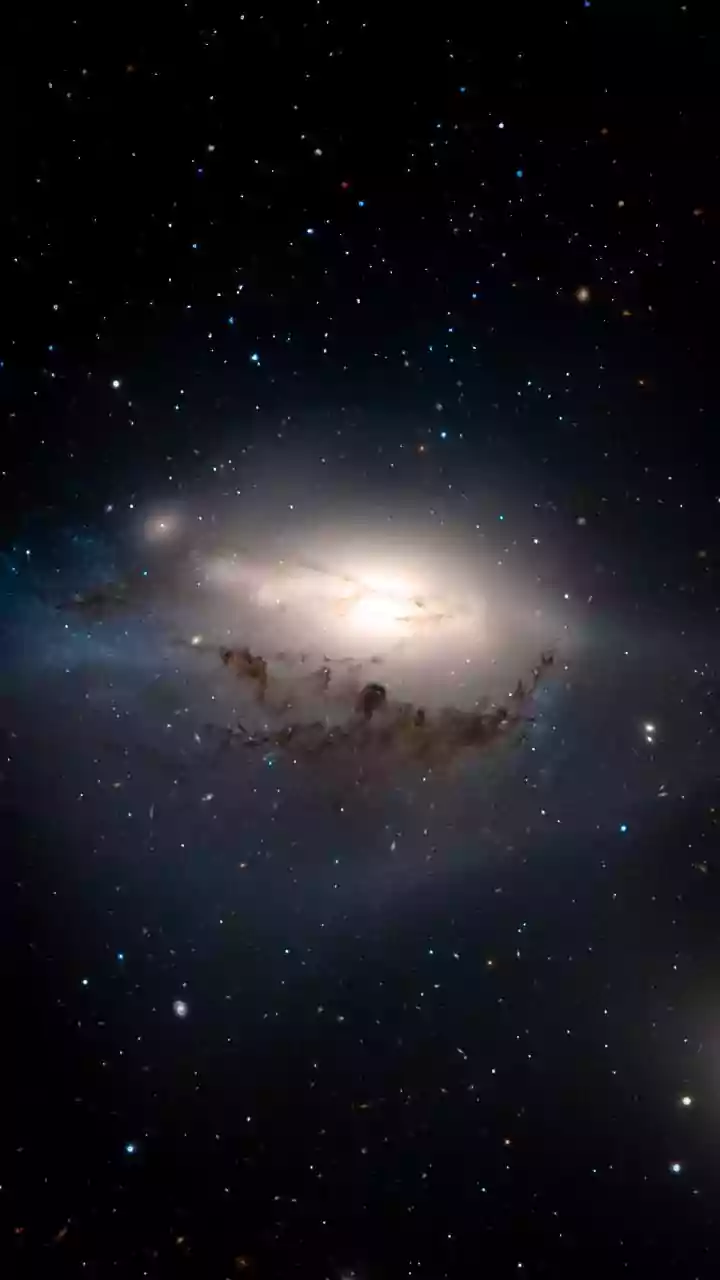
Galaxies come in a beautiful variety of shapes, from elegant spirals to smooth ellipticals. A galaxy's shape tells astronomers a great deal about its history and evolution. For decades, classifying these cosmic structures was a painstaking manual task, with astronomers visually inspecting images one by one. Today, deep learning algorithms can perform this task almost instantly. Trained on vast catalogues of classified galaxies, these AI models can look at a new image and determine its type with high precision. This allows scientists to build massive, detailed maps of the cosmos, helping them understand the large-scale structure of the universe and how galaxies grow and interact over billions of years.
Hearing the 'Chirps' of Spacetime
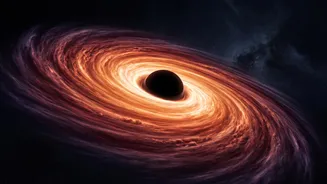
In 2015, scientists detected gravitational waves for the first time, confirming a century-old prediction by Albert Einstein. These ripples in spacetime are created by cataclysmic events, like the merging of two black holes. The detectors, like LIGO, are so sensitive that they are constantly bombarded with terrestrial noise from sources as minor as a passing truck. The true cosmic signal is a faint 'chirp' hidden within this noise. Machine learning has become crucial in this field, with algorithms designed specifically to filter out the noise and isolate the gravitational wave signal. This analysis can now be done thousands of times faster than traditional methods, allowing astronomers to quickly alert other telescopes to point toward the source of the event and capture any associated light.