






A Land of Thirsty Springs
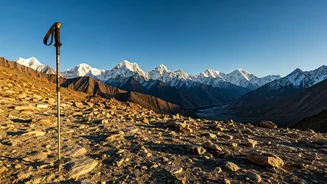
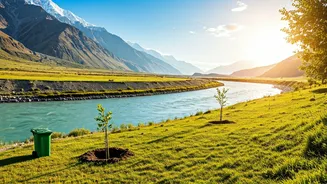
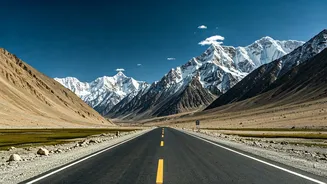
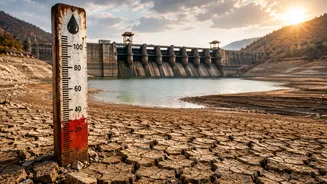
Ladakh is a cold desert. For centuries, its villages have survived by using the meltwater from glaciers to irrigate their barley and apricot fields in spring. But climate change has dangerously altered this delicate balance. Glaciers are receding at an alarming
rate, and winter snowfalls are becoming less predictable. The crucial meltwater now arrives too early and too fast in the season, rushing down the valleys long before the planting season begins in April and May. By the time farmers need water the most, the streams are often running dry, threatening their livelihoods and the very existence of their communities.
The Innovator and His Icy Idea
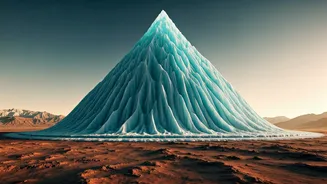
This dire situation inspired Sonam Wangchuk, a Ladakhi engineer and education reformer, to find a solution. He observed that even in late spring, ice often remained frozen under bridges and in shaded gullies, protected from the sun. His simple but brilliant idea was to find a way to “store” the winter water that would otherwise go to waste. The solution? Create artificial glaciers in the shape of a cone, a form culturally significant in the region as a 'stupa'. This shape is geometrically efficient, offering the minimum surface area for the maximum volume of ice, thus slowing the melting process by reducing exposure to direct sunlight.
How to Build an Ice Pyramid
The science behind the Ice Stupa is elegantly simple, relying on basic physics. In the winter months, when temperatures plummet far below freezing, a pipeline is used to channel water from a glacial stream at a higher altitude. Gravity does all the work. The water is brought down to the village, where it is sprayed out of a fountain-like system. As the atomised water hits the freezing air, it turns to ice and falls to the ground. Over weeks and months, this process builds a massive, cone-shaped mound of ice. A single Ice Stupa can store millions of litres of water, creating a frozen reservoir that sits right next to the village.
The Slow Melt: A Lifeline for Spring
The true genius of the Ice Stupa reveals itself in the spring. As temperatures rise and the sun gets stronger, the cone begins to melt—but very slowly. Because of its shape, it melts from the top down, releasing a steady, manageable trickle of water exactly when the farmers need it for sowing their crops. This captured winter water bridges the critical gap between when the natural streams run dry and when the main summer melt begins. The project is also community-driven, with villagers participating in the construction and maintenance, fostering a sense of ownership and collective action against a shared threat.
More Than Just Water
The impact of the Ice Stupas extends beyond agriculture. They have become a powerful symbol of climate action and human ingenuity, inspiring communities across the Himalayan region and beyond. The structures themselves have become tourist attractions, bringing a new form of revenue to the villages. The project has also sparked a broader conversation about using local, low-tech, and sustainable solutions to adapt to the realities of a warming planet. It demonstrates that instead of succumbing to climate despair, communities can innovate and find ways to secure their own future, blending traditional knowledge with modern science.