


How Air Frying Works Its Magic
Unlike deep-frying, which involves completely submerging food in hot oil, an air fryer works like a powerful, compact convection oven. It uses a heating element and a strong fan to circulate superheated air around the food at high speed. This rapid air circulation
cooks the food and creates a crispy, golden-brown exterior, mimicking the texture of deep-fried snacks but with a fraction of the oil. Often, just a light brush or spray of oil is all that's needed to achieve that satisfying crunch, a process that relies on a chemical reaction called the Maillard reaction, which needs heat, not necessarily a large amount of oil.
The Real Difference in Calories and Fat
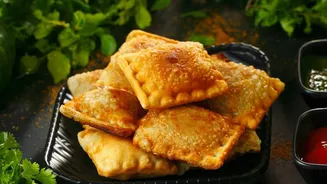
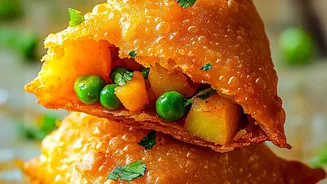
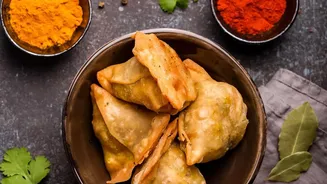
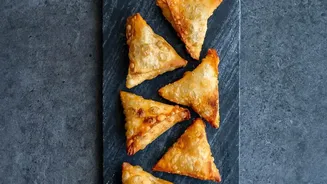
The primary health benefit of air frying comes from its drastic reduction in oil usage—often by 70% to 80% or more compared to deep frying. Since fat contains more than double the calories of protein or carbohydrates per gram, this reduction makes a significant impact. For a medium-sized homemade samosa, deep-frying can result in a snack containing 250-300 calories and 15-18 grams of fat. The same samosa cooked in an air fryer can drop to around 150-220 calories and just 5-8 grams of fat. This simple switch means you could be saving over 100 calories and cutting fat by up to 60% per samosa. This method also reduces the formation of potentially harmful compounds like acrylamide, which can form when starchy foods are cooked at high temperatures in oil.
Beyond Samosas: Other Snacks Get a Healthy Makeover
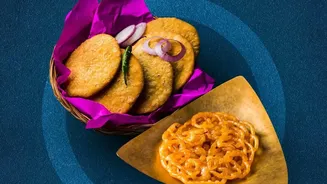
The benefits of air frying aren't limited to just samosas. A wide array of popular Indian snacks can be adapted for this healthier cooking method. Imagine crispy onion pakodas (bhajji), golden aloo tikkis, paneer tikka, and even dal vadas, all made with minimal oil. Snacks like kachoris, hara bhara kababs, and palak pakoras also cook beautifully in an air fryer, achieving a delightful crunch without being saturated in oil. This versatility makes the air fryer a practical tool for anyone looking to enjoy their favourite traditional snacks on a more regular basis without compromising their health goals.
Taste and Texture: The Honest Verdict
While air frying is a clear winner on the health front, it's important to set realistic expectations about taste and texture. An air-fried samosa will be incredibly crispy, but it may not have the same flaky, rich quality that comes from being submerged in oil. Some describe the texture as crispier but slightly drier. The filling will taste just as flavourful, but the pastry is where the difference lies. Think of it not as a lesser version, but a different one. It’s a trade-off: you lose a bit of that deep-fried indulgence but gain a significant health advantage, making it a worthy compromise for everyday snacking.
Tips for the Perfect Air-Fried Snack
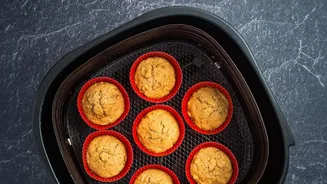
To get the best results from your air fryer, a few simple techniques can make all the difference. First, don't overcrowd the basket; place snacks in a single layer to allow hot air to circulate freely for even cooking. While you're using far less oil, a light brush or spray is still crucial for achieving a golden-brown finish. For even crisping, it’s a good practice to flip the snacks halfway through the cooking time. Preheating the air fryer, if your model allows, ensures that cooking starts immediately and proceeds evenly. Finally, remember that the dough itself is important—using a firm dough with some fat (oil or ghee) incorporated into it is key to a crispy, not dry, pastry.