


Choose Your Gear Wisely
The secret to light packing often begins before you even open your suitcase. Instead of your heaviest wool overcoat, consider a modern alternative. Packable down or synthetic-fill puffer jackets offer incredible warmth for their weight and can be compressed
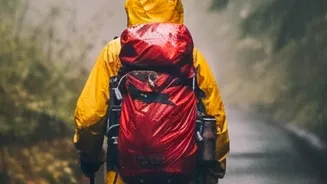
into a tiny pouch. Similarly, many brands now offer high-quality rain jackets that are not only waterproof but are also designed to be folded into their own pocket, creating a small, manageable bundle. A 3-in-1 jacket, which has a waterproof outer shell and a removable insulated inner layer, is another versatile option that allows you to adapt to changing conditions without packing three separate coats.
Become a Master of Folding and Rolling
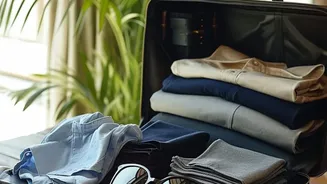
How you pack is as important as what you pack. For puffer jackets, a popular method is to lay the jacket flat, fold the arms over the body, and then roll it tightly from the bottom up towards the collar. Some travellers prefer to fold the jacket into its own hood to keep it contained. For rain gear, a similar tight roll works wonders. The goal is to expel as much trapped air as possible before the item even goes into your bag. This simple technique prevents your outerwear from naturally 'fluffing up' and expanding inside your luggage.
Use Compression Tools to Your Advantage
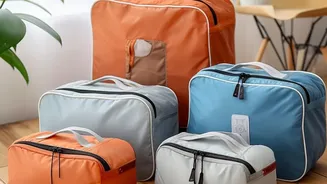
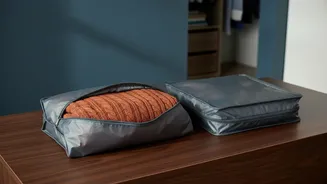
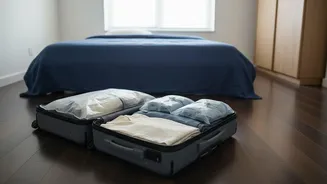
For maximum space-saving, technology is your best friend. Compression packing cubes and vacuum-seal bags are game-changers for bulky items. Compression cubes use a second zipper to squeeze everything together, helping with organisation and modest compression. Vacuum bags, on the other hand, allow you to remove all the excess air, shrinking a puffy jacket to a fraction of its original size. While vacuum bags offer the most significant space savings, they can cause more wrinkles and often require a pump or a vacuum at your destination to repack. For this reason, many travellers use vacuum bags for the initial journey and rely on compression cubes or rolling for the trip home.
The Classic Rule: Wear, Don't Pack
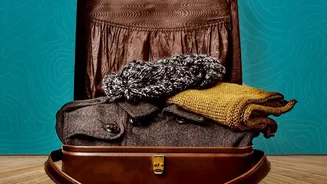
It’s the oldest travel trick in the book for a reason: it works. Your bulkiest item of clothing should be on your body, not in your bag. Wear your main jacket and perhaps your sturdiest pair of shoes or boots on the plane. This single move frees up a massive amount of real estate in your carry-on. Once you're seated on the plane, you can easily stow your jacket in the overhead bin or use it as a pillow. It might feel a bit cumbersome while navigating the airport, but the luggage space you save is well worth the minor inconvenience.
Think in Layers
Instead of one enormous, heavy coat, think about packing a system of lighter layers. A combination of a long-sleeved base layer, a fleece or wool mid-layer, and a waterproof outer shell can be just as warm as a single bulky parka, but far more versatile. This approach allows you to add or remove layers as the temperature changes throughout the day. Crucially, each of these individual items is far easier to roll, fold, and fit into the nooks and crannies of your suitcase than a single monolithic jacket.
Every Bit of Space Counts
Once your main items are packed, it's time to get creative. Your bulky jacket, even when rolled or compressed, has pockets. Use them! Stuff them with socks, gloves, scarves, or other small accessories. The same goes for your shoes; they are perfect containers for small, soft items. By filling these otherwise empty voids, you are maximising every square centimetre of your available packing space, ensuring your bag is dense and efficiently packed without any wasted room.