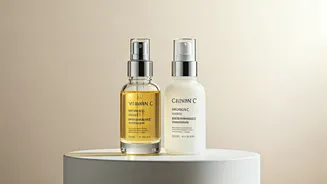









Meet Vitamin C: The Brightening Protector
Think of Vitamin C as your skin’s personal bodyguard against daily environmental stress. As a potent antioxidant, its primary job is to neutralise harmful free radicals from things like UV rays and pollution, which are major culprits behind premature
ageing. This action helps prevent sun damage and keeps your skin healthier over the long term. But its benefits don't stop there. Vitamin C is famous for its ability to brighten the complexion, fade dark spots, and even out skin tone by inhibiting pigment production. It also plays a crucial role in stimulating collagen synthesis, the protein responsible for keeping skin firm and plump, which helps reduce the appearance of fine lines and wrinkles. If your main goals are achieving a radiant glow, tackling sun damage, and getting a more even-toned complexion, Vitamin C is a fantastic choice.
Meet Niacinamide: The Calming Restorer
Niacinamide, a form of Vitamin B3, is the ultimate multitasker for skin health. Its core strength lies in supporting and strengthening your skin's natural barrier—the protective layer that keeps moisture in and irritants out. By helping your skin produce more ceramides (essential lipids), niacinamide improves hydration and resilience. This makes it incredibly effective for calming redness and inflammation, which is great news for those with sensitive, acne-prone, or rosacea-prone skin. Furthermore, niacinamide helps regulate oil production, which can lead to fewer breakouts and less visible pores. It also contributes to a smoother, more even skin tone by preventing the transfer of pigment within the skin, helping to fade post-acne marks and other forms of hyperpigmentation. If your concerns revolve around sensitivity, oiliness, enlarged pores, or a compromised skin barrier, niacinamide is your go-to ingredient.
Key Differences at a Glance
While both ingredients can help with brightening and anti-ageing, they go about it in different ways. Vitamin C is primarily an offensive player; it actively protects against external damage and directly tackles pigment and collagen production. Think of it as the brightener and protector. Niacinamide is more of a defensive and restorative player; it focuses on strengthening the skin from within, balancing oil, and calming inflammation. Think of it as the balancer and restorer. For this reason, Vitamin C is often recommended for morning use to provide antioxidant protection throughout the day, while Niacinamide’s calming properties are beneficial both day and night. Vitamin C can sometimes be irritating for very sensitive skin types, especially at higher concentrations, whereas niacinamide is generally well-tolerated by almost everyone.
The Big Question: Can You Use Them Together?
Yes, absolutely! The old myth that you shouldn't mix Vitamin C and niacinamide stems from outdated research involving high heat and unstable forms of the ingredients—conditions that simply don't apply to modern, well-formulated skincare products used at home. In fact, when used together, these two ingredients can complement each other beautifully. Vitamin C provides the antioxidant shield and brightening power, while niacinamide strengthens the barrier, soothes potential irritation, and helps with texture and pores. This combination allows you to address a wider range of skin concerns simultaneously, leading to healthier, more radiant skin overall. Many modern formulations are specifically designed to be stable and effective when layered.
How to Layer Like a Pro
Layering these two ingredients is simple once you know the rules. The most common expert recommendation is to apply products from the thinnest to thickest consistency. For a morning routine, this typically means applying your Vitamin C serum first to clean, dry skin. Allow it a minute or two to fully absorb. This allows its antioxidant properties to get to work protecting your skin during the day. After that, you can apply your niacinamide product, which could be another serum or a moisturiser. An alternative, especially for those with very sensitive skin, is to use Vitamin C in the morning and niacinamide in the evening. This separation gives each ingredient its own space to work effectively while minimizing any potential for sensitivity. No matter which method you choose, always finish your morning routine with a broad-spectrum sunscreen of SPF 30 or higher.