









The Exam That Stops a Nation
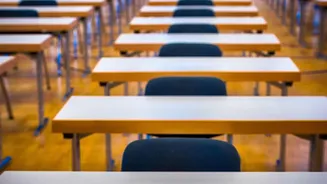
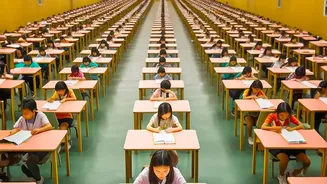
On the third Thursday of November, South Korea undergoes a remarkable annual transformation. For one day, the nation collectively holds its breath for the College Scholastic Ability Test, or Suneung. It’s an eight-hour marathon of back-to-back tests in
subjects like Korean, mathematics, and English, taken by over half a million students. For many, this single day is seen as the culmination of over a decade of intense study, a day that can determine university placements, career paths, and even future social standing. The stakes are so high that the entire country mobilizes to create the perfect test-taking environment.
A Country on Mute
The adjustments go far beyond the stock market's delayed 10 a.m. opening. Government offices and many private businesses also start work an hour later to clear the roads, ensuring students are not caught in traffic jams. Police cars are on standby to give students running late a siren-blaring escort to their test centres. During the 35-minute English listening portion of the exam, all aircraft takeoffs and landings across the country are suspended. Planes already in the air are instructed to maintain an altitude of at least 3 kilometres to prevent their noise from disturbing the candidates below. Even military drills are paused. It's a level of national coordination that highlights the profound importance placed on this single event.
The Weight of a Lifetime
The Suneung is more than an academic hurdle; it is a deep-seated cultural phenomenon with roots in historical civil service exams. For generations, success on this test has been viewed as the key to securing a place at one of the country's top 'SKY' universities (Seoul National, Korea, and Yonsei) and, by extension, a stable job at a major conglomerate. This has fueled a hyper-competitive education system where students spend years in 'hagwons', or private cram schools, often studying from early morning until past midnight. The pressure is immense, not just from personal ambition but also from familial and societal expectations. On exam day, it is common to see parents gathering at temples and churches, praying for their children's success.
New Fears and Extreme Measures
In recent years, the focus on fairness has intensified, leading to extreme anti-cheating measures. For the exam held on November 19, 2026, concerns over AI-assisted cheating prompted authorities to deploy unprecedented tactics. This followed a scandal where a candidate in another national exam admitted to using a hidden camera and an AI tool to cheat. As a result, Suneung test-takers faced inspections of their eyeglasses and had stickers placed over their clothing buttons to block any concealed micro-cameras. The government even sent out nationwide emergency alerts to all mobile phones, which ring at full volume even if muted, to expose any devices that hadn't been surrendered.
A System Under Scrutiny
Despite its central role in society, the Suneung system is a subject of ongoing debate. Critics argue the intense focus on a single exam puts immense psychological strain on young people, contributing to high rates of stress, anxiety, and even youth suicide. There are also questions about whether the test, which critics say encourages rote memorization, truly assesses a student's full potential and creativity. In response, reforms have been introduced to create alternative pathways to university based on factors like high school grades and extracurricular activities, with some reports suggesting that direct Suneung-based admissions have decreased. However, the exam's cultural weight remains significant.