







A Doubling of Demand
The engine rooms of the digital world—data centres—are becoming insatiably power-hungry. According to the International Energy Agency's 'World Energy Outlook 2026' report, global electricity consumption from data centres is projected to double by 2030,
soaring to approximately 1,000 terawatt-hours (TWh). To put that into perspective, this surge is equivalent to the entire current electricity demand of India. This dramatic increase follows a period of already rapid growth, with data centre power use climbing 17% in 2025 alone. This explosive trajectory is putting immense pressure on corporate balance sheets and global power grids that are already struggling to keep up.
AI: The Great Energy Accelerator
The primary driver behind this unprecedented demand is the boom in artificial intelligence. The IEA attributes about three-quarters of the growth in data centre electricity consumption to AI. Training and running large AI models are incredibly energy-intensive processes. An AI-focused facility can consume over 100 megawatts of power, enough to power around 100,000 homes. While conventional data centres require significant power, AI servers are vastly more intensive, with their power usage increasing elevenfold between 2020 and 2025. This has created a new class of 'AI factories' that are straining local energy infrastructure and forcing a reckoning within the tech industry about the true cost of the AI revolution.
The Bottom-Line Impact on Big Tech
For tech giants like Amazon, Google, and Microsoft, this energy surge translates directly into rising operational costs. As the biggest operators of the 'hyperscale' data centres that power cloud computing and AI, these firms are now in a race to secure reliable and affordable energy. In some regions, the rapid buildout of data centres has been cited as a primary reason for significant increases in consumer electricity prices, raising public and regulatory scrutiny. While some research suggests the direct impact on residential bills has been modest so far, the sheer scale of future demand threatens to change that, forcing a conversation about who should pay for the necessary grid upgrades.
The Hunt for Efficiency
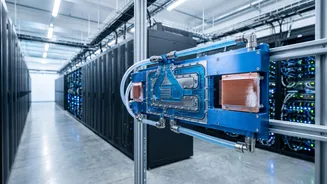
In response, the tech industry is aggressively pursuing innovation in energy efficiency. Cooling, which can account for up to 40% of a data centre's energy use, is a major focus. Companies are moving beyond traditional air conditioning to advanced solutions like liquid and immersion cooling, where server components are submerged in dielectric fluid to dissipate heat more effectively. Other strategies include deploying more energy-efficient hardware like solid-state drives (SSDs), optimizing airflow management with hot and cold aisle containment systems, and using AI itself to manage and predict energy loads within the facilities. These efficiency gains, however, are struggling to keep pace with the sheer growth in demand.
A New Power Play: Renewables and Nuclear
Efficiency alone won't solve the problem. Tech firms have become the world's biggest corporate buyers of renewable energy, signing massive power-purchase agreements to fuel their operations. Yet, even this is proving insufficient. The IEA projects that in major markets like the U.S. and China, fossil fuels like natural gas and coal will be needed to meet the demand. This has led some companies to explore more radical solutions. There is growing interest in powering data centres with dedicated, next-generation small modular reactors (SMRs) to provide a constant, carbon-free source of electricity. Recognizing the scale of the challenge, tech leaders including Amazon, Google, Meta, and Microsoft have also launched a collaborative initiative to invest in and pilot next-generation energy and materials technologies.