








Understanding India's Bike Import Taxes
India's import tax structure for motorcycles is designed to be complex, primarily to encourage local manufacturing. The amount of tax depends on how the bike is imported. A 'Completely Built Unit' (CBU) is a bike imported in a ready-to-ride state and
attracts the highest duties. In the 2025 Budget, CBU duties were set at 40% for bikes under 1600cc and 30% for those above 1600cc. To lower costs, manufacturers often use the 'Completely Knocked Down' (CKD) or 'Semi-Knocked Down' (SKD) routes. CKD involves importing parts and assembling the bike in India, attracting a much lower 10% duty. SKD kits, which are partially assembled, fall in between with a 20% duty. This system is a core part of the government's 'Make in India' strategy.
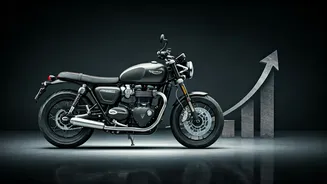
What is the Proposed 'Duty Boost'?
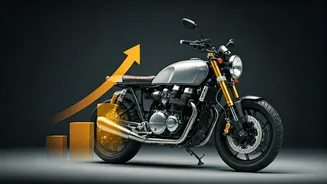
The headline-making 'duty boost' refers to the persistent possibility that the government could raise these import tariffs, particularly on CBU models. While the most recent major changes in the 2025 budget were actually reductions, the spectre of a hike is a constant in the automotive sector. The rationale behind any potential increase would be to further strengthen the 'Make in India' initiative. By making fully imported bikes significantly more expensive, the government can create a stronger incentive for global brands to invest in local manufacturing or assembly plants, which in turn creates jobs and boosts the domestic economy. This is a strategic balancing act between making high-end goods accessible and building national industrial capacity.
The Impact on Your Wallet
For a prospective buyer, any increase in import duty translates directly into a higher ex-showroom price. Let's take a hypothetical example: a CBU superbike with a pre-tax value of ₹15 lakh. At a 40% duty rate, the tax alone is ₹6 lakh. If that duty were to be hiked back to a previous rate of 50%, the tax would jump to ₹7.5 lakh—a ₹1.5 lakh increase passed directly to the customer. This doesn't even include other taxes like GST. While the premium market is growing, industry leaders note that significant price hikes can negatively impact sales volume, even for aspirational products. Any potential duty 'boost' would almost certainly make the dream of owning a top-tier imported bike a significantly more expensive proposition.
Trade Agreements: The Wild Card
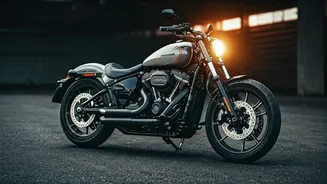
The situation is further complicated by Free Trade Agreements (FTAs). For example, a recent India-UK trade agreement set to take effect from July 15, 2026, includes provisions to gradually reduce import duties on vehicles from the UK, albeit under a quota system. Similarly, trade pacts with the US have previously led to specific, targeted duty eliminations, such as zero-duty access for certain Harley-Davidson motorcycles. These agreements can create exceptions to the general duty structure, making some brands or models cheaper while others remain expensive. It creates a complex patchwork where a bike's country of origin becomes as important as its engine size in determining its final price in India.
The Bigger Picture: Make in India
The government's overarching goal is clear: to position India as a global manufacturing hub. The automotive sector is a critical component of this vision, contributing significantly to the GDP and employment. Policies like the Production Linked Incentive (PLI) scheme further encourage companies to deepen their manufacturing roots in India. From this perspective, high import duties are not just a revenue source but a policy tool. They serve as a protective barrier for domestic players and a strong nudge for international giants to move beyond simply selling in India and start building in India. While this may temporarily raise prices for imported goods, the long-term aim is to foster a self-reliant and competitive domestic industry.