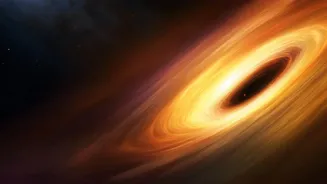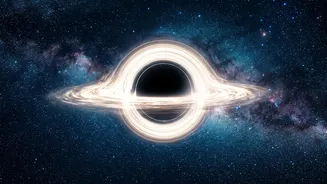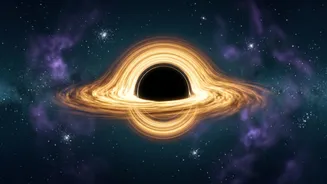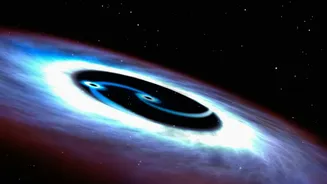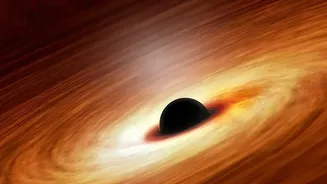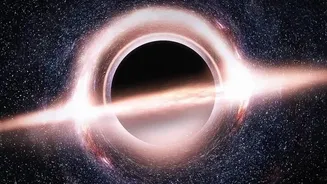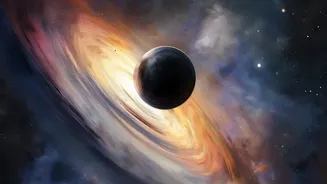

The Milky Way is hiding millions of black holes, but astronomers have found only a tiny fraction of them. Now, a groundbreaking citizen science project called Black Hole Hunters is closing the gap by recruiting an army of thousands of volunteers.
An Invitation to the Cosmos
Astronomers
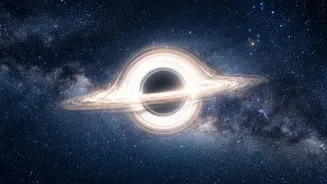
believe our galaxy could contain more than 10 million black holes, yet only around 70 have been officially cataloged. This vast discrepancy exists because most black holes are 'quiet', meaning they aren't actively consuming material from a nearby star, a process that would otherwise make them detectable through X-ray emissions. To find these invisible giants, a team of UK astronomers from institutions like the University of Southampton and the Open University launched 'Black Hole Hunters', a project on the Zooniverse citizen science platform. The premise is simple yet powerful: give the public access to real astronomical data and empower them to join one of the most exciting quests in modern astronomy. No prior experience is needed, just a computer and a willingness to explore the stars from your own home.
Hunting for a Cosmic Magnifying Glass
Volunteers aren't looking at dramatic images of black holes. Instead, their mission is to spot a subtle effect called 'gravitational self-lensing'. Many massive stars exist in binary pairs. If one star collapses into a black hole and the pair remains gravitationally bound, they continue to orbit each other. If their alignment is just right from our perspective on Earth, the black hole will periodically pass in front of its companion star. The black hole's immense gravity bends the starlight around it, acting like a cosmic magnifying glass that briefly makes the star appear brighter. Volunteers search for this specific signature by examining 'light curves'—graphs that plot a star's brightness over time—from NASA's Transiting Exoplanet Survey Satellite (TESS). They look for a distinct, symmetrical peak in brightness that could indicate an invisible black hole is making its presence known.
Why Human Eyes Trump AI
While artificial intelligence is used to perform a first pass on the millions of stars observed by TESS, computers can be easily fooled. Stellar flares, natural pulsations in a star's brightness, or even noise in the data can create patterns that mimic a self-lensing event, leading to false positives. The human brain, however, excels at nuanced pattern recognition. The Black Hole Hunters project leverages this by showing each light curve to multiple volunteers. This crowdsourced approach helps filter out mistakes and identifies the most promising candidates for professional astronomers to investigate further. As project co-lead Dr. Adam McMaster explained, the volunteers' work is crucial for creating a shortlist, which helps scientists use valuable and expensive telescope time more efficiently for follow-up observations.
An Army of Stargazers
Since its launch, the project has attracted nearly 23,000 volunteers who have made over 12 million classifications. These citizen scientists come from all walks of life—students, retirees, and space enthusiasts—united by a desire to contribute to real scientific discovery. For many, like physics undergraduate Grace Clarke, the project's accessible interface makes it possible to participate in genuine astrophysical research from a personal device. The initiative has proven so successful that the data classified by volunteers is now being used to train more advanced machine-learning models, creating a powerful synergy between human and artificial intelligence. The project's success demonstrates a widespread public appetite to engage with complex science when given the right tools and opportunity.
The Search Continues
While the project is actively searching, it is a hunt for a signal that has been predicted but not yet conclusively observed for a black hole system. The practice data even includes simulations because a definitive realworld example of this specific selflensing event remains elusive. But that is precisely what makes the hunt so thrilling. Every volunteer who logs on and analyzes a light curve could be the first person in history to identify this new type of black hole system. Each candidate they flag moves science one step closer to understanding the true population of black holes in our galaxy, refining models of stellar evolution, and unlocking more secrets of the cosmos. The potential for thousands of new discoveries keeps both the professional astronomers and their volunteer army motivated.