




A Puzzling Proximity
Recent analysis, spurred by satellite imagery and a pattern of airstrikes, has highlighted a curious overlap: the location of many of Iran's dams and water-transfer projects appears to correlate with the placement of its underground missile facilities.
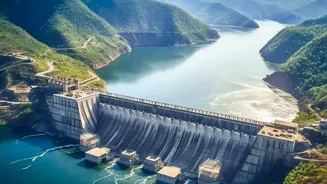
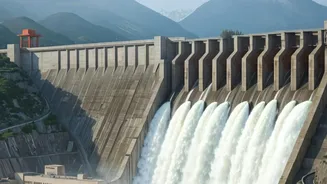
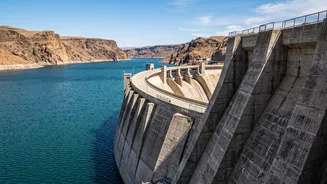
For years, water experts have questioned the logic behind Iran's construction of over 500 dams, one of the highest counts in the region, especially since many seemed to lack clear civilian justification in a water-scarce country. The theory gaining traction among some military analysts is that these massive infrastructure projects may serve a dual purpose: providing the substantial and steady supply of water and electricity needed to sustain Iran's sprawling, secretive underground 'missile cities'. These complexes are designed to produce, store, and launch missiles while being protected from aerial attack.
The Strategic Calculation
The strategic rationale, from a military perspective, is one of self-sufficiency. By co-locating these assets, Iran could ensure its critical defense facilities have 'operational continuity' and are not dependent on the public national grid, which is more vulnerable to attack. However, other experts are highly skeptical. They argue that spatial proximity does not prove a causal link. Mountainous regions are naturally suited for both dam construction and for digging deep, fortified tunnels. Furthermore, critics of the theory note that fewer than 50 of Iran's 500+ dams actually have turbines installed to generate electricity, undermining the idea that they were built as power sources for military bases. This counterargument suggests the overlap may be a coincidence of topography rather than a deliberate, dual-use strategy.
A Catastrophic Vulnerability
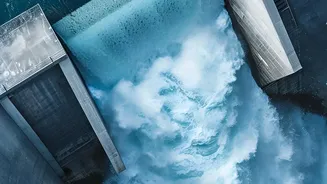
Regardless of the intent, the result is an undeniable and terrifying risk. Placing high-value military targets near massive dams, which hold back billions of cubic meters of water, creates a catastrophic vulnerability. A successful strike on a missile facility could unintentionally damage a nearby dam, or a dam could be targeted directly. The result would be a damburst of unimaginable scale, releasing a wall of water that would obliterate downstream communities, destroy agricultural land, and trigger a humanitarian disaster affecting millions of civilians. International humanitarian law offers special protection to dams precisely because of this risk, prohibiting attacks that could release such 'dangerous forces' and cause severe civilian losses.
Human Shields and Legal Lines
The debate has also entered the fraught territory of international law. By placing military objectives in the vicinity of protected civilian infrastructure, a nation could be seen as using its own population and resources as a form of human shield. Iranian officials have pushed back fiercely against any suggestion that their dams are legitimate military targets, calling it 'irresponsible journalism' and a pretext for justifying attacks on civilian infrastructure. Iran's Parliament Speaker, Mohammad Bagher Ghalibaf, warned that if this logic were applied, then any dam, port, or power plant near a U.S. or Israeli base could also be considered 'dual-use' and therefore a target. This sharp response highlights the dangerous escalatory potential of blurring the lines between civilian and military assets.
An Already Strained System
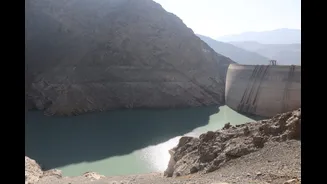
This new geopolitical risk is layered on top of an existing environmental crisis. Iran's aggressive dam-building, often linked to the Islamic Revolutionary Guard Corps (IRGC), has been criticized for years for its devastating environmental impact. The policies have contributed to drying rivers, critical water shortages, and land subsidence. Dams like the Gotvand on the Karun River have been called a 'strategic mistake' even by Iranian officials for causing salinization and ruining agriculture. Many of Iran's major dams are already at critically low levels due to mismanagement and drought. This underlying fragility means that any disruption, whether from a military strike or an accident, would hit a system already teetering on the brink of collapse.