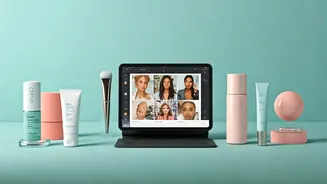









A New Breed of 'Skintellectual' Consumer
The Indian beauty market, valued at over $30 billion, is expanding rapidly, but the growth is nuanced. Today's consumers, particularly Gen Z and millennials, are more informed and discerning than ever. Armed with internet access and influenced by social
media, they have become 'skintellectuals'—savvy buyers who prioritize ingredient transparency, efficacy, and scientific backing over mere brand names. This shift has moved the market away from a simple 'natural vs. chemical' debate towards a focus on demonstrable performance. Consumers are actively checking ingredient lists, comparing formulations, and demanding products that solve specific problems, from pollution protection to targeted skin concerns like acne and hyperpigmentation.
The 'Skinification' and Multi-Use Revolution
Spurred by a desire for value and efficiency, practicality is the new mantra. This has given rise to two significant trends: 'skinification' and the demand for multi-use products. 'Skinification' refers to the incorporation of skincare-grade ingredients, like hyaluronic acid and vitamin C, into makeup, hair care, and body care. Consumers want their foundation to not just cover but also improve their skin with serum-like benefits. At the same time, multitasking products that save time, money, and space are flying off the shelves. Think lip-and-cheek tints, 3-in-1 eyeliner and kajal pencils, or tinted serums that prime, moisturise, and provide sun protection all in one. This reflects a broader shift towards minimalism and conscious consumption, where one high-performance product is preferred over five mediocre ones.
Homegrown Heroes and the Digital Disruption
This new consumer mindset has created the perfect environment for homegrown, direct-to-consumer (D2C) brands to thrive. A striking 36% of Indian consumers now prefer local beauty brands over imported ones. Companies like Mamaearth, Sugar Cosmetics, and Minimalist have leveraged digital platforms to reach a vast audience, bypassing traditional retail gatekeepers. These brands are agile, culturally fluent, and quick to respond to consumer needs, offering products tailored to Indian skin tones and climatic conditions. The digital ecosystem, including e-commerce and the powerful influence of quick commerce, has not only democratised access to these products but also provided a platform for education and community building, further empowering the practical consumer.
Value Is More Than Just a Price Tag
This practicality doesn't always mean choosing the cheapest option. Instead, Indian consumers are displaying sophisticated 'hi-lo' spending patterns. They might buy a mass-market cleanser but invest in a premium, science-backed serum from a D2C brand. Value is now defined by a combination of efficacy, quality ingredients, and emotional satisfaction, rather than just the price. This shift is forcing both legacy giants and new entrants to rethink their strategies. Large FMCG companies are increasingly acquiring successful D2C beauty brands to tap into this new, value-driven market and gain access to a younger, digitally native consumer base.