






A New Strategy for Mars
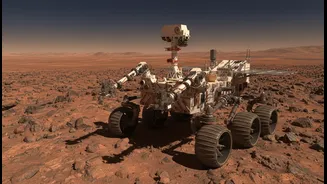
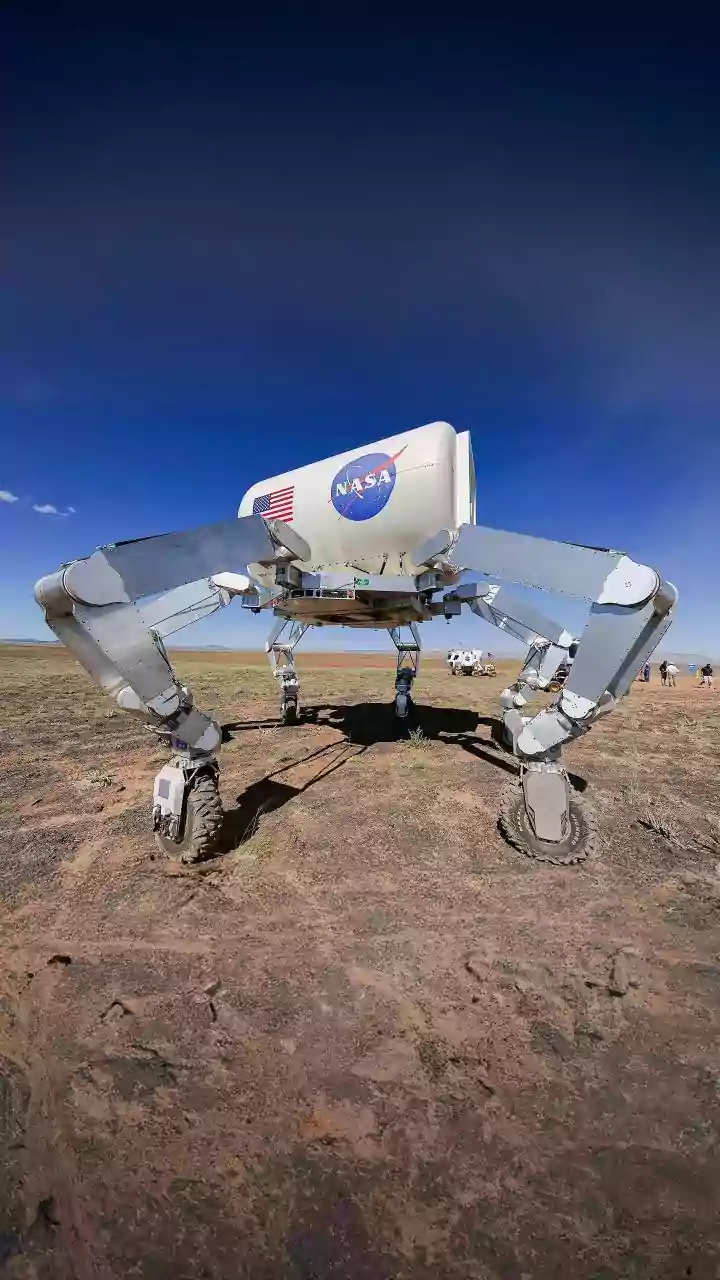
NASA recently announced seven contract awards under its Science Transport and Robotic Innovation for Deployment and Exploration (STRIDE) initiative. With a total potential value of around $17 million, these public-private partnerships aim to develop the next
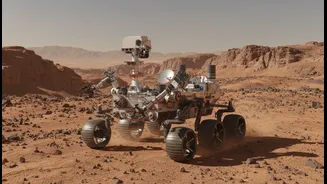
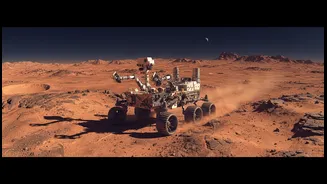
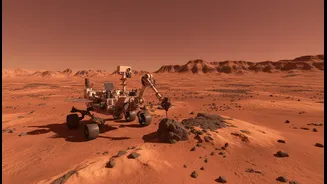
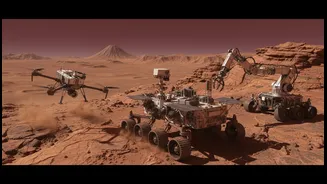
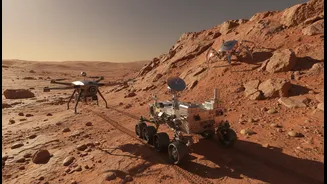
generation of robotic mobility for Mars. The goal is to create systems that can travel farther and explore scientifically valuable regions that are currently out of reach for rovers like Curiosity and Perseverance. This shift doesn't just outsource construction; it aims to foster a commercial ecosystem for deep-space exploration, much like the Commercial Lunar Payload Services (CLPS) program did for the Moon. By tapping into private sector innovation, NASA hopes to get more science done, more often, and for less money.
1. AeroVironment: The Drone Expert
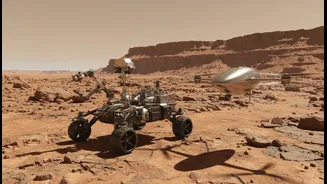
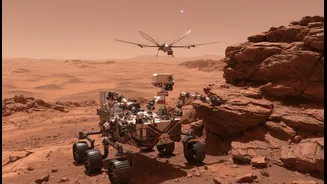
Known for its pioneering work on the Mars Ingenuity helicopter, AeroVironment is a natural choice. The company has unparalleled experience with aerial flight in the thin Martian atmosphere. While the specifics of their STRIDE project are focused on design studies, their expertise suggests a future involving more advanced, and perhaps larger, aerial drones. Drones can act as scouts for rovers, exploring treacherous terrain from above and identifying safe paths or scientifically interesting targets that a ground-based vehicle might miss entirely. The limit, as always with Mars flight, is managing power and navigating the incredibly thin air, which is less than 1% as dense as Earth's.
2. Astrobotic: From the Moon to Mars
Pittsburgh-based Astrobotic is a major player in NASA's lunar ambitions, developing landers and rovers for the Moon. This contract allows them to adapt their lunar mobility systems for the unique challenges of Mars. This includes dealing with different gravity, atmospheric conditions, and the notorious Martian dust. Astrobotic's benefit is its existing experience in creating robust mobility systems for another celestial body. The challenge will be translating that success to a planet with dust storms that can block sunlight for solar-powered vehicles and a terrain that has broken rovers in the past.
3. Venturi Astrolab: The Heavy Hauler
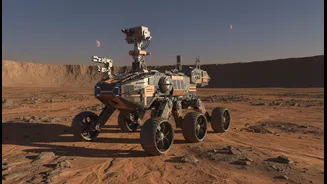
Venturi Astrolab is focused on creating larger, more capable rovers. Their Flexible Logistics and Exploration (FLEX) rover is designed not just for science but also for logistics, capable of carrying heavy and varied payloads. This could be crucial for future missions, including those that might set up a human habitat. Their benefit is a focus on utility and scalability, creating a 'pickup truck for Mars' that could support a wide range of activities. The limitation is that larger rovers require more complex landing systems and face greater mobility challenges in soft sand or rocky fields.
4. Intuitive Machines: A Versatile Partner
Like Astrobotic, Intuitive Machines cut its teeth on lunar missions, successfully landing its Odysseus spacecraft on the Moon. Their inclusion in the STRIDE program signals NASA's confidence in their ability to apply that expertise to Mars. The company will likely focus on developing a complete system, from landing to surface mobility. The benefit is their proven end-to-end mission capability. For investors and the company, this contract is seen as a massive vote of confidence, officially tying them to NASA's Mars program.
5. Honeybee Robotics: The Drill and Tool Specialist
Honeybee Robotics has a long history of providing critical components for NASA missions, including drills, scoops, and sample collection systems for past and present Mars rovers. Their STRIDE contract likely leverages this deep expertise in creating tools that can interact with the Martian surface. The benefit of their involvement is their proven track record in building hardware that works reliably in the harsh Martian environment. Their focus might be less on a complete rover and more on specialized mobility systems for accessing difficult-to-reach geological formations.
6. Ground Control Robotics: Agile and Autonomous
A newer name on the scene, Atlanta-based Ground Control Robotics is focused on developing highly autonomous and agile rovers. The future of Mars exploration depends on robots that can make more of their own decisions, as the communication delay between Earth and Mars makes real-time control impossible. Their benefit is a potential leap forward in autonomous navigation, allowing rovers to cover more ground safely and efficiently. The limit is the immense complexity of creating AI that can reliably interpret and navigate a hazardous, alien landscape without human intervention.
7. MEI Technologies: System Integrators
MEI Technologies, which merged with Alpha Space to form Aegis Aerospace, has a background in engineering and mission integration. Their role is often to ensure all the complex subsystems of a spacecraft or mission work together. For STRIDE, their work will likely focus on the overall architecture and system design for new mobility concepts. The benefit is their expertise in the big picture, ensuring that novel rover or drone designs are practical and can be integrated into a functional mission. They provide the essential, if less visible, glue that holds ambitious projects together.