

More Than a Moonshot
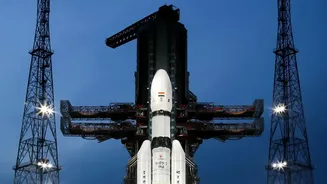
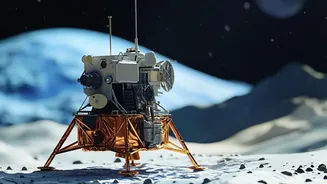
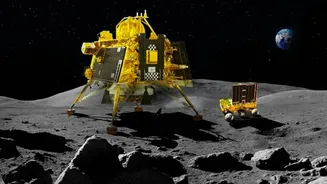
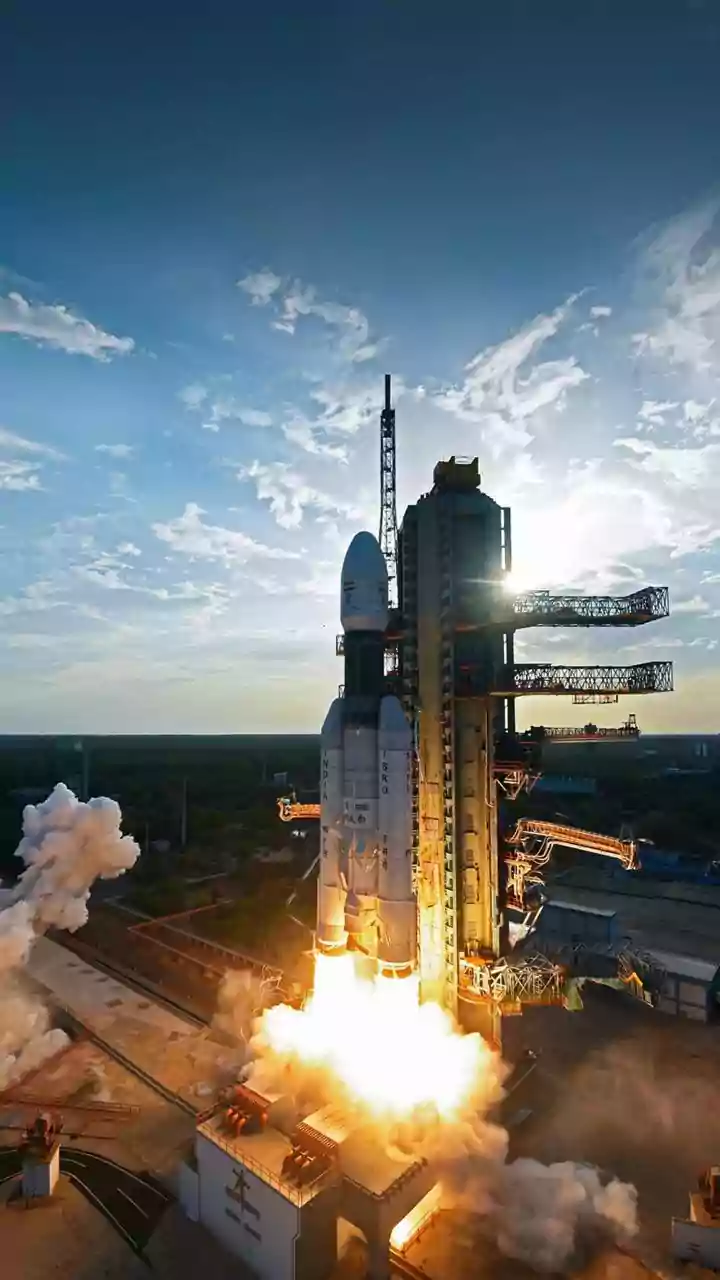
The primary goals of Chandrayaan-3 were clear: demonstrate a safe and soft landing on the lunar surface, deploy the Pragyan rover, and conduct in-situ scientific experiments. These objectives were met with triumphant success, placing India in an elite
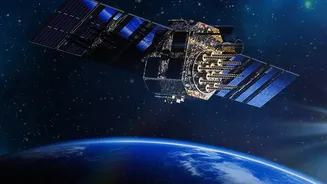
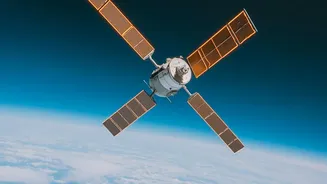
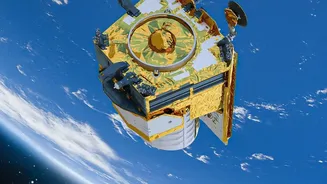
group of spacefaring nations. However, tucked away on the mission's Propulsion Module—the component responsible for carrying the lander and rover to lunar orbit—was an experimental payload with a different target in mind: our home planet. This instrument, known as SHAPE, represented a clever use of resources, ensuring that even the carrier module had a vital scientific role to play long after its main job was done.
A New Perspective on Home
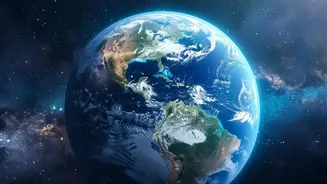
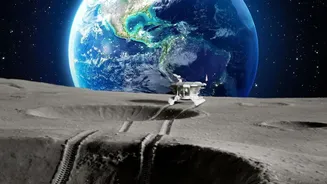
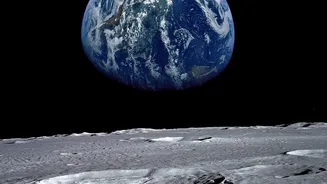
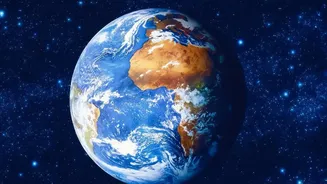
Observing Earth from a terrestrial or low-Earth orbit is standard practice, but viewing it from the Moon offers a unique advantage. From this great distance, the entire disc of the Earth can be seen at once, providing a holistic view that is impossible from up close. This perspective is crucial for studying large-scale phenomena like global weather patterns, climate change indicators, and the planet's overall energy budget. The Propulsion Module, orbiting the Moon, provided a stable, long-term platform for just these kinds of observations, turning what would have been space debris into a valuable scientific outpost.
The SHAPE of Things to Come
The key to this Earth-gazing mission was the SHAPE payload, which stands for Spectro-polarimetry of HAbitable Planet Earth. Developed by ISRO, this instrument was designed to study the light reflected from Earth in the near-infrared spectrum. It analyses not just the spectrum of light—which reveals chemical signatures—but also its polarisation, or the orientation of the light waves. This dual capability is what makes SHAPE so powerful. The goal was to capture the unique 'signature' of a life-bearing planet by observing its atmosphere and surface features, like clouds, oceans, and forests, as a single, integrated system.
A Blueprint for Finding New Worlds
The primary scientific driver behind SHAPE was not just to learn more about Earth, but to use our planet as a template for finding life elsewhere in the universe. By characterising Earth's unique spectro-polarimetric signature from afar, scientists can create a benchmark. When future powerful telescopes are pointed at distant exoplanets (planets orbiting other stars), they will look for similar light signatures. If a distant world reflects light in a way that mimics what SHAPE recorded for Earth, it could be a strong indicator that it, too, is a habitable, rocky world with an atmosphere and possibly even life. In essence, Chandrayaan-3 was using the Moon as a mirror to understand what our own vibrant planet looks like to a distant alien observer.
A Legacy of Ingenuity
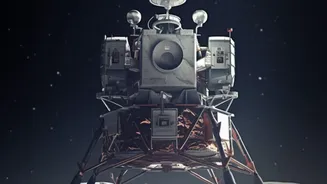
After deploying the Vikram lander, the Propulsion Module's mission could have ended. Instead, ISRO guided it on an extended journey, even maneuvering it back into a high orbit around Earth to continue its observations. This demonstrated not only technical prowess but a commitment to maximizing the scientific return on every mission. The SHAPE experiment turned a lunar mission into a dual-purpose observatory, simultaneously advancing our understanding of the Moon and honing the techniques we'll need to search for the next Earth. It stands as a testament to the innovative thinking that defines India's space program, proving that sometimes, the best way to explore the cosmos is to start by taking a good, hard look at home.