





Our Planet's Invisible Weather
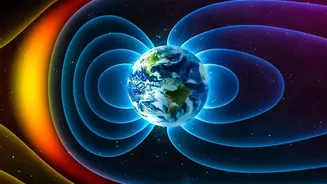
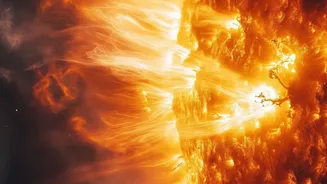
When we think of weather, we imagine rain, wind, and sun. But there's another kind of weather that starts at the sun and travels across the solar system. This is space weather, and it consists of phenomena like solar flares and coronal mass ejections
(CMEs). A solar flare is an immense explosion on the sun's surface, releasing energy and radiation. A CME is a massive bubble of plasma and magnetic fields hurled into space. When these events are aimed at Earth, they can have serious consequences for the technologies we rely on every single day. These are not minor fluctuations; a powerful geomagnetic storm can induce electrical currents in power grids, potentially causing widespread blackouts.
The Silent Threat to Satellites
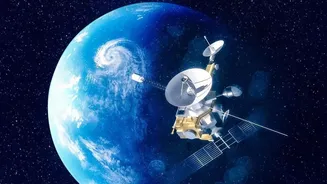
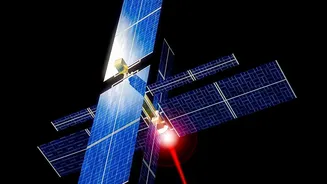
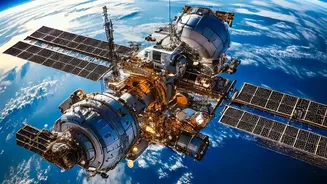
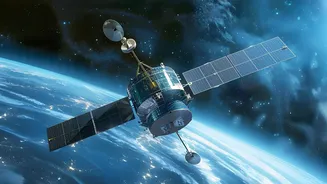
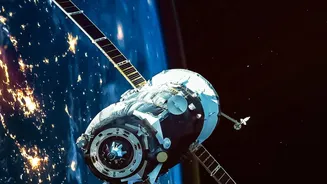
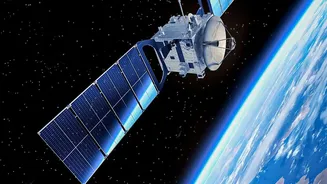
Satellites are particularly vulnerable to the sun's temper tantrums. Energetic particles from solar events can penetrate satellite electronics, causing malfunctions or even complete failure. They can also increase atmospheric drag on satellites in low-Earth orbit, causing them to lose altitude faster than expected and potentially re-enter the atmosphere prematurely. This happened to a batch of Starlink satellites in 2022, demonstrating the very real financial and operational risks. Furthermore, space weather disturbs the ionosphere, the layer of Earth's atmosphere that radio signals travel through. This can degrade or block the signals used for GPS navigation and satellite communications, leading to inaccurate positioning or a total loss of service. For industries from aviation and shipping to banking and agriculture, this unreliability is a major problem.
A New Era of Prediction
For years, forecasting space weather was largely a reactive process. But now, a combination of new observational tools and powerful artificial intelligence (AI) is changing the game. Advanced AI models are now being trained on vast amounts of solar data, learning to spot the warning signs of solar flares and CMEs with greater accuracy and longer lead times. For example, a model developed by NASA and IBM called Surya is already showing a 16% improvement over existing benchmarks for predicting solar flares. These AI systems can sift through complex data from solar observatories far faster than humans, identifying patterns that precede major solar events. This allows for earlier, more reliable warnings to be issued.
India's Eye on the Sun
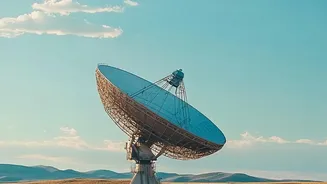
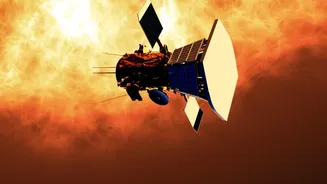
India is playing a crucial role in this global effort. The Indian Space Research Organisation's (ISRO) Aditya-L1 mission, the country's first dedicated solar observatory, is positioned at a strategic point between the Earth and the sun. This allows it to constantly monitor solar activity and provide crucial data for forecasting models. Aditya-L1's instruments observe solar flares and CMEs as they happen, helping scientists understand how these events originate and travel toward Earth. This data, combined with ground-based monitoring from facilities like the Indian Network for Space Weather Impact Monitoring (INSWIM), gives India a robust, in-house capability to track and predict space weather events that could affect the nation's critical infrastructure.
From Warning to Action
The true game-changer isn't just knowing a storm is coming, but having enough time to act. Improved forecasts mean satellite operators can be given advance warning, allowing them to take protective measures. This might involve temporarily shutting down sensitive electronics or adjusting a satellite's orbit to reduce drag and avoid collisions. For airlines, it means the ability to reroute flights that would otherwise pass through polar regions where communication can be blacked out during a solar storm. On the ground, it gives power grid operators time to prepare their systems for induced currents, preventing damage and blackouts. For the average person, this enhanced security underpins the reliability of digital payments, GPS navigation for a cab ride, and stable communication networks.