


The End of an Era
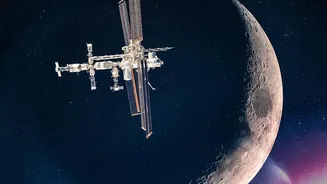
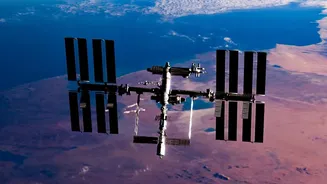
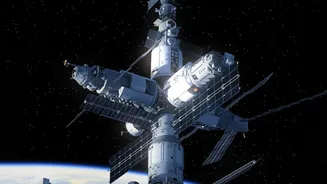
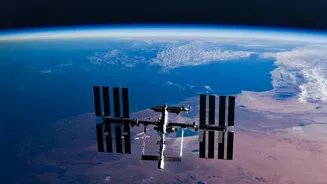
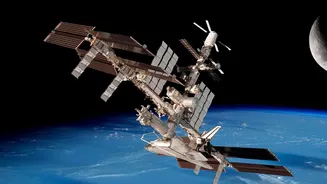
Since its first components reached orbit in 1998, the International Space Station has been humanity's only continuous outpost in space. A marvel of engineering and diplomacy involving five space agencies, it has hosted thousands of experiments and crew
members from around the world. However, the station is aging. Designed for a 15-year lifespan, it has operated for well over two decades, and the costs and challenges of maintaining it are rising. Recognizing this, NASA plans to deorbit the nearly 420-tonne structure around 2030, bringing its incredible journey to a fiery conclusion over the Pacific Ocean. This impending retirement creates an urgent need: without a successor, the United States and its partners risk losing their foothold in low-Earth orbit (LEO), a region critical for scientific research and a stepping stone to deeper space exploration.
NASA's Commercial Handover
Rather than build another government-owned station, NASA is turning to the private sector. Through its Commercial LEO Destinations (CLD) program, the agency is fostering the development of privately owned and operated space stations. The strategy is to transition from being an owner and operator to being just one of many customers. NASA will pay these companies for access to their orbital platforms for astronaut training, scientific research, and technology development. This public-private partnership model is intended to lower costs for the taxpayer, stimulate a robust LEO economy, and allow NASA to focus its resources on more ambitious goals like missions to the Moon and Mars. The agency has awarded initial funding to several key players, kicking off a race to see who can build the first viable commercial successor to the ISS.
The Frontrunners: Axiom, Starlab, and Orbital Reef
Three major contenders have emerged in the race to build the next generation of space stations. Axiom Space has a unique approach: it plans to first attach its commercial modules to the ISS. The first module is scheduled for launch around 2027. After adding subsequent modules, the entire Axiom Station will detach to become a free-flying independent outpost before the ISS is retired. Another leading project is Starlab, a joint venture between US-based Voyager Space and European aerospace giant Airbus. They plan to launch a large, single-module station around 2029, designed to host a wide range of research and industrial activities. Finally, there's Orbital Reef, envisioned as a "mixed-use business park" in space. Led by Blue Origin and Sierra Space, this ambitious project involves a coalition of partners, including Boeing, and aims to support a diverse clientele of researchers, manufacturers, and even space tourists.
Challenges on the Final Frontier
The path to a commercialized low-Earth orbit is far from certain. The financial and technical hurdles are immense. Developing a space station is incredibly expensive, and companies must create sustainable business models in a market where NASA is currently the primary customer. There is significant concern about a potential "gap" in U.S. space presence if these commercial stations are not operational before the ISS is deorbited. Timelines are ambitious; Axiom is targeting 2028 for its station to become independent, with Starlab aiming for a 2029 launch. Delays in development or funding could jeopardize the seamless transition NASA hopes for. Furthermore, the regulatory and legal frameworks for privately operated orbital platforms are still being navigated, presenting policy challenges on an international scale.