





Official Freeze, Unofficial Flow
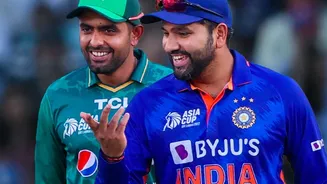
On paper, direct trade between India and Pakistan is at a near standstill. Following the Pulwama attack in 2019, India revoked Pakistan's Most Favoured Nation (MFN) status. Islamabad responded by suspending bilateral trade. Tensions escalated further
after the Pahalgam attack in April 2025, leading Pakistan to suspend all trade with India, including transactions via third countries. Yet, recent data reveals a surprising trend. According to the State Bank of Pakistan, imports from India saw a significant 69% jump in the first quarter of the 2026-27 fiscal year, reaching $61.7 million compared to $36.6 million in the same period last year. This raises an obvious question: if formal trade is frozen, how are Indian products still crossing the border in growing numbers?
The Third-Country Corridor
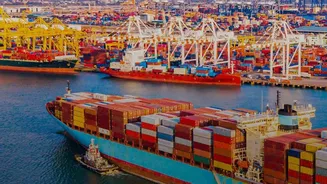
The answer lies in a thriving 'grey-zone' trading strategy. Pakistani businesses are sourcing Indian products through intermediary hubs like Dubai, Singapore, and Colombo. According to the Global Trade Research Initiative (GTRI), a think tank, this indirect trade is substantial, potentially reaching $10 billion annually. The process is straightforward: Indian goods are shipped to a port in a third country, often held in a bonded warehouse, and then re-exported to Pakistan. In some cases, documentation and labels are altered to show a different country of origin, allowing the goods to bypass direct trade restrictions. This workaround keeps supply chains moving, albeit at a higher cost for Pakistani importers who must absorb additional freight and handling fees.
The Indispensable Shopping List
The demand driving this indirect trade is not for just any products; it's for essential goods where Indian suppliers have a distinct advantage in price, quality, and proximity. Topping the list are pharmaceuticals and organic chemicals, which accounted for over 96% of Pakistan's recorded imports from India in the 2025-26 fiscal year. Items like vaccines, active pharmaceutical ingredients (APIs) for manufacturing medicines, and other therapeutic products are critical for Pakistan's healthcare sector. Even after formal bans were announced, Pakistan made specific exemptions for life-saving drugs, acknowledging its dependence on Indian suppliers. Other goods making their way through these channels include textiles, chemicals, tea, coffee, and machinery components.
Economic Need Versus Political Rhetoric
For many Pakistani industries, the trade suspension has been costly. The Pak-India Business Council estimates that the halt in direct trade since 2019 has resulted in economic losses of around $40 billion for Pakistan. Industries have been forced to source essential materials from more distant and expensive markets. For example, the pharmaceutical industry could save an estimated $2 to $3 billion annually if it could import directly from India. Similarly, the textile sector has faced an additional expenditure of around $5 billion from having to import cotton from countries like Brazil and the United States instead of from its next-door neighbour. This economic pressure explains why, despite the political standoff, businesses continue to find ways to access the Indian market.