






The Question of Stability
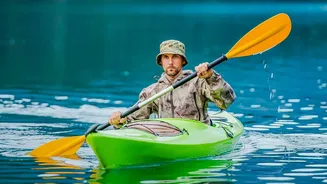
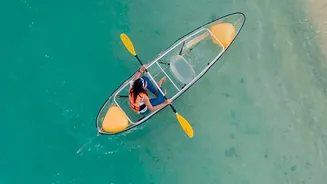
For absolute beginners, the kayak often feels like the safer bet. With a low centre of gravity, you sit inside or on top of the vessel, making it inherently stable and much harder to tip over. This seated security allows newcomers to focus on their paddle
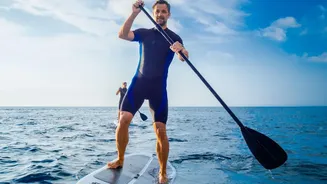
stroke and direction almost immediately. Stand-up paddleboarding (SUP), by contrast, demands active balance from the moment you stand up. While modern, wide boards are surprisingly stable, most beginners can expect to take a few tumbles while finding their sea legs. However, mastering this balance is part of the appeal and progression of the sport, and it usually only takes a few sessions to feel comfortable.
The Fitness Factor
If a full-body workout is your main goal, the paddleboard has a clear edge. Simply standing on an unstable surface engages your legs, glutes, and deep core muscles constantly to maintain balance. Every paddle stroke then adds an upper-body and rotational core workout on top of that. Kayaking provides an excellent workout for the upper body—lats, shoulders, and arms—and a significant core challenge through the rotation of paddling. However, the legs are largely passive. You can burn a significant number of calories doing both, but SUP is more comprehensive in its muscle engagement from head to toe.
Your View of the World
Your position on the water dramatically changes your perspective. Standing on a paddleboard gives you a superior vantage point. You can look down into the water to spot fish or submerged features, and you get a better overall view of your surroundings. This makes SUP a popular choice for wildlife viewing in clear, calm waters. In a kayak, you are seated closer to the water's surface, creating a more intimate connection with the environment. This low profile is great for gliding quietly into coves and provides a powerful, efficient feel as you cut through the water.
Handling the Elements
When conditions get challenging, the kayak typically shines. Its lower profile makes it more aerodynamic and easier to handle in wind and choppy water. A standing paddler on a SUP can act like a sail in a strong breeze, making it difficult to control your direction. For longer distances or expeditions, a kayak’s efficiency and comfort for seated paddling over many hours are major advantages. Many kayaks also offer covered storage, keeping your gear dry and secure, which is a bonus on longer trips or in unpredictable weather.
The Learning Curve
Kayaking has a lower barrier to entry for the first day on the water. Most beginners can get into a recreational kayak and start paddling with confidence within minutes, thanks to its passive stability. The double-bladed paddle also makes steering feel more intuitive initially. The learning curve for SUP is slightly steeper, focusing primarily on balance. The first session might involve more kneeling than standing. That said, once you find your centre of balance, the basic skills of paddleboarding are acquired fairly quickly. Don't forget, in both sports, wearing a personal flotation device (PFD) is essential for safety.