
The Science of the Big Chill
The secret to how a lake freezes lies in a strange quirk of water. Unlike most substances that get denser the colder they become, water is at its most dense at 4°C. As autumn turns to winter, the lake's surface water cools, becomes denser, and sinks.
This pushes the warmer water from below up to the surface, where it also cools. This process, known as 'fall turnover', continues until the entire lake, from top to bottom, reaches a uniform temperature of around 4°C. This mixing is vital, as it distributes oxygen and nutrients throughout the water column, a sort of deep breath before the long winter slumber.
The Great Freeze-Over
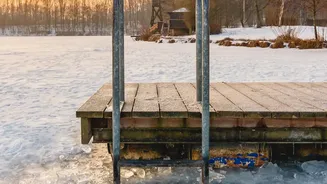
Once the entire lake has reached 4°C, the surface water continues to cool towards freezing point (0°C). As it does, it becomes less dense and floats on top. This is why lakes freeze from the top down. This layer of ice is crucial for aquatic life. It acts as an insulating blanket, protecting the liquid water below from the frigid air above. This refuge allows fish and other organisms to survive the winter in the relatively warmer, liquid environment beneath the ice, where their metabolism slows down to conserve energy.
India’s High-Altitude Ice Sheets
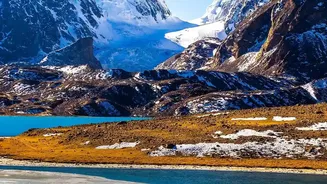
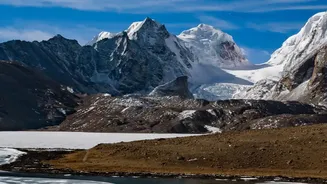
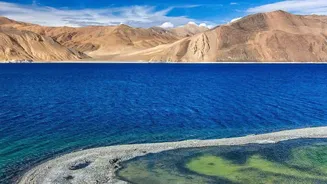
In the Indian Himalayas, this process creates scenes of stark, desolate beauty. High-altitude lakes like Pangong Tso in Ladakh and Gurudongmar Lake in Sikkim, situated over 4,200 metres, transform into vast, frozen expanses. From November to February or even May, these saline and freshwater bodies freeze over, sometimes so thick that they can theoretically support the weight of a vehicle. The journey to these lakes in winter is an adventure in itself, with snow-covered roads and extreme cold. For those who make it, the reward is a silent, surreal landscape of white ice stretching to the horizon, surrounded by snow-dusted peaks under a clear blue sky.
Canada’s Icy Spectacles
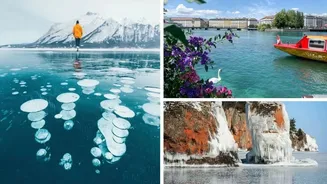
Across the globe in Canada, winter creates different, but equally stunning, lake phenomena. At Abraham Lake in Alberta, a man-made reservoir, a captivating sight emerges: stacks of frozen white bubbles trapped within the clear ice. These are bubbles of methane gas, released by decaying organic matter like plants on the lakebed. As the gas rises, it gets trapped in successive layers of freezing ice, creating vertical columns of suspended white orbs. Strong winds in the area often sweep the ice surface clear of snow, making it a world-renowned destination for photographers. Farther east, the Great Lakes create their own weather. Cold air passing over the vast, unfrozen waters picks up moisture, leading to the famous 'lake-effect snow' that buries downwind shores in metres of powder.
The Colours of Frozen Water
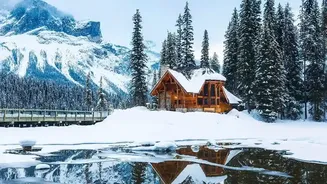
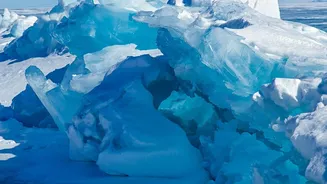
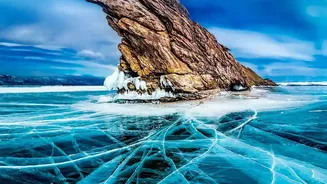
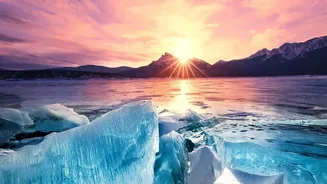
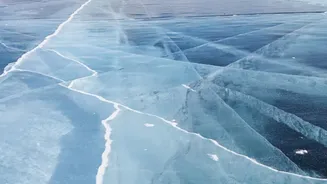
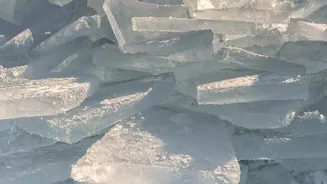
The appearance of the ice itself also varies dramatically. Ice can appear white when it's filled with tiny, trapped air bubbles that scatter light in all directions. However, dense, bubble-free ice, often found deep in glaciers or in very clear, slow-forming lake ice, can appear a brilliant blue. This is because the water molecules absorb the red part of the light spectrum, allowing the blue light to pass through and be seen by our eyes. In glacial-fed lakes, like many in Canada, fine sediment called 'rock flour' suspended in the water scatters sunlight to create a vibrant turquoise hue in summer, which vanishes when a blanket of white snow covers the ice in winter.