






Don't Panic: A Chewed Leaf Isn't a Crisis
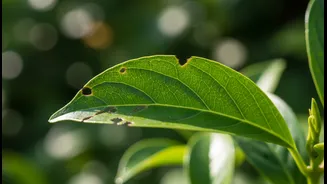
Seeing damage on your plants can be disheartening, but it's crucial not to panic. A few holes in a leaf are not a sign of failure; in fact, they are a sign of a living, breathing ecosystem. Most healthy plants can easily tolerate a small amount of damage and
will continue to thrive. A perfect, untouched garden is often an sterile one. The goal is not eradication of all insects, but control and balance. A little nibbling indicates that nature is active in your backyard, which is exactly what a garden should be. Think of it less as an attack and more as a conversation starting between you and your garden's inhabitants.
Play Detective: Identify the Culprit
Before you can solve the problem, you must correctly identify its source. A quick, impulsive spray might not even affect the pest you're targeting. Take a moment to investigate. Look at the type of damage: are they irregular holes, clean cuts along the edge, or 'skeletonised' leaves where only the veins remain? Slugs and snails often leave irregular holes and tell-tale slime trails. Caterpillars are notorious for chewing through leaf centers, while leafcutter bees make clean, semi-circular cuts for their nests. Check the undersides of leaves and inspect your plants at different times of day, as many pests are nocturnal. Proper identification is the most critical step in effective pest management.
Meet Your Garden's Allies
Your garden is home to a host of beneficial insects that work for you free of charge. Ladybugs, lacewings, hoverflies, and certain wasps are natural predators that feast on common pests like aphids and caterpillars. In fact, less than 2% of all insect species are considered pests; the rest are either beneficial or harmless. When you use broad-spectrum chemical sprays, you kill these allies along with the pests. This can disrupt the natural balance, sometimes leading to a rebound effect where pest populations explode without their natural enemies to keep them in check. Encouraging these 'good bugs' by planting a variety of flowers is a key preventative strategy.
The Downside of 'Just-in-Case' Spraying
Reaching for a chemical pesticide as a first resort is a strategy fraught with problems. Beyond harming beneficial insects and important pollinators like bees, these chemicals can have wider environmental impacts. Pesticides can drift from the target area, contaminate soil, and wash into waterways. Overuse can also lead to pests developing resistance, making the chemicals less effective over time. Furthermore, even organic or homemade sprays should be used thoughtfully. A spray is a tool, not a cure-all, and applying it without a clear target is like taking medicine for an undiagnosed illness. Responsible pest management is about making targeted, informed decisions.
Smarter, Gentler Interventions First
Once you've identified the pest, start with the least toxic, most targeted solutions. Often, the simplest methods are highly effective. For larger pests like caterpillars or beetles, hand-picking them off plants is a quick and satisfying solution. A strong jet of water from a hose can dislodge aphids and mites. For crawling pests like slugs, you can set up barriers like crushed eggshells or copper tape. You can also use physical row covers to protect vulnerable seedlings. If a spray is needed, consider insecticidal soaps or neem oil, which are less harmful to the overall ecosystem when used correctly. These are part of an approach called Integrated Pest Management (IPM), which prioritizes prevention and low-impact controls.
When a Stronger Approach Is Needed
Sometimes, despite your best efforts, a pest infestation can become severe and threaten the life of your plants. In these cases, a more potent, targeted pesticide might be considered a last resort. The key is to use it responsibly. Always read the label carefully to ensure the product is appropriate for the specific pest and plant, and to understand the potential risks to pollinators. Apply the spray in the evening when bees and other pollinators are less active, and never spray on a windy day to avoid drift. Spot-treat only the affected areas rather than spraying the entire garden. The goal is to control the problem with minimal collateral damage, preserving as much of your garden's healthy ecosystem as possible.