





A Landmark Projection
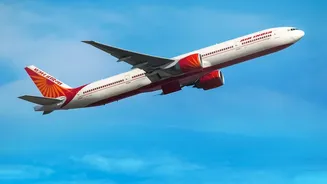
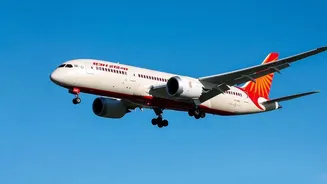
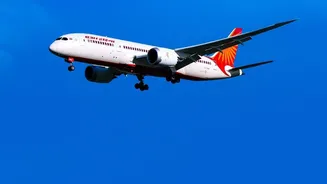
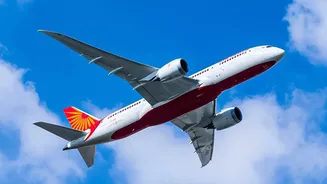
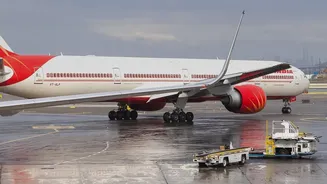
During a visit to Egypt, Union Minister for Commerce and Industry, Piyush Goyal, announced that India is facing an 'acute' shortage of civilian aircraft. He detailed that while Indian carriers have already placed orders for more than 1,200 planes, the
country is prepared to order another 1,000 to meet its soaring requirements. This combined demand for over 2,000 aircraft signals one of the most aggressive fleet expansion drives in global aviation history. The statement underscores the government's urgency in pushing global manufacturers like Airbus and Boeing for faster deliveries to bridge the capacity gap.
The Engines of Sky-High Demand
Several powerful forces are behind this explosive demand for air travel. A primary driver is India's expanding economy and a burgeoning middle class with rising disposable incomes. This has transformed air travel from a luxury into an accessible option for millions. Consultancy firm Oliver Wyman forecasts that India's commercial aircraft fleet will grow at an annual rate of 7.1% between 2026 and 2036, among the highest rates globally. This growth isn't just confined to major metropolitan hubs; it's spreading across the nation, creating a vast, interconnected market.
How Government Policy Fuels Growth
Proactive government policies have been instrumental in democratising India's skies. The UDAN (Ude Desh ka Aam Naagrik) scheme, launched in 2016, is a cornerstone of this strategy. By providing financial incentives and capping fares, the scheme has successfully connected dozens of unserved and underserved airports in Tier-2 and Tier-3 cities. Since its inception, UDAN has enabled over 1.56 crore passengers to fly on regional routes, creating new travel corridors and stimulating local economies. This focus on regional connectivity has unlocked a new wave of first-time flyers, fundamentally increasing the baseline demand for aircraft nationwide.
The Key Players and Their Orders
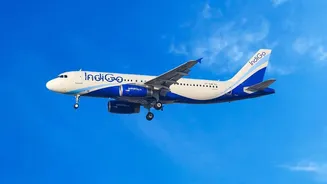
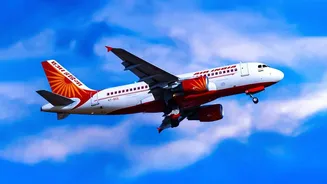
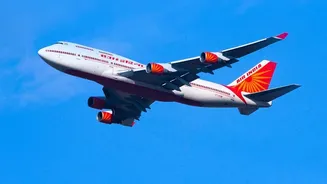
India's leading airlines are at the forefront of this expansion. Carriers like IndiGo, a revitalised Air India, and the newer Akasa Air have already placed historic orders with both Airbus and Boeing. These orders are not just about adding more planes but also about modernising fleets with more fuel-efficient and versatile aircraft. For example, IndiGo's plans include long-haul capable jets to expand its international footprint. This massive procurement drive also has a significant 'Make in India' component, with Airbus and Boeing sourcing approximately $2 billion worth of components and services from Indian suppliers annually. Furthermore, Brazil's Embraer is exploring a collaboration with the Adani Group for regional aircraft manufacturing in India.
Navigating Significant Turbulence
Despite the optimistic outlook, the path to acquiring 2,000 new aircraft is not without its challenges. A major bottleneck is the global supply chain. Aircraft manufacturers are dealing with huge order backlogs, and shortages of engines and other key components have delayed production schedules worldwide. Some delivery timelines for existing Indian orders already stretch as far as 2034. Domestically, India must also rapidly scale up its infrastructure. This includes not only building new airports and terminals but also training a sufficient number of pilots, cabin crew, and maintenance engineers to operate and service this massively expanded fleet. The government is also working on improving aircraft leasing and financing options to support the airlines.