



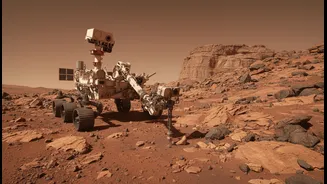


The Self-Driving Martian
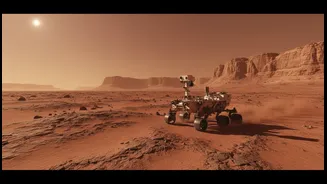
You can’t joystick a rover in real-time when a single command can take up to 22 minutes to travel from Earth to Mars. This is where Perseverance’s biggest upgrade comes in: its brain. The rover uses a sophisticated autonomous navigation system called
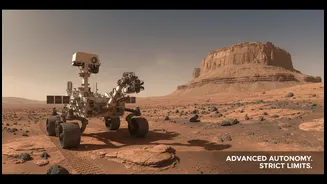
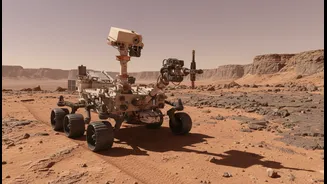
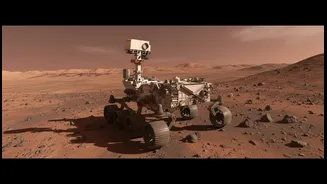
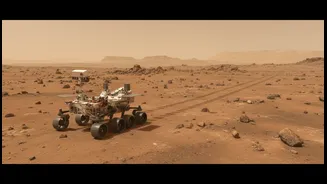
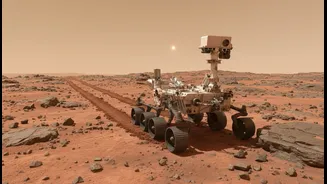
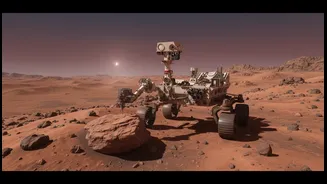
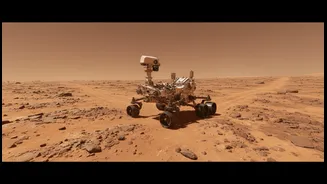
AutoNav. Unlike older rovers that had to stop, take pictures, and wait for instructions, Perseverance can think while it drives. As it moves, its cameras create a 3D map of the upcoming terrain, identifying hazards like large rocks or dangerous slopes. The rover's software then plots the safest and most efficient path forward, all on its own. This self-driving capability allows Perseverance to cover far more ground each day than any of its predecessors, turning what would have been a slow crawl into a steady march across the Red Planet. This autonomy is so effective that the rover's travel distance is now limited more by how well it knows its own position than by the terrain itself.
Commands from Millions of Kilometres Away
While AutoNav handles the moment-to-moment driving, the overall mission is still guided by human hands. Back at NASA's Jet Propulsion Laboratory (JPL), a team of rover drivers acts as interplanetary tour guides. Using 3D glasses and images sent back by the rover, they meticulously plan the general route. They don't give turn-by-turn directions but instead provide a series of goals, like 'drive to that interesting rock outcrop' or 'head towards the ancient river delta'. These commands are bundled together and beamed across the solar system via the Deep Space Network. The rover receives its daily to-do list, executes the commands using its autonomous systems, and then sends back the results—a trove of scientific data and images of its progress. This careful collaboration between human planners and robotic autonomy allows for both strategic scientific investigation and rapid, efficient travel. The drivers set the destination, but the rover finds the best way to get there.
Hardware Built to Endure
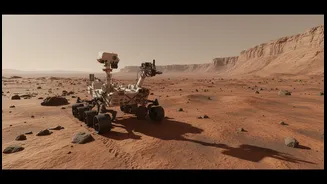
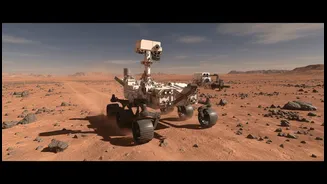
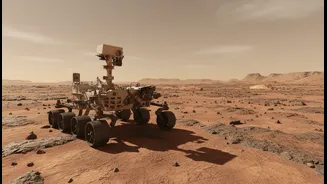
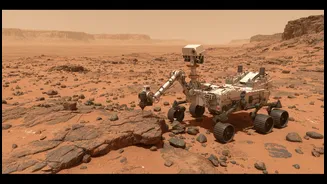
A brilliant navigation system is useless without a body that can withstand the punishing Martian environment. Perseverance was built for endurance. Its six aluminum wheels are a direct improvement over those on the Curiosity rover, which sustained significant damage from sharp rocks. Perseverance's wheels are thicker, slightly larger in diameter, and feature 48 gently curved treads, or grousers, for better traction and durability. Powering this entire enterprise is a nuclear battery called a Multi-Mission Radioisotope Thermoelectric Generator (MMRTG). This system converts heat from the natural decay of plutonium into a steady supply of about 110 watts of electricity. Unlike solar-powered rovers that are vulnerable to dust storms and the dark of night, the MMRTG provides constant power for a designed life of over a decade, ensuring Perseverance can keep rolling, day or night, through its marathon journey and beyond.
A Symphony of Systems
The rover’s marathon is not the result of any single innovation but the seamless integration of these three core elements. The durable hardware provides the physical resilience to survive on Mars. The remote commands from Earth provide the mission's scientific direction and long-term goals. And the autonomous navigation system provides the intelligence to execute those goals quickly and safely on a moment-to-moment basis. It’s a partnership: human ingenuity sets the course, and artificial intelligence handles the driving. This combination allows Perseverance to be both a methodical scientist and an efficient explorer, covering record-breaking distances while hunting for signs of ancient life in Jezero Crater. Each kilometre it travels is a testament to this powerful synergy, pushing the boundaries of what is possible in planetary exploration.