







India's Premier Nanotech Summit
Bengaluru INDIA NANO is widely recognized as India's flagship event for nanotechnology. For over a decade, it has served as a crucial bridge connecting research, industry, government, and academia. Organized by the Government of Karnataka's Department
of Science & Technology and key research institutions like the Jawaharlal Nehru Centre for Advanced Scientific Research (JNCASR), the summit has become a catalyst for innovation in the country. The 14th edition, scheduled for August 3-5, 2026, continues this tradition. It brings together leading scientists, entrepreneurs, and policymakers to explore the latest advancements and, more importantly, how to move them from the laboratory to the real world. While the official theme is broad, a key focus remains on sustainability, particularly in the energy sector, which has been a consistent highlight of the conference series.
What is Nanotechnology Anyway?
Before diving into its applications, it helps to understand what 'nano' even means. Imagine a single human hair; a nanometre is about 100,000 times smaller. Nanotechnology is the science of designing and manipulating materials at this incredibly small scale. Why does this matter? Because when materials are shrunk down to the nanoscale, their properties can change dramatically. Gold, for example, is inert and yellow in its bulk form, but at the nanoscale, it can become a powerful chemical catalyst and appear red or purple. By harnessing these unique properties, scientists can create materials and devices with extraordinary capabilities, from medicine to electronics and, critically, to energy.
Powering Up with Tiny Tech
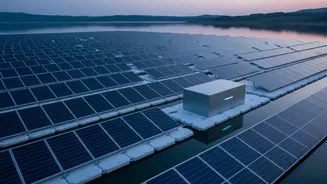
The energy sector is one of the most promising areas for nanotechnology, offering solutions that are more efficient, cheaper, and sustainable. One major area is solar power. Nanomaterials like quantum dots or nanowires can be used in solar panels to absorb a wider spectrum of light, significantly boosting their efficiency. This means more electricity from the same-sized panel. Furthermore, nanotechnology allows for the creation of solar cells that are flexible, lightweight, and can be produced using print-like manufacturing processes, potentially making solar power more affordable and versatile. Energy storage is another critical piece of the puzzle, especially for electric vehicles (EVs) and storing power from renewable sources like wind and solar. Nanotechnology is paving the way for batteries that are lighter, charge much faster, and hold more power for longer. By engineering materials like graphene and carbon nanotubes at the nano level, scientists can create battery electrodes with a vastly increased surface area, enhancing their capacity and performance.
From Complex Science to Clear Solutions
The headline claim—that the event makes these applications easier to understand—is central to its mission. Bengaluru INDIA NANO is structured to demystify the field for a wider audience. It hosts pre-conference tutorials that provide in-depth knowledge and hands-on experience for participants. The main conference then connects this foundational science to practical use cases through dedicated sessions on energy, healthcare, and agriculture. By featuring startup showcases like NanoSparX and a large exhibition floor, the event allows attendees to see and interact with tangible products and prototypes. This emphasis on moving from 'conceive' to 'commercialise' forces presenters to speak the language of impact, not just theory. It creates a space where an industry leader can understand the business case, a policymaker can see the strategic value, and a student can be inspired by the real-world possibilities.