





Decoding the Concrete Jungle's Fever
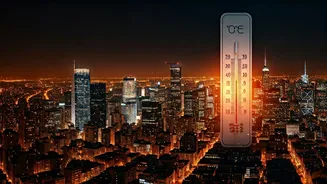
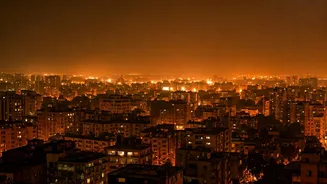
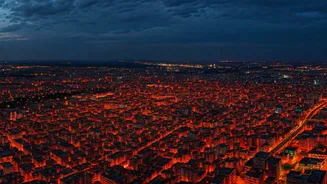
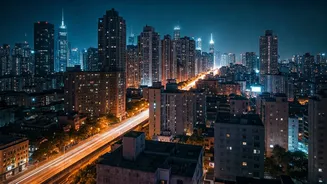
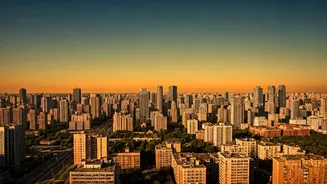
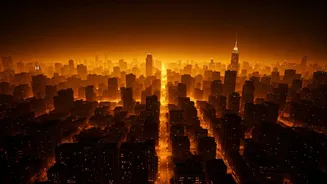
The Urban Heat Island (UHI) effect is the observed phenomenon where metropolitan areas are significantly warmer than surrounding rural areas. The reason is simple: our cities are built with materials like concrete, asphalt, and brick that absorb and retain
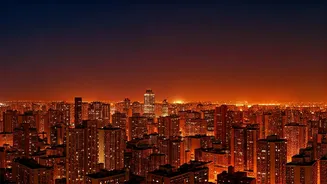
the sun’s heat far more than natural landscapes like forests and fields. During the day, these surfaces soak up solar radiation, and at night, they slowly release that stored heat, preventing the city from cooling down as much as the countryside. This temperature difference is often most pronounced after sunset. Compounding this are factors like the heat generated by cars, air conditioners, and industrial processes, as well as the dense layout of tall buildings that block wind and trap warm air in what is known as the 'urban canyon effect'.
The Alarming New Findings
Recent research has moved from simply identifying UHIs to tracking their 'evolution'. Studies show that the UHI effect is not static; it's intensifying. A study covering nine major Indian urban agglomerations, including Delhi, Mumbai, and Ahmedabad, found steady decadal increases in the Surface Urban Heat Island Intensity (SUHII). Cities are not just hotter than their surroundings; they are becoming hotter at an accelerating rate. Some studies suggest cities are warming 29% faster than rural areas, with megacities heating up even more quickly. This intensification is driven by rapid, often unplanned, urban expansion, which replaces cooling green spaces and water bodies with heat-trapping buildings and roads. The trend warns that as cities grow, so does the severity of their heat islands, amplifying the dangers of heatwaves.
India’s Urban Hotspots
For India, a rapidly urbanizing nation, the implications are severe. Studies specifically focusing on Indian cities confirm a worrying trend. The expansion of built-up areas at the expense of vegetation is a central factor. In some Indian cities, the UHI effect can increase temperatures by over 5°C compared to nearby rural areas. This isn't just about discomfort. It poses serious health risks, including heat exhaustion and heatstroke, especially for vulnerable populations like the elderly, children, and outdoor workers who often live in densely packed, low-income areas with little green cover. Furthermore, it creates a vicious cycle: higher temperatures increase the demand for air conditioning, which consumes more energy and releases more waste heat, further warming the city.
Beyond Greener Parks
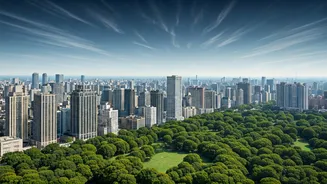
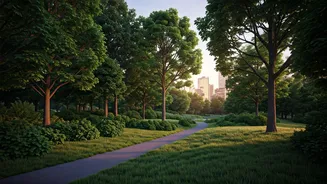
So, what can be done? The solutions go beyond simply planting more trees, although that is a crucial first step. Trees and green spaces provide shade and cool the air through evapotranspiration. But recent studies highlight the need for a multi-pronged approach. 'Cool roofs,' which use light-colored or reflective materials to bounce sunlight back, can lower building temperatures significantly. Similarly, 'cool pavements' can reduce heat absorption by roads. Integrating 'blue infrastructure' like lakes, ponds, and fountains provides evaporative cooling. A study of 50 German cities found that polycentric cities—those with multiple urban centres and dispersed green spaces—were better at mitigating heat than cities with a single, dense core. This suggests that smarter urban planning that integrates green and blue spaces throughout the city, not just in large parks, is essential for managing the UHI effect.