



More Than Just a Snack
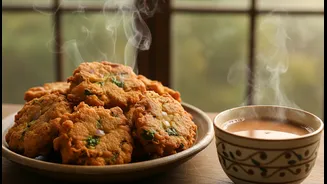
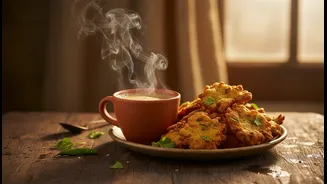
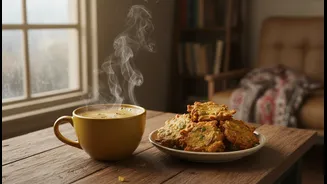
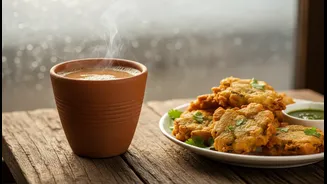
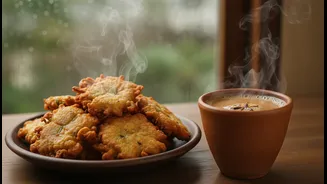
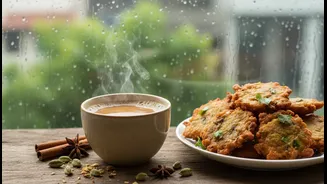
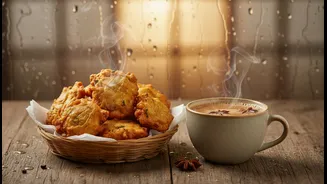
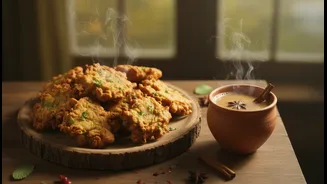
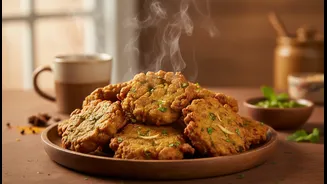
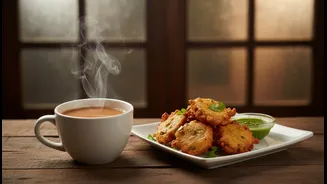
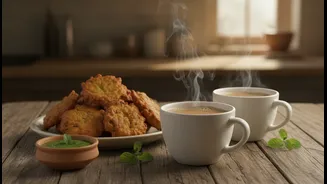
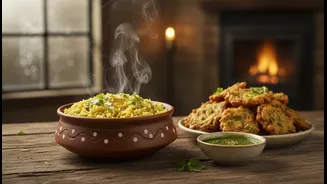
Across India, the combination of steaming, spiced tea and deep-fried, crispy fritters is not merely a snack but a cultural institution. This pairing is the unofficial cuisine of the Indian monsoon, a time when the cool, damp weather creates a collective
desire for something warm, crunchy, and comforting. It transcends being a simple meal, functioning as a social adhesive. It’s the centerpiece of conversations when guests arrive, a companion during a break from work, and a shared joy among family members gathered to watch the rain. From street-side stalls, or 'chaiwallahs', to family kitchens, the act of preparing and sharing chai and pakoras reinforces community bonds and hospitality, making it a gesture of welcome and friendship.
The Comfort of Ritual
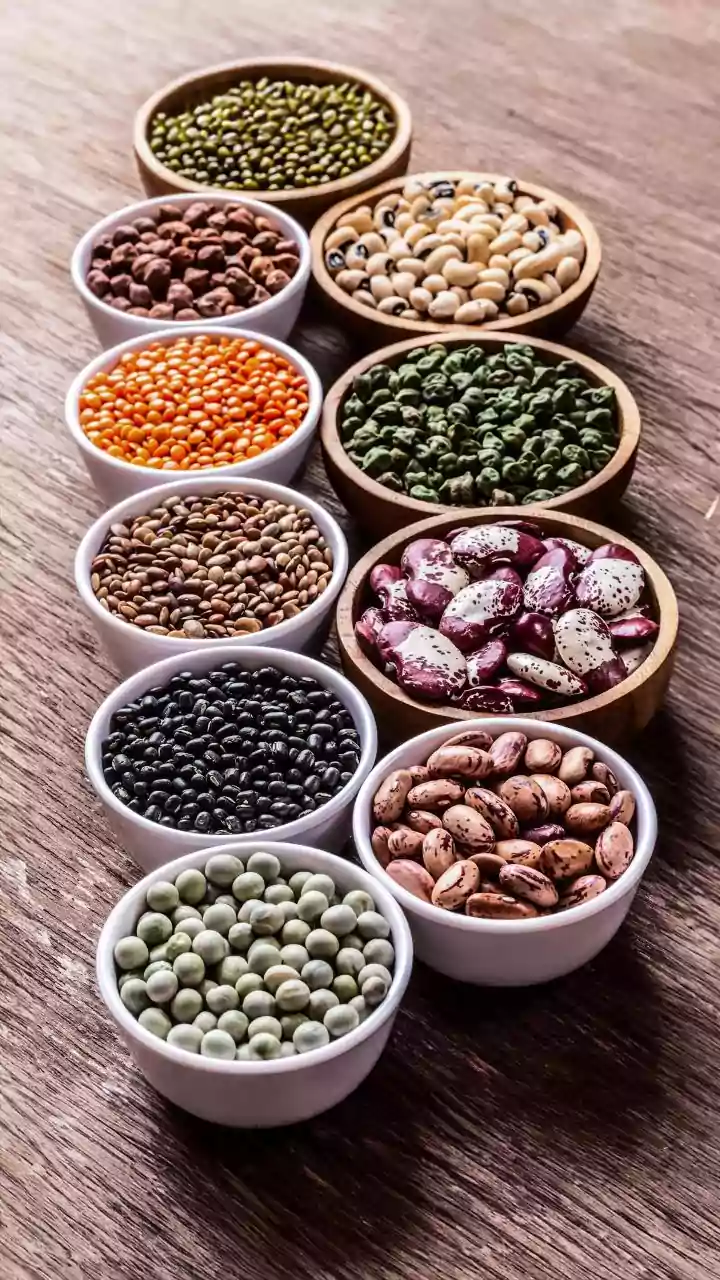
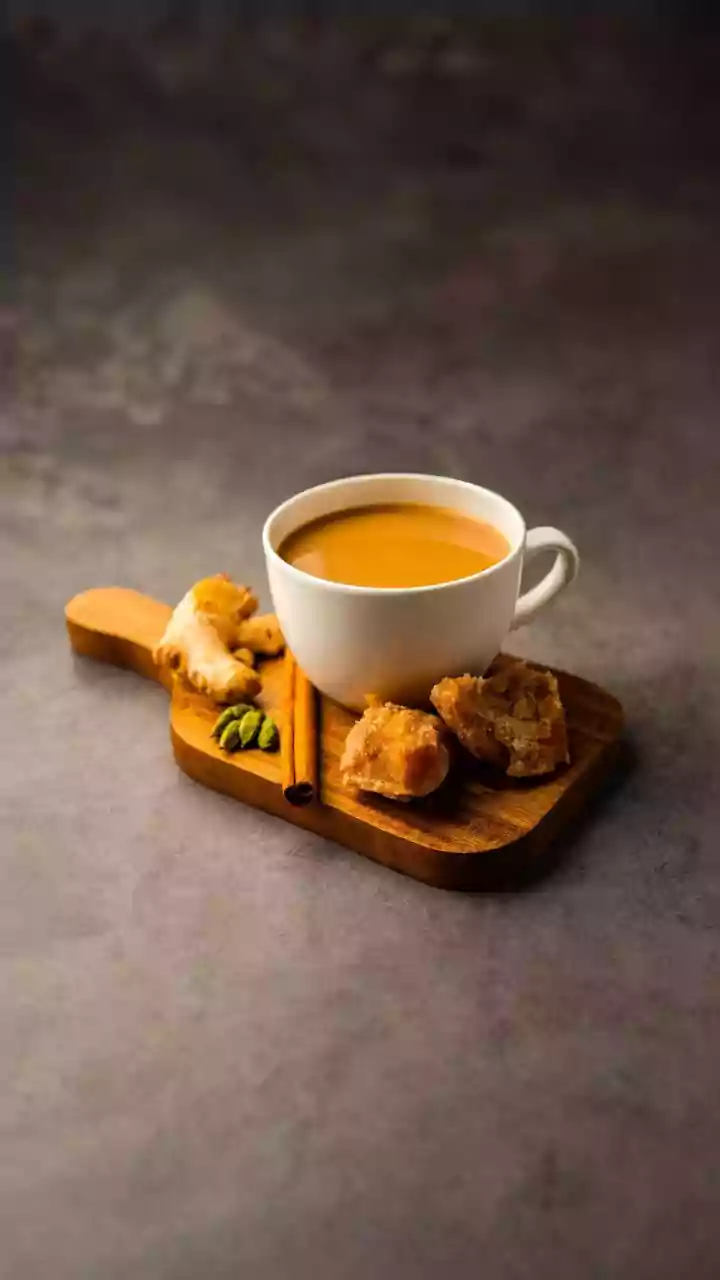
The power of chai and pakoras lies significantly in its ritual. It is a predictable comfort in a fast-paced world. The process itself—brewing the tea with ginger and cardamom, mixing the gram flour batter, and hearing the sizzle of pakoras hitting hot oil—is a ceremony of sorts. This routine, often performed in the late afternoon to combat the body's natural energy dip, becomes a deliberate pause in the day. It’s a moment to step away from screens and deadlines, to engage with the physical world through aroma and action. This daily or seasonal repetition transforms the act of eating into a grounding experience, a dependable source of comfort and a way to punctuate the rhythm of daily life.
A Symphony of Senses and Texture
A key reason this pairing is so satisfying lies in its complex sensory contrast. Texture plays a crucial role in how we experience and enjoy food, often as much as flavor itself. The crunchy, slightly greasy exterior of a pakora gives way to a soft, savoury interior. This satisfying crunch provides a dynamic contrast to the smooth, warm, and milky chai. The flavours are a perfect counterbalance: the spicy, salty pakora is mellowed by the sweet, aromatic tea. This multi-sensory experience—the feel, the sound of the crunch, the temperature difference, and the blend of tastes—is what makes the combination so craveable and memorable. It’s a carefully orchestrated, yet entirely intuitive, culinary duet.
The Science of Food Nostalgia
Ultimately, the craving for chai and pakoras is a craving for a feeling. This is the work of food-evoked nostalgia. Our brains are wired to create powerful links between scent, taste, and emotional memory. The aroma of ginger in tea or besan in hot oil can instantly transport a person back to their childhood, family gatherings, or moments of comfort and security. Eating these foods is not just about sating hunger; it's about reconnecting with a past self and reinforcing a sense of identity and belonging. These food memories are often tied to feelings of being cared for, making the meal a form of emotional nourishment. The craving is less for the food itself and more for the comfort, safety, and connection it symbolises.