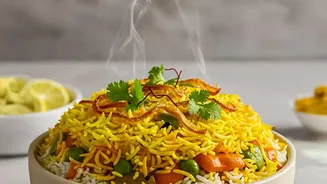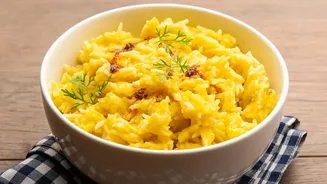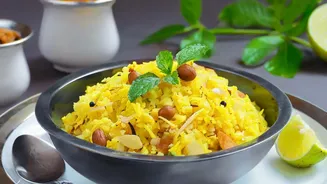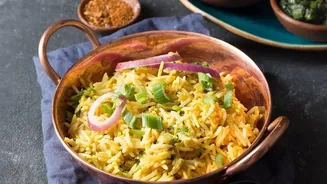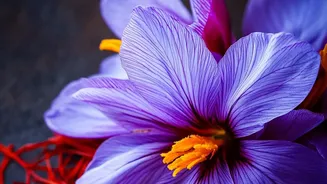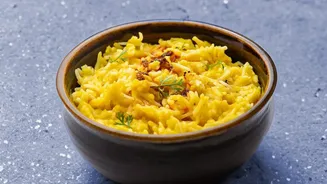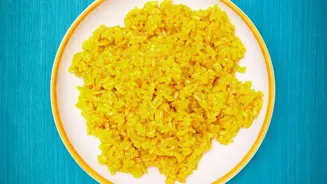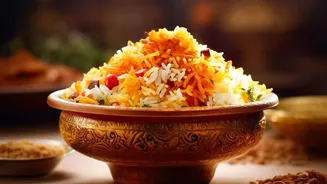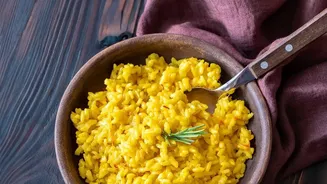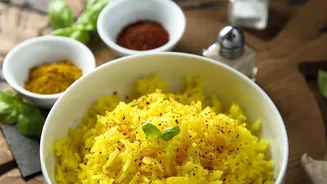

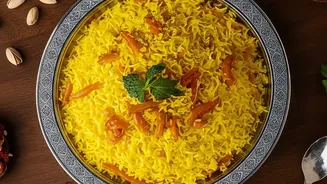
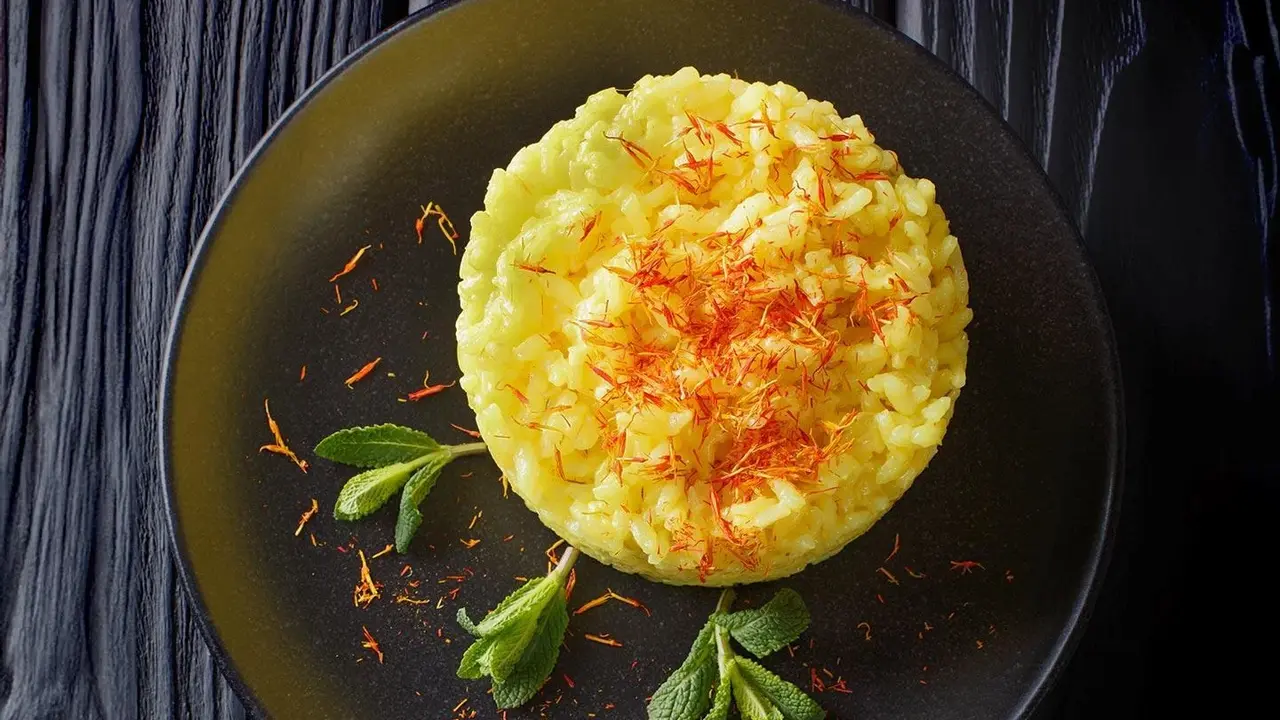
It’s a sight familiar in many Indian kitchens: a vast pot of rice, steaming and fragrant, made golden by just a few precious crimson threads. Saffron, the ‘red gold’ of spices, holds a mystical power to transform a simple meal into a feast.
The World’s Most Precious Spice
Saffron's reputation
as the most expensive spice by weight is no exaggeration. Its value comes from an incredibly labour-intensive harvesting process that has remained unchanged for centuries. The spice consists of the three delicate, deep-red stigmas found in the centre of the Crocus sativus flower. Each flower produces only three of these threads, and they must be hand-picked at dawn before the sun can damage their delicate structure. It takes an astonishing 75,000 to 170,000 flowers to produce just one pound of dried saffron, a task that requires immense patience and precision. These flowers bloom for only a few weeks a year, primarily in specific climates found in Iran, India (notably Kashmir), Spain, and Greece, making the supply both limited and precious.
The Science Behind Its Potency
Saffron's ability to infuse a large dish with so much character is pure chemistry. The threads contain three key bioactive compounds. Crocin is the powerhouse pigment responsible for the vibrant, golden-yellow hue that saffron imparts to food. Picrocrocin is what gives the spice its distinctively bitter-floral taste, while safranal is the compound that creates its signature aroma, often described as smelling of hay and honey. When you add saffron to a liquid, these compounds are released, allowing their colour, flavour, and scent to spread evenly. This is why a tiny pinch, when used correctly, can have such a dramatic and far-reaching effect on a large pot of biryani or kheer.
Making the Most of Every Thread
To get the most out of this expensive spice, never just toss the threads directly into your dish. You need to 'bloom' them first to unlock their full potential. The most common method is to steep the saffron threads in a small amount of warm (not boiling) liquid like water, milk, or broth for at least 15-20 minutes. Another technique, popular with chefs, is the ice cube method: crushing the threads and letting an ice cube melt over them, which provides a slow, cold infusion that extracts a deeper colour. For an even more intense aroma, you can lightly toast the threads in a dry pan for a few seconds before crushing and steeping them. The resulting golden liquid, along with the threads, can then be added to your recipe.
A Symbol of Celebration in India
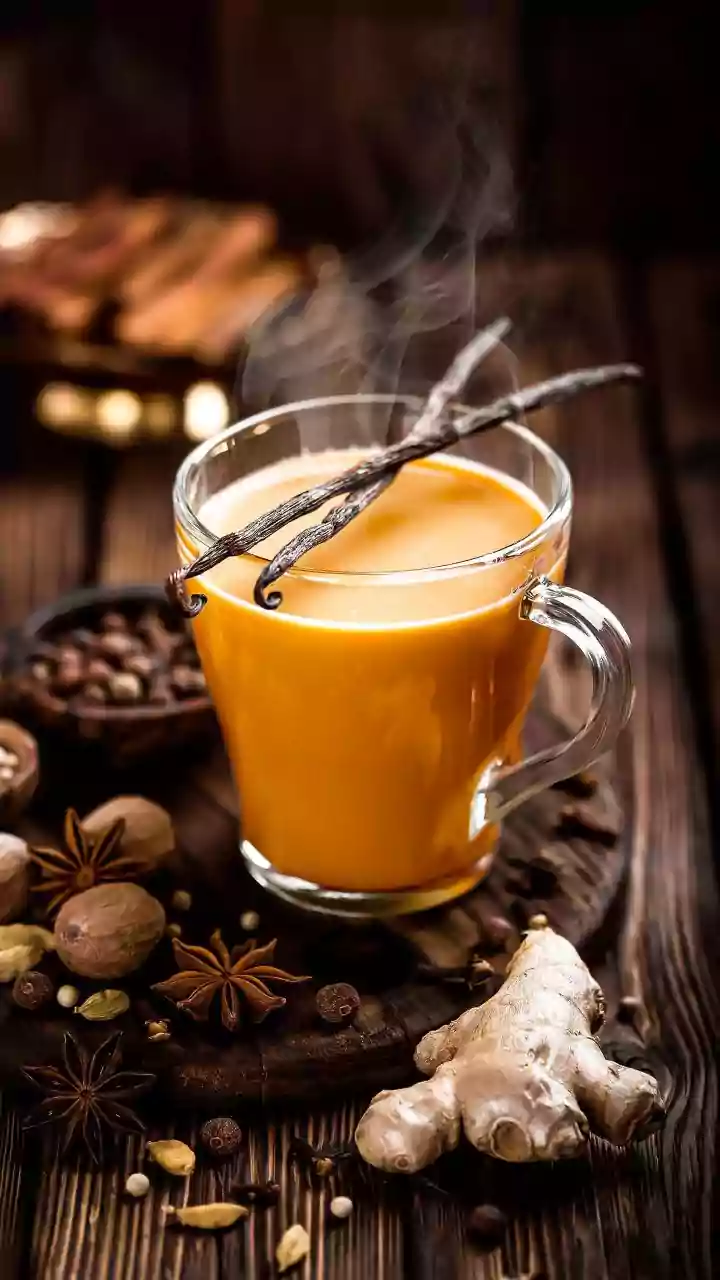
In India, saffron is more than just an ingredient; it is a symbol of purity, celebration, and auspiciousness. Its use is often reserved for special occasions like weddings and festivals, making its presence in a dish a sign of care and importance. From the royal biryanis of Mughlai cuisine to the comforting warmth of kesar doodh (saffron milk), this spice elevates both savoury and sweet preparations. It's a key ingredient in many traditional sweets like kheer, shrikhand, and kulfi, where its fragrant notes beautifully complement dairy. Introduced to India centuries ago, likely by Persian traders, saffron has woven itself into the fabric of the nation's culinary and cultural heritage.
How to Spot the Real Deal
Given its high price, the saffron market is unfortunately rife with fakes, which are often just safflower or dyed corn silk threads. There are simple tests to check for authenticity. Real saffron threads are trumpet-shaped, wider at one end. When placed in warm water, genuine saffron will release its golden-yellow colour slowly, while the threads themselves remain red. Fake saffron, on the other hand, often bleeds a red dye almost instantly and the threads lose their colour. The aroma should be strong and honey-like; if it smells of nothing or chemicals, it is likely an imposter. Finally, real saffron tastes bitter and floral, never sweet.