




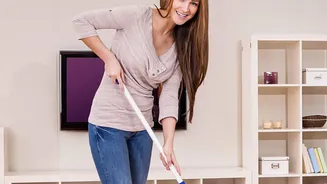

Work With Gravity, Not Against It
The most fundamental reason to clean floors last is gravity. Professional cleaners follow a top-to-bottom method because dust, cobwebs, crumbs, and other debris naturally fall downward. When you dust shelves, wipe down ceiling fans, or clean countertops,
particles are dislodged and settle on the surfaces below. If you’ve already vacuumed or mopped, you’ve just created more work for yourself by dirtying a clean area. By starting with the highest points in a room—like light fixtures and the tops of cabinets—and systematically working your way down, you ensure all the debris collects on the floor, which you can then remove in one final, efficient pass.
The Key to Maximum Efficiency
Cleaning is often a race against time, and nothing wastes more of it than having to re-do a task. Professionals call it 're-work', and it’s the enemy of an efficient process. Cleaning floors first is a classic example of creating rework. Imagine mopping the kitchen floor, then wiping down the counters—the crumbs and drips will inevitably land on your freshly cleaned surface. The same logic applies to using cleaning sprays that can overspray and drift downwards. The top-to-bottom, floors-last sequence is designed to eliminate this backtracking. By following this logical order, you create a streamlined workflow where each step prepares the way for the next, saving you valuable time and energy.
Dry Before Wet for a Deeper Clean
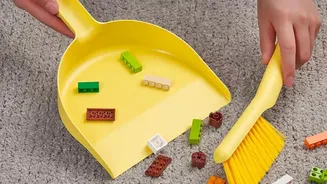
Another core principle of professional cleaning is to handle dry tasks before wet ones. This means completing all dusting and vacuuming before you introduce any mopping or wet wiping. When you try to mop a floor that hasn't been thoroughly vacuumed or swept, you're essentially just pushing around wet clumps of dust and dirt, creating a muddy residue rather than removing the grime. First, perform all dry cleaning tasks from top to bottom, culminating in a thorough vacuuming or sweeping of the floor. This removes all the loose debris. Only then should you proceed with mopping. This ensures the water and cleaning solution can tackle embedded dirt and stains on the surface itself, not fight through a layer of dust and hair.
The Psychological Finish Line
Beyond the practical benefits, cleaning the floor last provides a powerful psychological boost. A sparkling, clear floor is the visual confirmation that a room is truly finished. It acts as a definitive finish line for your cleaning efforts. When you work your way out of a room after mopping, you leave behind a perfect surface, which reinforces a sense of accomplishment. This contrasts sharply with the feeling of spotting new dust on a floor you just cleaned. In home staging, a pristine floor is considered critical because it signals to potential buyers that a home is well-maintained from the ground up. Applying this mindset to your own routine can make cleaning feel less like a chore and more like a satisfying act of home care.
Putting It All Together
To implement this method, start in the corner of a room furthest from the door and work your way across and down. Begin by dusting ceiling fans, light fixtures, and corners. Move down to wiping artwork, mirrors, and windows. Then, clean furniture, countertops, and other mid-level surfaces. After all upper and mid-level surfaces are done, it's time for the floor. First, vacuum or sweep thoroughly, using attachments to get into corners and along baseboards. Then, if you’re mopping, start at the furthest point from the exit and work your way out of the room so you don’t step on your work. This systematic approach ensures no spot is missed and every effort counts.