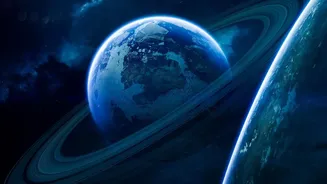




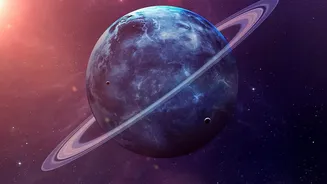
The Golden Hour for Saturn Begins
While the headline promises a month of Saturn's dominance, August is more accurately the grand opening act for the planet's best performance of 2026. The main event, known as opposition, occurs on October 4th. Opposition is when Earth passes directly
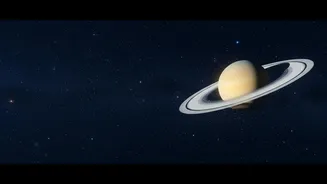
between the Sun and Saturn, making the planet appear at its biggest and brightest from our perspective. But you don't have to wait until October. Throughout August, Saturn is steadily brightening and climbing higher in the night sky, making it a fantastic and rewarding target. Think of this month as securing the best seats in the house before the show truly begins. The planet will be visible for long stretches of the night, rising in the east during the evening and journeying across the sky until dawn.
Your Guide to Spotting the Ringed Wonder
Finding Saturn is easier than you might think. You won't need a map packed with complex star charts. During August, look towards the eastern sky in the mid-to-late evening. Saturn will be rising among the faint stars of the constellation Pisces, the Fish. Because it's so much closer to us, it won't twinkle like the distant stars. Instead, it will shine with a steady, yellowish-white glow. Early in August, Saturn will rise around 11 p.m. local time, but by the end of the month, you can catch it as early as 9 p.m. For the best and clearest views, wait until it has climbed higher in the sky, well after midnight. If you're out on the nights of August 3-4 or August 30-31, the Moon will serve as a convenient guidepost, passing close to the planet.
Naked Eye, Binoculars, or Telescope?
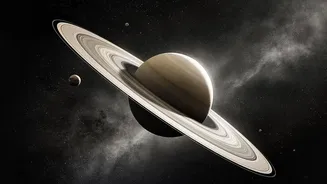
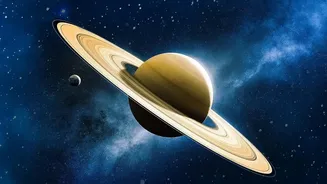
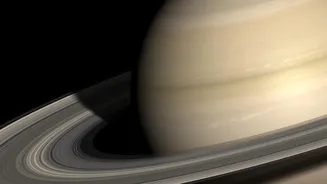
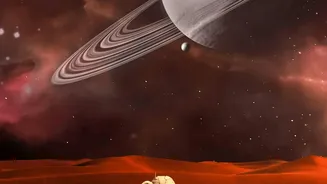
The beauty of observing Saturn is that it offers a different experience depending on your equipment. With just your naked eye, it’s a prominent, bright point of light that stands out from its starry background. If you have a pair of binoculars, you can get a better sense of its shape. The planet will lose its star-like point and appear as a tiny, distinctly non-circular oval. This elongation is caused by its famous rings. But the real magic happens with a telescope. Even a modest beginner's telescope with 30x magnification or more will reveal the rings as a separate structure from the planet itself. It's an unforgettable sight that has captivated astronomers for centuries. With a bit of luck and a steady view, you might even spot its largest moon, Titan, as a tiny star-like dot nearby.
A Dazzling Bonus: The Perseid Meteor Shower
As if a rising Saturn wasn't enough, August 2026 also offers one of the best celestial fireworks displays of the year. The Perseid meteor shower, beloved for its reliability and bright meteors, is set to peak on the night of August 12-13. This year's event is particularly special because the peak coincides with a new moon. This means the skies will be perfectly dark, without any moonlight to wash out the fainter shooting stars. Under these ideal conditions, you could see anywhere from 50 to 100 meteors per hour. The meteors will appear to radiate from the constellation Perseus in the northeast but can streak across any part of the sky. For the best show, find a dark location away from city lights, let your eyes adjust for about 20 minutes, and simply look up.